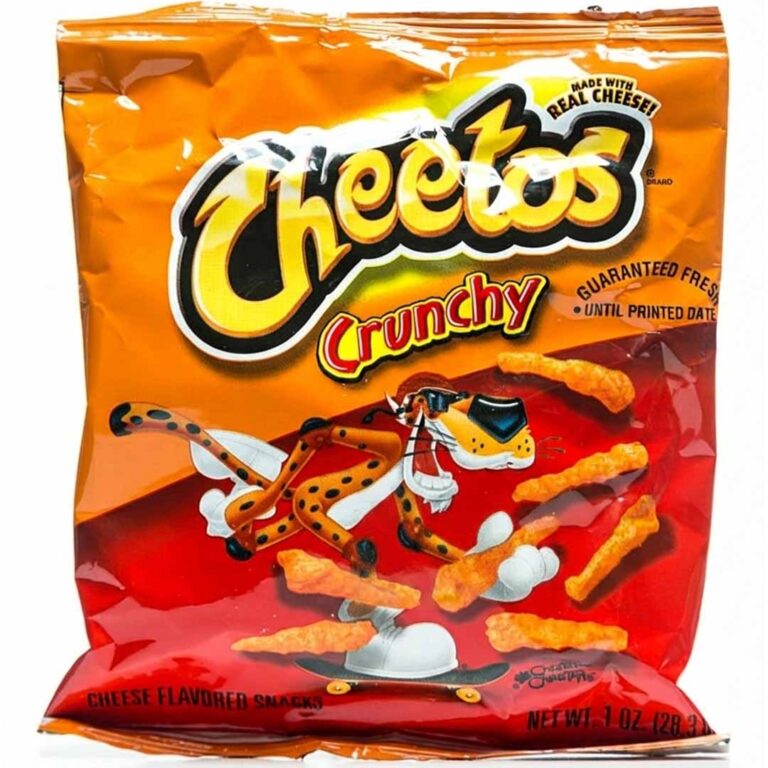
Ever grabbed a bag of Cheetos and wondered, “Wait, are Cheetos halal?” You’re not alone. This popular cheesy snack is sold in over 36 countries—but here’s the key detail: the answer depends on where it’s made and sold.
The confusion comes from regional differences. The same brand may be produced under different ingredient standards. In some countries like Pakistan, certain products may be halal-certified. However, in places like the United States, Cheetos are not halal-certified and may contain animal-derived enzymes with unclear sources.
This guide breaks down those differences so you can make an informed decision.
Are Cheetos Halal: Why the Confusion?
It’s not the corn or the oil that makes Cheetos a tricky subject for halal consumption—it’s the cheesy seasoning.
To create that cheese flavor, manufacturers use enzymes (often referred to as rennet) to process the milk.
These enzymes can come from different sources:
- Animal-derived enzymes: Typically from calves or, problematically, a pig. Or other animals, which may not be slaughtered according to halal standards
- Microbial enzymes: Produced from bacteria or fungi — generally considered halal
- Lab-produced enzymes: Also considered halal
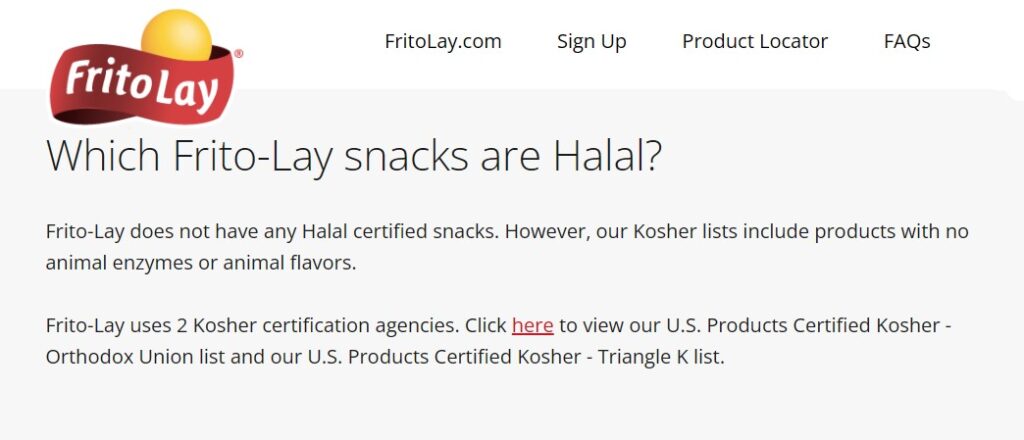
The big issue is that Frito-Lay (the company that makes Cheetos) has admitted that they “use animal enzymes derived from pork to develop the cheese in some of our cheese seasonings.”
Since there’s no Halal symbol on the bag, you have no way of knowing if the bag you pick up is one of the ones that uses the pork enzymes or not.
Regional Breakdown: Where Cheetos Are Halal
Halal Status in Muslim-Majority Countries (And a Common Misconception)
While Frito-Lay states that its snacks are not globally halal-certified, the situation can differ in Muslim-majority countries due to local manufacturing, government regulations, and certification systems.
🇵🇰 Pakistan
Certification: Some products may be certified by local or international halal bodies (verification required per product)
Manufacturing: Often produced locally under halal-compliant guidelines
Enzyme Source: Typically microbial or halal-compliant, but may vary
Popular Varieties: Cheetos Crunchy, Flamin’ Hot, Masala Balls
Verdict: ⚠️ Likely halal, but must be verified on the packaging.
You can review the ingredient analysis of Flamin’ Hot Cheetos on Open Food Facts, which shows multiple additives and dairy-derived components.
🇮🇩 Indonesia
Regulation: Halal certification is mandatory under national law (BPJPH system)
Certification Body: Majelis Ulama Indonesia (MUI)
Compliance: Products sold locally are generally required to meet halal standards
Verdict: ⚠️ Often halal-certified, but check for official logo on packaging
🇸🇦 Saudi Arabia & GCC
Regulation: Strict import controls requiring halal compliance for food products
Authorities: Saudi Food and Drug Authority (SFDA), Emirates Authority for Standardization and Metrology (ESMA)
Supply Chain: Products are subject to halal verification before market entry
Verdict: ⚠️ Generally halal-compliant, but certification should still be confirmed
🇲🇾 Malaysia
Certification Body: JAKIM
Standard: MS 1500 (globally recognized halal standard)
Traceability: Full supply chain auditing and strict ingredient control
Verdict: ⚠️ High likelihood of halal certification, but always verify the logo
Common Misconception: PepsiCo Certification vs Frito-Lay Snacks
Many people assume that because PepsiCo has halal certification in Pakistan, all products under its umbrella— including Frito-Lay snacks like Cheetos—are automatically halal.
This is incorrect.
PepsiCo’s halal certification in Pakistan applies specifically to its beverage operations (such as soft drink concentrate manufacturing)
This certification does not extend to Frito-Lay snack products, which use different ingredients, processes, and facilities
According to Frito-Lay’s official statements, the company does not produce halal-certified snacks globally
Bottom line:
A halal certificate for PepsiCo beverages does not make Frito-Lay snacks halal. Each product must be evaluated individually, based on its ingredients and local certification (if available).
Why Halal Status Changes by Country
The same brand can have different halal status depending on where it is produced and sold:
Local factories may use different ingredient sourcing
Governments may require halal compliance for food products
Certification bodies audit and approve products before market entry
North America (NOT Halal ❌)
🇺🇸 United States
- Status: ❌ No halal certification
- Key Issue: Frito-Lay has confirmed that porcine (pork-derived) enzymes are used in some cheese seasonings
- Transparency Problem: The company does not disclose which specific products contain these enzymes
- Product Uncertainty: If a product is not listed among pork-free items, its enzyme source remains unclear
Verdict: ❌ High risk of non-halal ingredients — best avoided for strict halal consumption
According to an official Frito-Lay document, pork-derived (porcine) enzymes are used in some cheese seasonings in the United States
Important Note (for Muslim Consumers): While some Frito-Lay products are certified Kosher (check their Kosher list), it is crucial to remember that Kosher certification does not automatically guarantee a product is Halal. Although Kosher products generally use microbial enzymes and contain no pork, Muslim consumers should be cautious and may prefer to avoid or keep distance from products where the Halal status is not explicitly confirmed, as standard Cheetos varieties are NOT on the Frito-Lay Kosher list.
🇨🇦 Canada
- Status: ❌ No halal certification
- Manufacturing: Often aligned with North American formulations
- Key Concern: Same issue of potential pork-derived or unclear animal enzymes
Verdict: ❌ Same concerns as U.S. products — avoid unless verified
United Kingdom (Mixed ⚠️)
🇬🇧 United Kingdom & 🇪🇺 Europe
The UK and EU markets often provide more transparency due to strict labeling rules (e.g., clear vegetarian markings and additive disclosure). However, this does not equal halal certification.
Potentially Suitable Options
- Some Cheetos variants may be labeled “Suitable for Vegetarians”
- Certain varieties (e.g., cheese puffs or twists) may avoid animal-derived rennet
Always verify each product’s packaging and ingredient list.
What “Suitable for Vegetarians” Typically Means
- ✅ No animal-derived rennet or meat-based ingredients
- ✅ Enzymes are usually microbial or non-animal
- ⚠️ Does not guarantee halal compliance (no halal certification implied)
⚠️ The Ethanol Consideration
Some flavorings may use ethanol as a carrier in very small, non-intoxicating amounts.
- Permissive scholarly view: Trace, non-intoxicating amounts used in processing may be acceptable
- Strict view: Any presence of ethanol should be avoided
👉 Consumers should follow their preferred scholarly opinion.
🚫 What to Avoid
- Products without vegetarian labeling (enzyme source unclear)
- Ingredients like E120 (Carmine) — widely considered impermissible by many scholars
Verdict
⚠️ Varies by product.
Vegetarian-labeled Cheetos may be more suitable, but since there is no halal certification, they should be treated as doubtful (mashbooh) unless verified otherwise.
Europe (EU) (Mixed ⚠️)
🇪🇺 Europe (Country-by-Country Variations)
Cheetos formulations in Europe can vary significantly by country due to different ingredient regulations and labeling standards.
Key Concerns
E120 (Carmine)
- A red color derived from insects (cochineal)
- Used in some products as an alternative to synthetic dyes
- Scholarly view: Considered impermissible by many scholars (especially in the Hanafi school), though opinions differ
E471 (Mono- and Diglycerides)
- Can be sourced from plant or animal fats
- If not labeled as vegetarian, the source is unclear
Safer Approach
- Look for “Suitable for Vegetarians” labeling
- Avoid products listing E120 (Carmine)
- Check country-specific formulations (e.g., German vs. French variants may differ)
⚠️ Important Note
A vegetarian label typically indicates no animal-derived rennet or meat-based ingredients, but it does not guarantee halal certification or full compliance with halal standards.
Verdict
⚠️ Varies by product and country.
Vegetarian-labeled varieties are generally more suitable, but without halal certification, they should still be considered doubtful (mashbooh) and verified individually
Australia & New Zealand (Mixed ⚠️)
Manufacturer: Smith’s Snackfood Company (PepsiCo subsidiary)
Status:
- Some varieties are AFIC-certified (Australian Federation of Islamic Councils)
- Others are not certified but may be vegetarian
How to Check:
- Look for official halal logo
- Check for “Suitable for Vegetarians” symbol
- When in doubt, contact Smith’s directly
Verdict: Certification varies by product line – always verify packaging.
How to Verify Your Specific Bag
Since formulations change and supply chains vary, follow this protocol:
Step 1: Look for Halal Certification
Recognized Organizations:
- JAKIM (Malaysia)
- MUI (Indonesia)
- SANHA (Pakistan/South Africa)
- IFANCA (USA – rare but exists)
- HFA (UK)
- AFIC (Australia)
If you see a halal logo: The product is certified. You’re good to go.
Common Questions Answered
The Ethical Dimension: Beyond Ingredients
For many Muslim shoppers today (2025-2026), deciding if a food is “halal” is about more than just the ingredients—it also includes ethical and moral concerns.
The BDS (Boycott, Divestment, Sanctions) Angle
PepsiCo, the company that owns Cheetos, has been the target of boycott campaigns for a few reasons:
- In 2018, they bought SodaStream, a company that previously operated in Israeli settlements.
- They are seen by some as having corporate positions that are unfavorable regarding Middle East conflicts.
How Consumers Responded: Reports from 2023–2024 show that sales dropped significantly in Muslim-majority countries such as Egypt, Pakistan, and Turkey.
The Personal Choice: Some individuals have made the decision to avoid all PepsiCo products, including those with halal certification, purely because of these ethical objections.
Resources for Further Verification
Official Certification Bodies:
Product-Specific Resources:
Mobile Apps: