
Natural Red Food Coloring: Which Are Halal?
Quick Answer Most natural red food colorings come from plants, such as beet, red cabbage, paprika and tomato, and are generally considered halal by source.
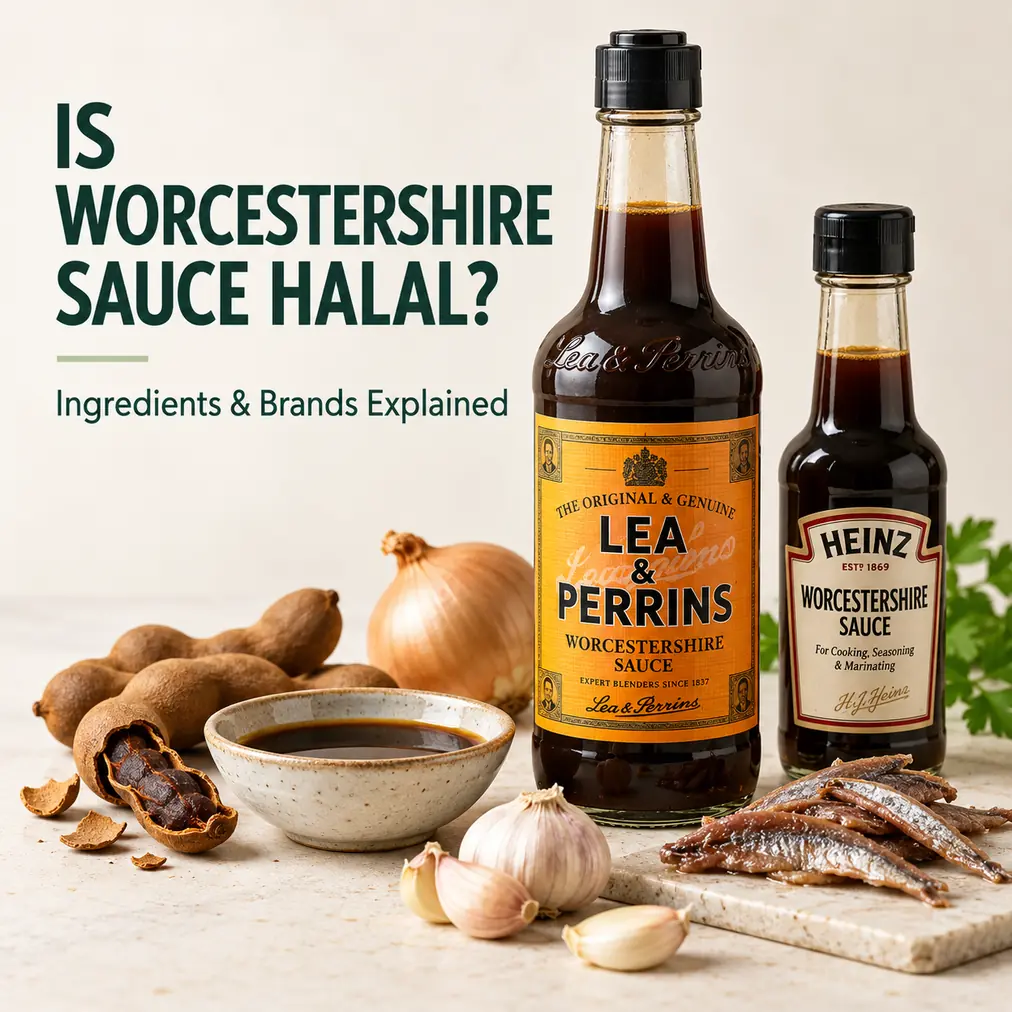
People often ask me about Worcestershire sauce. Usually they have a bottle of Lea & Perrins in their hand and one worry in their mind: anchovies, vinegar, or alcohol.
So, is Worcestershire sauce halal? Based on its ingredients, Lea & Perrins is halal for most Muslims. But it is not halal-certified, its flavorings are not disclosed, and Heinz’s version adds soy sauce made with alcohol.
Every brand uses its own recipe, and sometimes the same brand changes its recipe from country to country. So the bottle in your hand decides the answer. My job here is to walk you through each ingredient, tell you what the scholars say, and help you check any bottle yourself.
Yes, for most Muslims, based on its ingredients. Lea & Perrins contains anchovies, which are fish and halal in all four schools, and distilled or malt vinegar, which most scholars accept. Alcohol is not listed. It is not halal-certified, and its flavorings are undisclosed. Heinz differs: its soy sauce lists alcohol.
| Ingredient | Found in | Halal status |
|---|---|---|
| Anchovies | Lea & Perrins, Heinz | Halal — anchovy is a fish, allowed in all four Sunni schools |
| Distilled, spirit or malt vinegar | Lea & Perrins (US: distilled; UK: malt and spirit), Heinz (distilled) | Accepted by most scholars |
| Wine vinegar | Some other brands | Scholars differ |
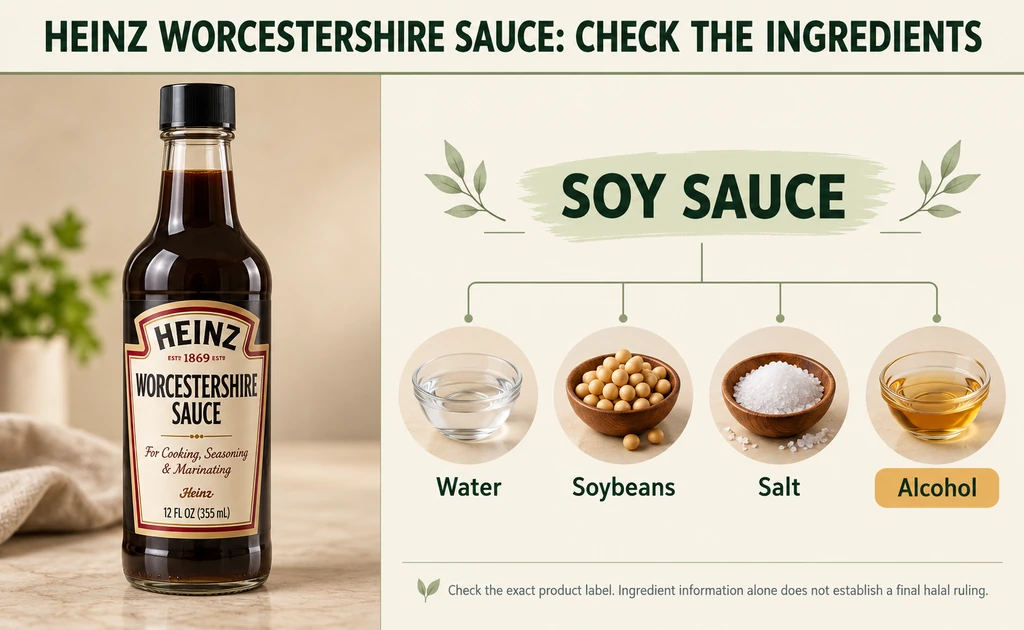
| Soy sauce that lists alcohol | Heinz | Scholars differ |
| Polysorbate 80 | Heinz | Source not stated (plant or animal) |
| Natural flavorings | Lea & Perrins (US and UK), Heinz | Source not stated |
| Halal certification | Not seen on either brand | Check the bottle |
A product of Indonesia that is halal-certified.
A Malaysian brand with JAKIM certification.
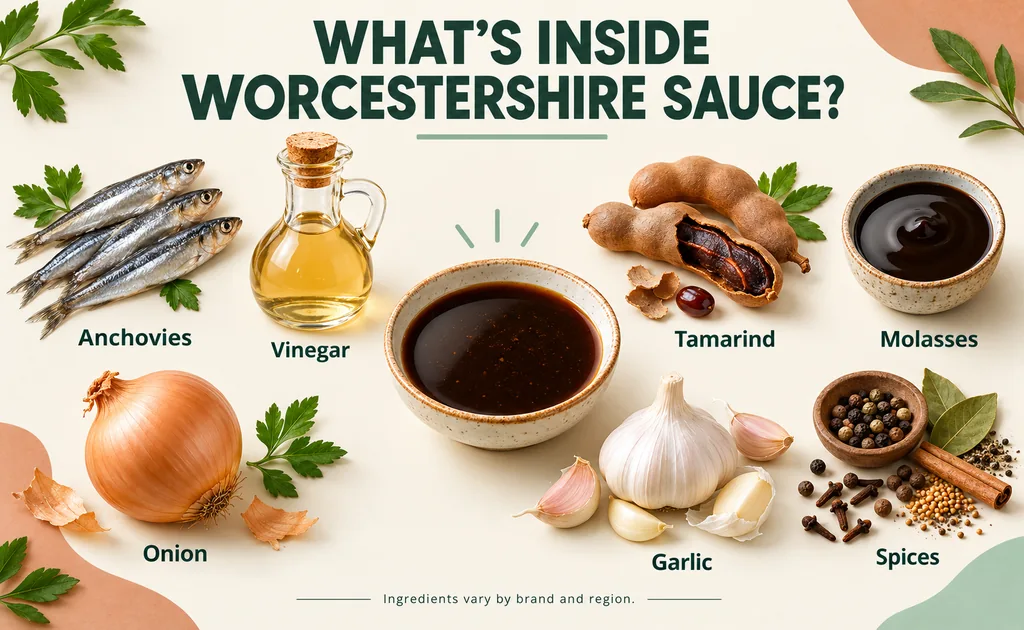
Worcestershire sauce is a fermented sauce made mainly from vinegar, molasses or sugar, salt, anchovies, tamarind, onion, garlic and spices. It was first sold in Worcester, England, by two chemists, John Wheeley Lea and William Henry Perrins, in 1837 (Wikipedia).
There is no single recipe. Some brands add soy sauce, some leave out the fish, and some use different vinegars. That is why I check two brands and two countries below, instead of giving one answer for every bottle.
Based on its ingredients, yes — for most Muslims. Lea & Perrins has no pork; alcohol is not listed as an ingredient; the anchovies are fish, and the vinegar is the kind most scholars accept. What no one can confirm from the label is where the flavorings come from.
The US and UK bottles are not the same recipe. Here they are side by side:
| US bottle | UK bottle | |
|---|---|---|
| Vinegar | Distilled white vinegar | Malt vinegar (from barley), spirit vinegar |
| Other ingredients | Molasses, sugar, water, salt, onions, anchovies, garlic, cloves, tamarind extract, natural flavorings, chili pepper extract | Molasses, sugar, salt, anchovies, tamarind extract, onions, garlic, spice, flavourings |
| Allergens | Anchovies | Barley, fish |
| Alcohol listed as an ingredient | No | No |
| Halal mark | Not shown | Not shown |
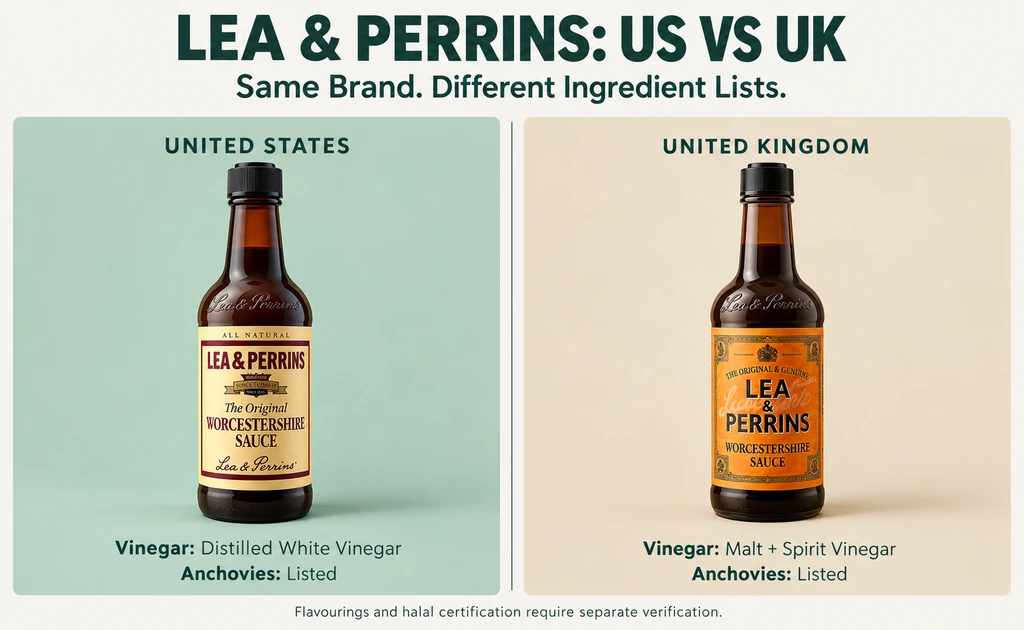
Sources: US label via Kraft Heinz; UK label via Waitrose. Checked on 24 October 2026.
So in both countries, three ingredients raise questions: the anchovies, the vinegar and the flavorings. I explain each one below. One more thing: some US listings say the sauce is “great for those keeping kosher.” Kosher is not the same as halal, so please do not treat it as a halal mark.
Heinz has more open questions than Lea & Perrins. It is a different product with a different recipe, even though Kraft Heinz has owned Lea & Perrins since 2005 (Wikipedia).
The US Heinz label lists: distilled white vinegar, water, molasses, salt, high fructose corn syrup, soy sauce (water, soybeans, salt, alcohol), caramel color, anchovies, corn syrup, natural flavorings, polysorbate 80 and soy flour (Heinz). The vinegar and anchovies are the same story as Lea & Perrins. Three ingredients are new.
I explain this question in full in my article on whether soy sauce is halal.
My advice: if you follow the view that allows soy sauce, Heinz can still leave you with two unknowns. If you want certainty, choose a halal-certified bottle instead.
No. Anchovies are fish, and fish is halal without slaughter. Allah says, “Lawful to you is game from the sea and its food” (Qur’an 5:96).
The Hanafi school is the strictest on seafood. It allows only creatures that count as fish, which is why Darul Ifta Birmingham rules oyster sauce impermissible (Darul Ifta Birmingham). But an anchovy is a fish, so it passes even under this view.
Mufti Faizal Riza of Fatwa.org.au (Hanafi, 28 March 2012) made the same point: Worcestershire sauce is halal if it has no haram ingredients, while oyster sauce is not permissible in the Hanafi school (IslamQA.org).
The anchovies do make the sauce unsuitable for vegetarians. That is a vegetarian concern, not a halal one.
For the vinegars used by Lea & Perrins and Heinz, most scholars say yes. The real disagreement is about one narrow case — wine that people deliberately turn into vinegar — and neither brand lists wine vinegar.
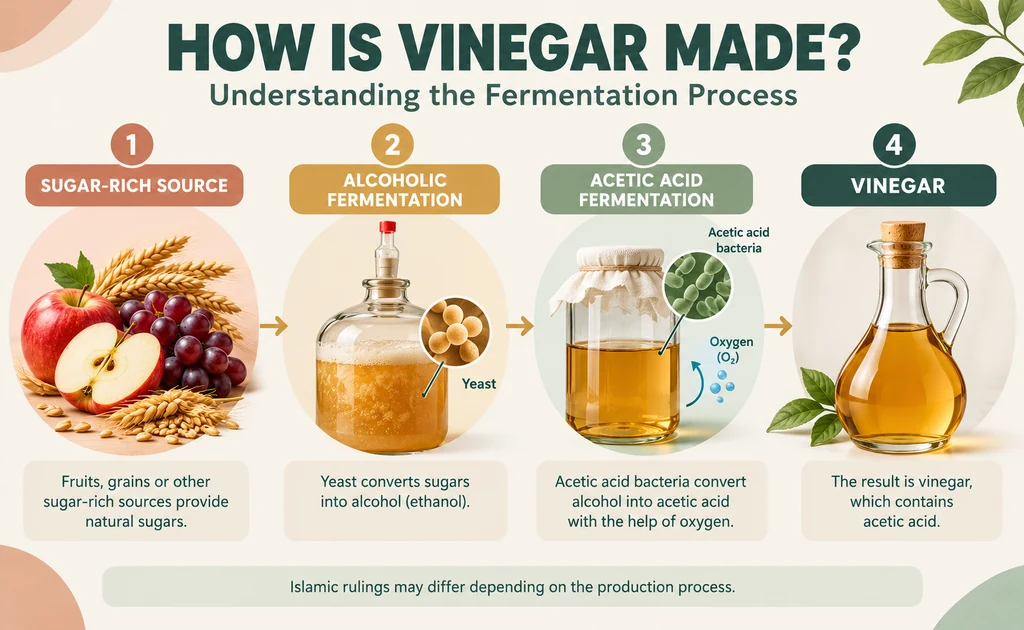
All vinegar starts as alcohol. Bacteria then turn that alcohol into acetic acid, so the final product is a sour liquid, not an intoxicant. Scholars call this kind of complete change istihalah: a substance turns into something new with a new ruling.
| Vinegar | Made from | Found in |
|---|---|---|
| Distilled white / spirit vinegar | Alcohol from grain or similar, fermented again into acetic acid | Lea & Perrins US, Lea & Perrins UK (spirit), Heinz |
| Malt vinegar | Malted barley, brewed and then turned into acetic acid | Lea & Perrins UK |
| Wine vinegar | Wine | Some other brands — not these two |
A quick note on the UK label: “spirit vinegar” is the name of a finished vinegar, made from distilled alcohol that has already turned into acetic acid. It does not mean spirits were poured into the sauce.
The Prophet ﷺ said, “The best of condiments is vinegar” (Sahih Muslim 2051). So vinegar itself is clearly allowed.
Scholars agree that wine that turns into vinegar on its own becomes pure and permissible. They differ over wine that people deliberately turn into vinegar. When the Prophet ﷺ was asked about making vinegar from wine, he said no (Sahih Muslim 1983). Based on this, Ibn Taymiyyah held that deliberately making vinegar from wine is not permissible, while the Standing Committee said vinegar made from things other than wine is permissible (IslamQA 191176).
The Hanafi school is the most lenient here. Shaykh Yusuf Badat of Mathabah (Hanafi) explains that wine vinegar is permissible once the wine has fully changed into vinegar, even when the change was made on purpose (Mathabah via IslamQA.org). Darul Ifta Birmingham (Fatwa ID 08812, 2026) also says vinegar made from dates, grapes or grain is permissible once the alcohol has fully turned into acetic acid (Darul Ifta Birmingham).
The Shafi’i school adds a condition: nothing outside should be added during fermentation, with some exceptions (SeekersGuidance).
You usually cannot know how a factory made its vinegar. Scholars have addressed this directly:
So distilled, spirit and malt vinegar are accepted by most scholars. If you meet a brand with wine vinegar, follow the scholar or school you trust.
It depends on the brand. Lea & Perrins does not list alcohol as an ingredient on its US or UK label. Heinz lists alcohol in its soy sauce (Heinz).
Please keep two things in mind:
Some online answers say Worcestershire sauce is haram “because it contains alcohol.” For Lea & Perrins, that mixes up vinegar with alcohol. For Heinz, the real question is the soy sauce, which I covered above.
We cannot tell from the label. “Natural” does not mean haram, but it does not prove halal either. This is the one question in Lea & Perrins that no label can answer.
Under US rules, a “natural flavor” can come from spices, fruit, vegetables, herbs and yeast — or from meat, seafood, poultry, eggs and dairy (21 CFR 101.22(a)(3)). The label does not have to say which. The UK Lea & Perrins label simply says “flavourings”, which is just as open.
There is a second, quieter question. Liquid flavorings are often carried in ethanol, and some powder flavorings use carriers that can be animal-derived. Halal certifiers check these carriers one by one (American Halal Foundation). I am not saying Lea & Perrins or Heinz use any of these. I am saying the label cannot tell us.
So what should you do? You have three reasonable options:
All three are followed by sincere Muslims. Choose the one your scholar advises.
If you want to avoid every open question, you have three kinds of alternatives. Please keep them separate in your mind, because they are not the same thing.
| Type | What it means | Example |
|---|---|---|
| Halal-certified | A recognised certifier has checked every ingredient, including flavorings | Search your local certifier's directory (JAKIM, MUIS, IFANCA, HMC or HFA) for "Worcestershire" and buy only what is listed |
| Vegetarian or vegan | No anchovies or other animal ingredients. This is not the same as halal-certified | Henderson's Relish (UK): water, spirit vinegar, sugar, caramel color, sugar syrup, salt, tamarind, acetic acid, cayenne pepper, cloves, saccharin, garlic oil (Ocado). The maker says it is approved by the Vegetarian Society for vegans and vegetarians, and does not claim halal certification (Henderson's Relish FAQ) |
| Homemade | Its halal status follows the ingredients you choose | Soy sauce, tamarind paste, molasses or brown sugar, distilled vinegar and a pinch of garlic and clove |
If you make it at home, choose a soy sauce you are comfortable with. My soy sauce guide explains the alcohol question.
You can check any bottle in under a minute:
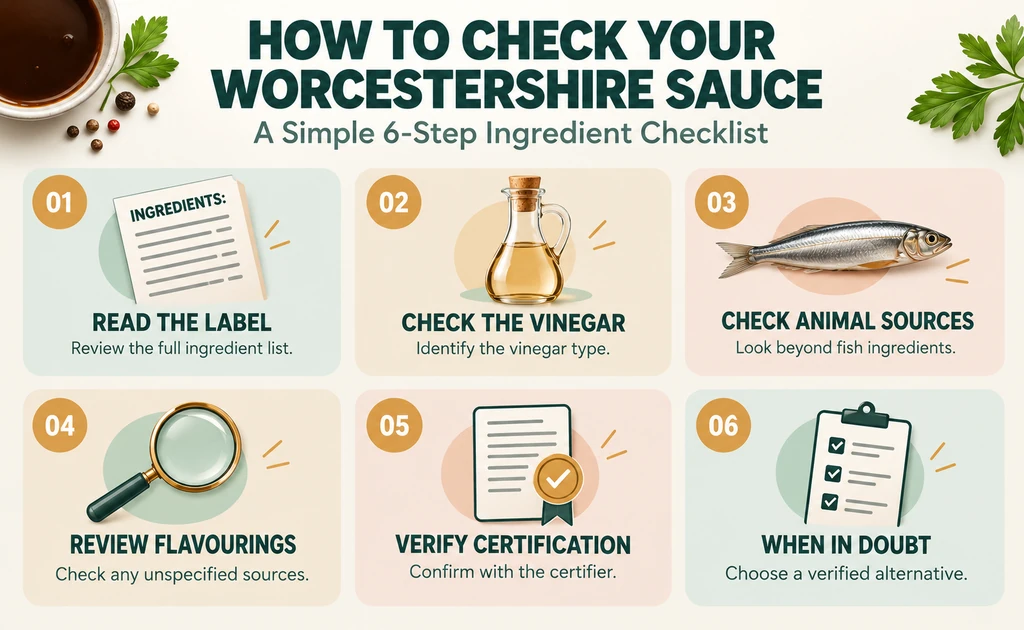
For most Muslims, Lea & Perrins is halal based on its ingredients: anchovies are fish, the vinegar is accepted by most scholars, and alcohol is not listed. It is not halal-certified, though, and other brands differ. Always check the bottle you are buying.
Lea & Perrins is halal by ingredients for most Muslims, but not certified, and its flavorings are undisclosed. Heinz adds soy sauce that lists alcohol, polysorbate 80 with no source stated, and the same flavorings question. Both brands are covered in detail above.
Lea & Perrins does not list alcohol on its US or UK label. Heinz lists alcohol inside its soy sauce. The vinegar in both is not alcohol: fermentation has already turned the alcohol into acetic acid, so it cannot intoxicate.
No. Soy sauce is fermented soybeans and wheat. Worcestershire sauce is mainly vinegar, molasses, tamarind and anchovies. Some brands, like Heinz, add a little soy sauce. If you are checking soy sauce itself, read my soy sauce guide.
Use a bottle listed in a recognised halal certifier's directory. Henderson's Relish is a vegan option in the UK, but it is not halal-certified. At home, mix soy sauce, tamarind paste, molasses or brown sugar, distilled vinegar, garlic and a pinch of clove.
Most Worcestershire sauce is not vegetarian, because it contains anchovies. That is a vegetarian issue, not a halal one: fish is halal for Muslims. Vegetarian versions exist, such as Henderson's Relish, if you want to avoid the fish for other reasons.
Say it "WUSS-ter-sher." Many people in Britain simply call it "Worcester sauce" (Wikipedia).
Lea & Perrins Worcestershire sauce is halal for most Muslims based on its ingredients. The anchovies are fish, the vinegar is the kind most scholars accept, and alcohol is not listed. It is not certified, and its flavorings are not disclosed.
Heinz has more open questions: soy sauce that lists alcohol, polysorbate 80 and the same flavorings.
If any of this troubles you, choose a certified bottle or follow the scholar you trust. The Prophet ﷺ said, “Leave what makes you doubt for what does not make you doubt” (Tirmidhi 2518).
And Allah knows best.
Product labels
Qur’an and Hadith
Fatwas and scholarly answers
Regulation, industry and background
Quick Answer Most natural red food colorings come from plants, such as beet, red cabbage, paprika and tomato, and are generally considered halal by source.
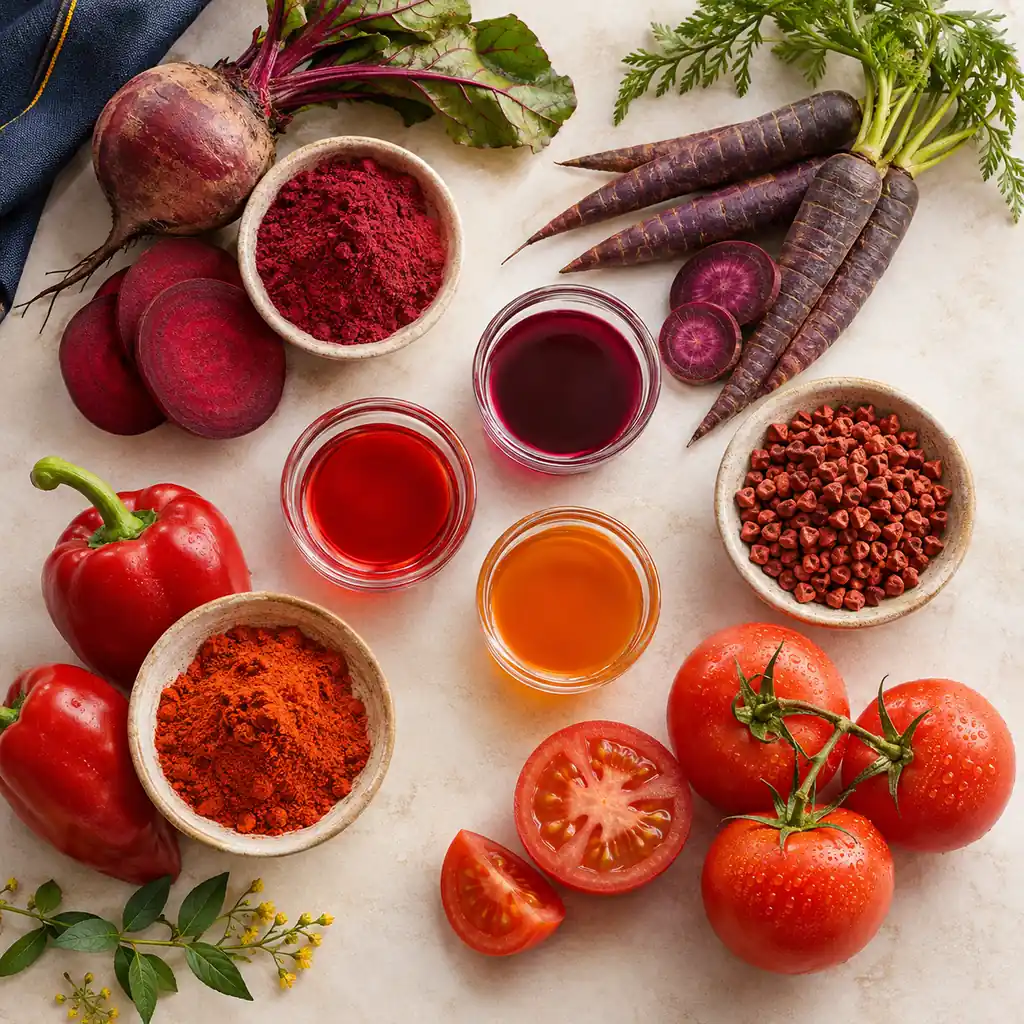
Quick Answer Quick Answer: Plant-based colors such as beet, paprika, purple carrot and tomato lycopene are common replacements for Red 40. They are generally halal
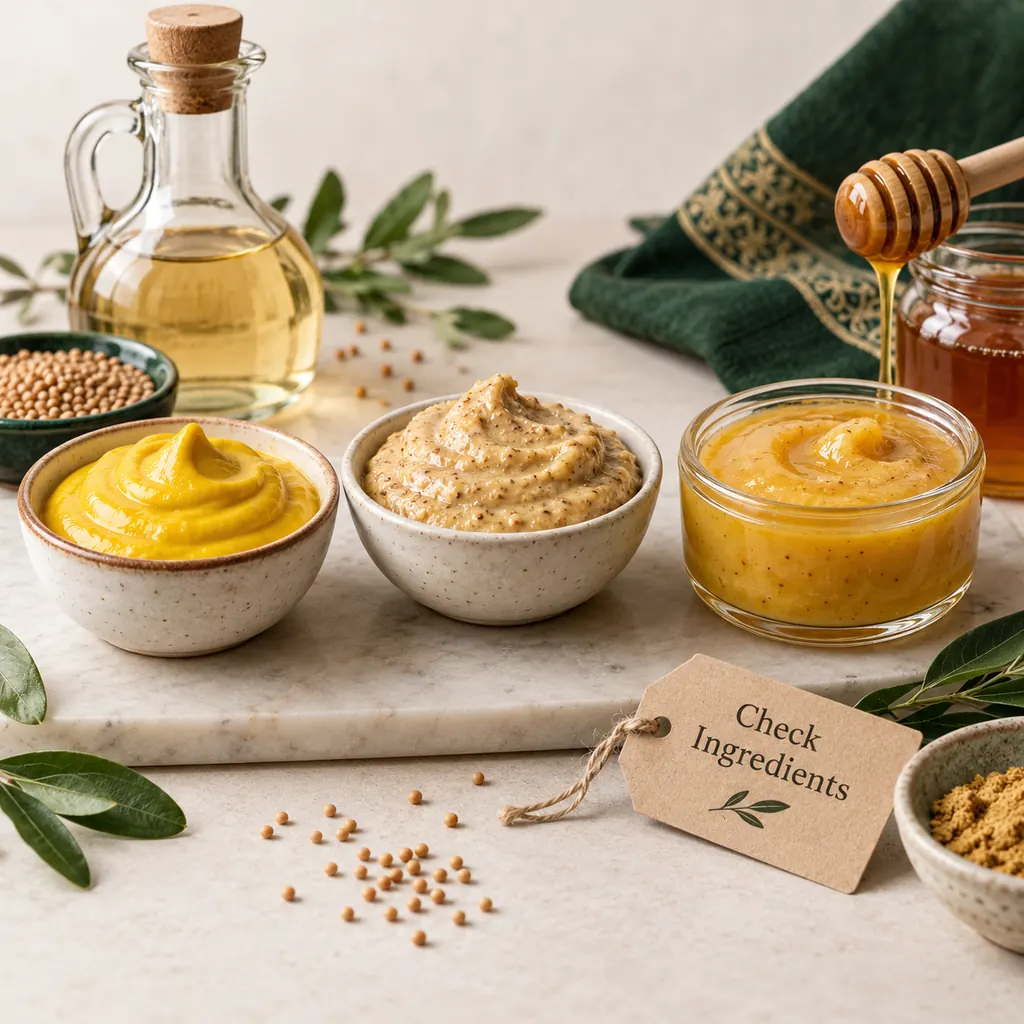
Plain mustard is made from plant seeds, vinegar and salt, so it is halal. The real question is what else goes in the jar: many Dijon and specialty mustards add white wine or spirits. Here is how to tell which jars are safe.
