
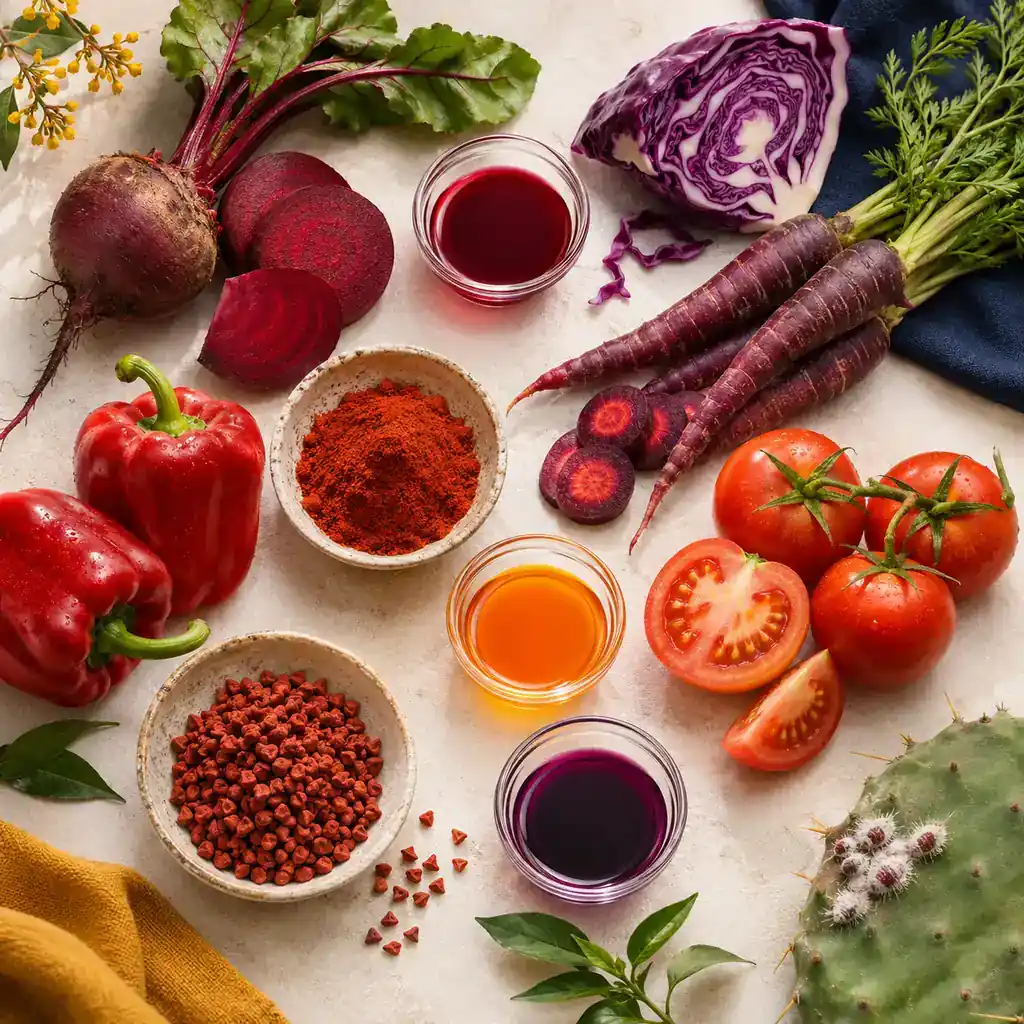
Natural Red Food Coloring: Which Are Halal?
Quick Answer Most natural red food colorings come from plants, such as beet, red cabbage, paprika and tomato, and are generally considered halal by source.
Quick Answer: Most natural red food colorings come from plants, such as beet, red cabbage, paprika and tomato, and are generally considered halal by source. Carmine is the exception: it comes from insects and needs a closer halal check.
When families tell me they want to “go natural,” I am glad, but I always add one word of caution. Natural is not a halal label. A natural red can come from a vegetable, from a grape left over after winemaking, or from an insect. In this guide I will show you every common natural red in one table, explain each one in plain words, and tell you exactly what to check. If your question is about the synthetic red instead, read our main guide: is Red 40 halal.
Natural red food coloring is any red color taken from a natural source, such as a vegetable, fruit, spice, mineral or insect, rather than made in a lab. The FDA groups these colors as “exempt from certification” and says they “generally include dyes and pigments derived from natural sources such as vegetables, minerals, or animals” (FDA).
Notice the last word: animals. In practice, that means insects. So “natural” tells you a color was not made from petroleum. It does not tell you the color came from a plant.
“Natural color” is a marketing phrase, not a halal term, and US label rules do not define it for added colors. In fact, US rules let makers list most natural colors under general words such as “color added” or even “artificial color,” while synthetic dyes like Red 40 must be named one by one (21 CFR 101.22). We explain how this works in our guide to certified colors.
Front-of-pack claims have changed too. Since February 5, 2026, the FDA has said it will not object to “no artificial colors” claims on foods with no certified colors, even if they use colors from natural sources (Wiley). So a product colored with carmine can carry that claim.
The takeaway is simple: neither “natural” nor “artificial” answers the halal question. The name of the color, and what it is mixed with, does.
Five of the seven common natural reds come from plants and are generally considered halal by source. Two come from insects. The “MUIS” notes refer to Singapore’s halal authority listing, last updated in 2016, which marks some additives as syubhah (doubtful) “either by way of its source or manufacturing process.” MUIS calls its list “a general guideline”. Not being marked doubtful is not the same as halal certification; it only means the list does not flag the ingredient (MUIS).
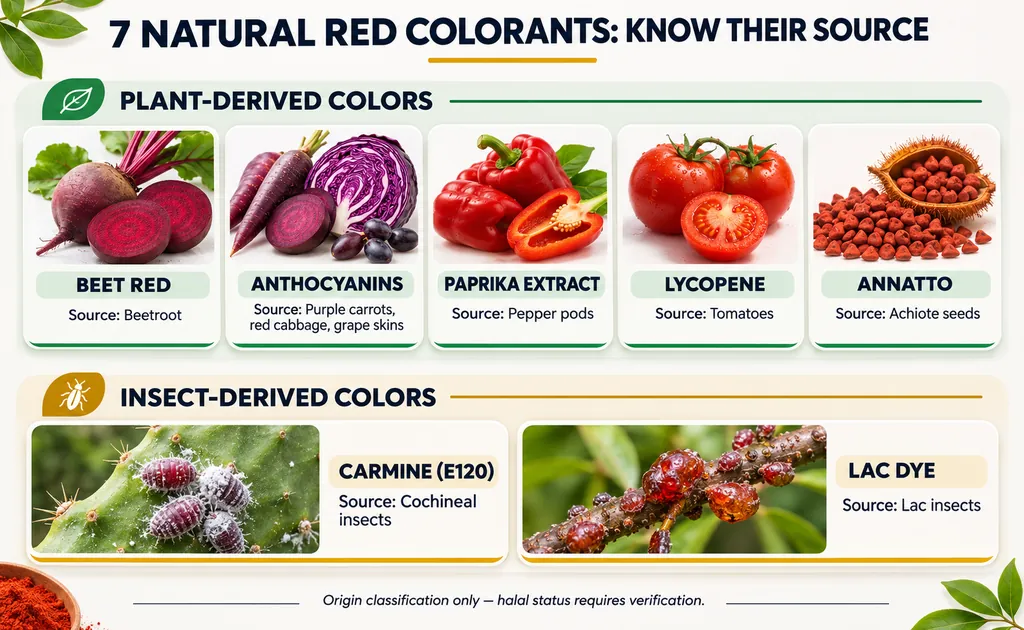
| Colorant | Source | Label names | Typical foods | Halal view | What to check |
|---|---|---|---|---|---|
| Beet red | Beetroot | Beet juice, beet powder, dehydrated beets, betanin, E162 | Drinks, dairy and fruit products, frostings | Generally considered halal by source. MUIS: no doubtful mark | Carrier in liquid colors |
| Anthocyanins | Purple carrot, red cabbage, grape skins | Vegetable juice, fruit juice, grape skin extract, E163 | Drinks, jams, sour candies | Generally considered halal by plant source. MUIS: marked doubtful | Extraction solvent; grape skin extract is made from grape juice or wine pressings and involves fermentation |
| Paprika extract | Pepper pods (Capsicum annuum) | Paprika, paprika oleoresin, capsanthin, E160c | Sauces, snacks, seasonings | Generally considered halal by plant source. MUIS: marked doubtful | Solvent may include alcohol |
| Lycopene | Tomatoes | Tomato lycopene extract, lycopene, E160d | Foods in general | Generally considered halal by plant source. MUIS: marked doubtful | Carrier and processing |
| Annatto | Achiote seeds (Bixa orellana) | Annatto, bixin, norbixin, E160b | Cheese, snacks (yellow to orange) | Generally considered halal by plant source. MUIS: marked doubtful | Solvent may include ethanol |
| Carmine | Cochineal insects | Carmine, cochineal extract, carminic acid, E120 | Yogurt, candy, drinks | Scholars differ. MUI (Indonesia) and Malaysia’s fatwa committee allow it; many Hanafi muftis say avoid. MUIS: no doubtful mark | Which scholarly view you follow |
| Lac dye | Lac insect (Kerria lacca) | Lac dye, laccaic acid | Used in some Asian markets | No named halal ruling found; insect-derived | Avoid unless a scholar you trust allows it |
Sources by row: beet (21 CFR 73.40, Cornell); anthocyanins (21 CFR 73.170, 21 CFR 73.260); paprika (21 CFR 73.345); lycopene (21 CFR 73.585); annatto (21 CFR 73.30); carmine (21 CFR 73.100, LPPOM MUI); lac dye (Park et al., 2022). E-numbers and MUIS status from the MUIS listing. For any other code, check our ingredient list.
The plant reds are the heart of natural coloring. Their source raises no halal question, so the only things to watch are how they are extracted and what they are mixed with.
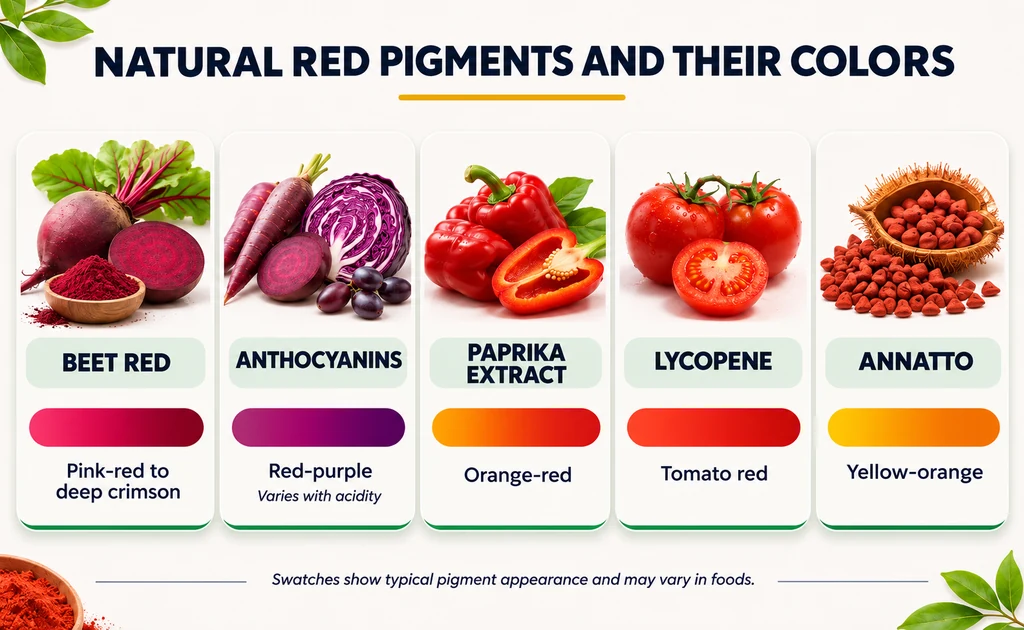
Beet red (E162) is the deep pink-red pigment of beetroot, sold as beet juice, beet powder or dehydrated beets. In the US, dehydrated beets are approved for coloring foods in general (21 CFR 73.40). Beet extract is already used widely in drinks, dairy and fruit products (Cornell).
Its weak point is stability. Beet color “degrades when exposed to heat, light or changes in pH” (Cornell). Some bakers use it for a natural red velvet cake, but expect a softer, browner red after baking. Among the plant reds, beet is the only one MUIS lists with no doubtful mark.
Anthocyanins (E163) are the pigments that make purple carrots, red cabbage, grapes and berries red, purple or blue. Their shade depends on acidity: red or pink in acidic foods, and purple near neutral (Wikipedia). That is why they look best in sour drinks, jams and fruit candies.
On US labels they usually appear as “vegetable juice,” “fruit juice” or “grape skin extract” (21 CFR 73.260). One of these needs a closer look. US rules describe grape skin extract as made from the pressed grape skins left after making grape juice or wine. While it steeps, “most of the extracted sugars are fermented to alcohol,” and nearly all of that alcohol is then removed by evaporation (21 CFR 73.170). In the US it is allowed only in drinks and drink bases. Because the source can be juice or wine pressings, check the specific product or its halal certification. Muslims who want to avoid any possible link to wine production may prefer purple carrot or red cabbage colors.
Paprika extract (E160c) is a red to orange color made from the pods of Capsicum annuum peppers (MUIS). It suits savory foods like sauces, seasonings and snacks, where a mild pepper note is welcome.
Lycopene (E160d) is the red pigment in tomatoes. In the US, tomato lycopene extract is made from tomato pulp using a solvent called ethyl acetate, which is then evaporated off, and it may color foods in general (21 CFR 73.585). It gives a warm tomato red.
Annatto (E160b) is made from the seeds of the achiote tree, Bixa orellana (21 CFR 73.30). It gives a yellow to peach color rather than a true red, and is best known in cheese and snacks.
All three are generally considered halal by plant source, but MUIS marks all three as doubtful. MUIS does not say why for each one. Since the plant source itself raises no question, one possible reason is the extraction and processing step, which I explain below.
Three things deserve your attention: the two insect-based reds, and the solvents and carriers used with plant reds.
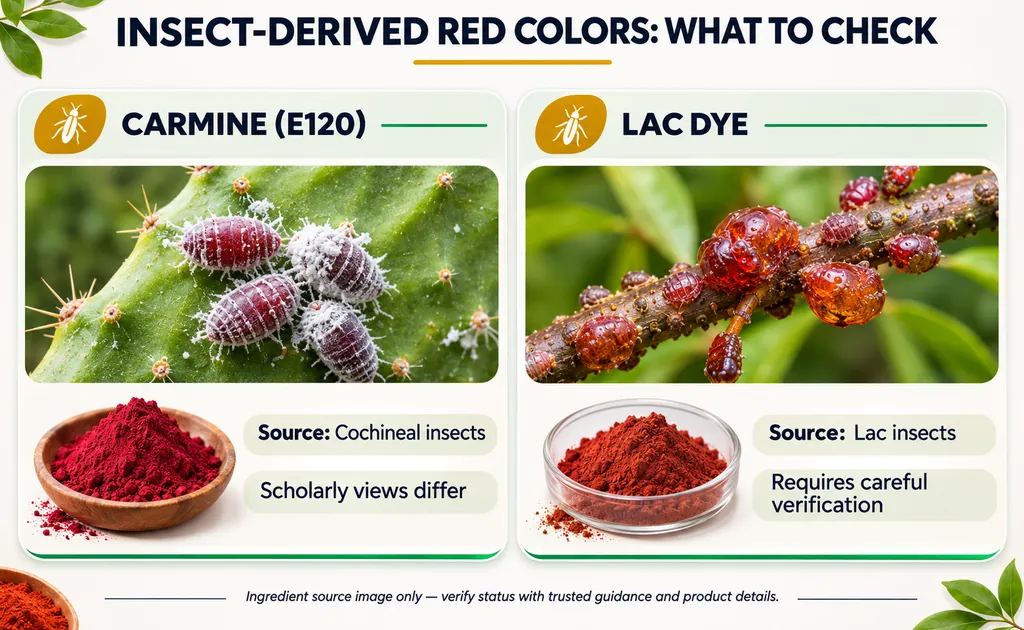
Carmine (E120) is the most common insect-based red. It is made from dried female cochineal insects, and US law requires it to be named on food labels as “carmine” or “cochineal extract” (21 CFR 73.100).
Scholars differ on it:
I do not give my own ruling here. Follow the scholar or certifier you trust. Our full guide on carmine explains each view and its reasoning.
Lac dye is a red made from the lac insect, Kerria lacca, as a by-product of shellac production. Its coloring part is called laccaic acid. It is listed as a food additive in China, Japan and Korea (Park et al., 2022). It does not appear on the FDA’s list of approved exempt food colors (21 CFR Part 73), so you are most likely to meet it in Asian imports. I could not find a named halal ruling on lac dye. Because it comes from an insect, treat it with the same care as carmine.
A plant red can still raise a question because of how it is made. US rules list the solvents allowed for each color, and some include alcohol:
Liquid color blends add one more question: what the color is dissolved in. Glycerin can come from plants or animal fat, and some blends use alcohol. Scholars and certifiers differ on alcohol used only in processing, especially when almost none remains, so follow your certifier. Some natural colors are also coated with gelatin to keep them stable, so the gelatin source matters too (LPPOM MUI). This is the same source-based reasoning we apply to every color: judge the source and everything mixed in. When in doubt, choose a powder or a product with halal certification.
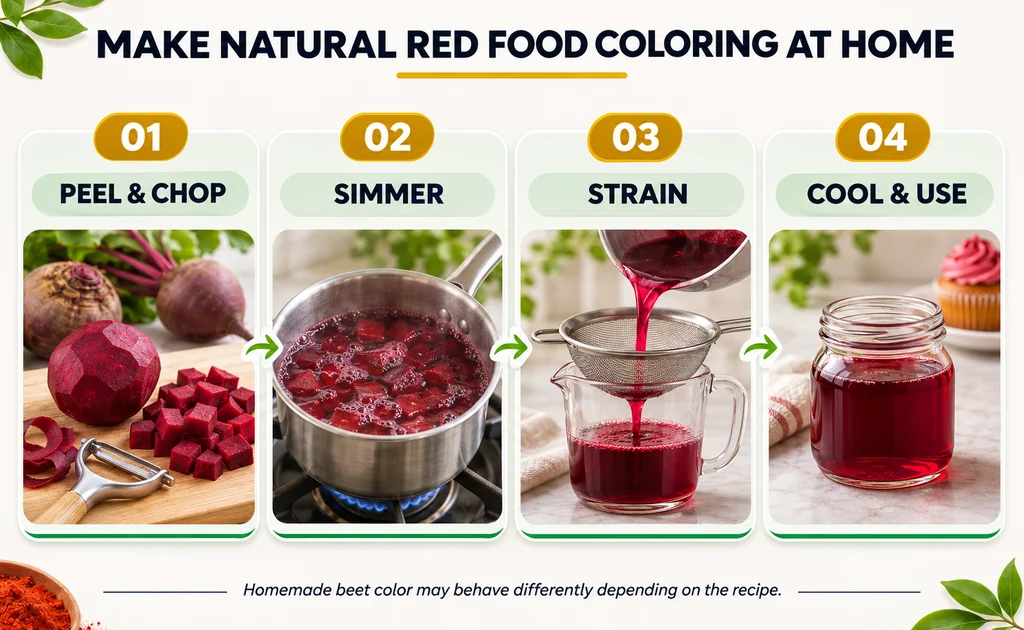
The surest halal red is one you make yourself from a vegetable or fruit, because nothing goes in except the plant and water. Here are two simple ways.
Beet red (pink to deep red):
For frosting, beet powder works better than juice, because it adds color without thinning the frosting.
Raspberry or strawberry (soft pink to red):
Storage: There is no official shelf life for homemade food coloring. As a general rule for cooked food, the USDA advises refrigerating cooked food within 2 hours, and keeping it for 3 to 4 days in the fridge or 3 to 4 months in the freezer (USDA FSIS). Make small batches, and freeze extra in an ice cube tray so you can thaw a little at a time.
Remember that beet color fades with heat, so homemade beet red is best in foods you do not bake, like frosting, yogurt and smoothies.
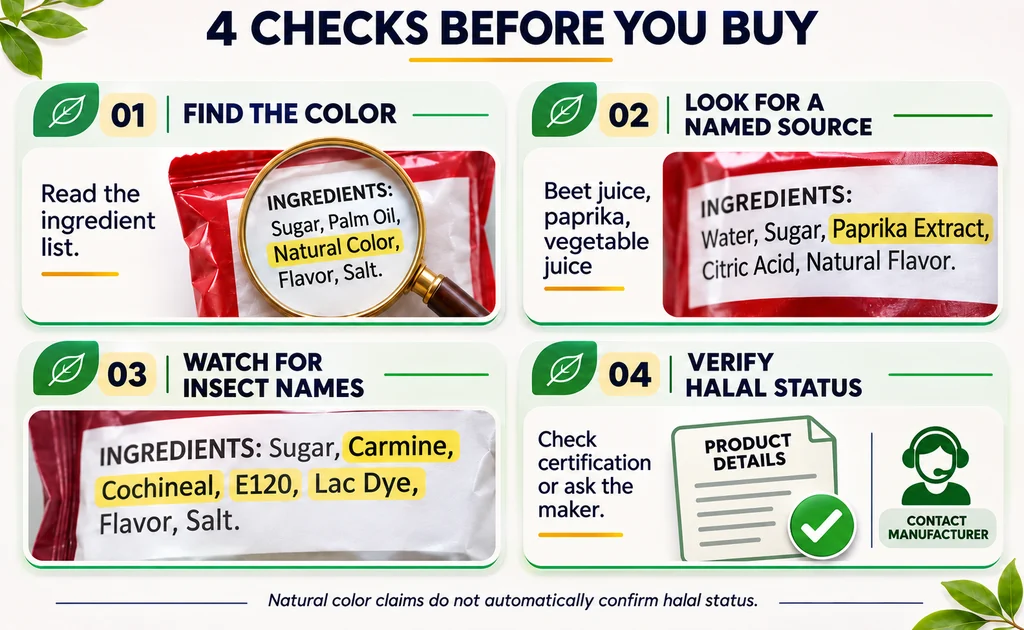
Four steps will tell you what you need to know:
Synthetic colors work differently, because US law requires each one to be named. Our guide to certified colors explains both systems side by side.
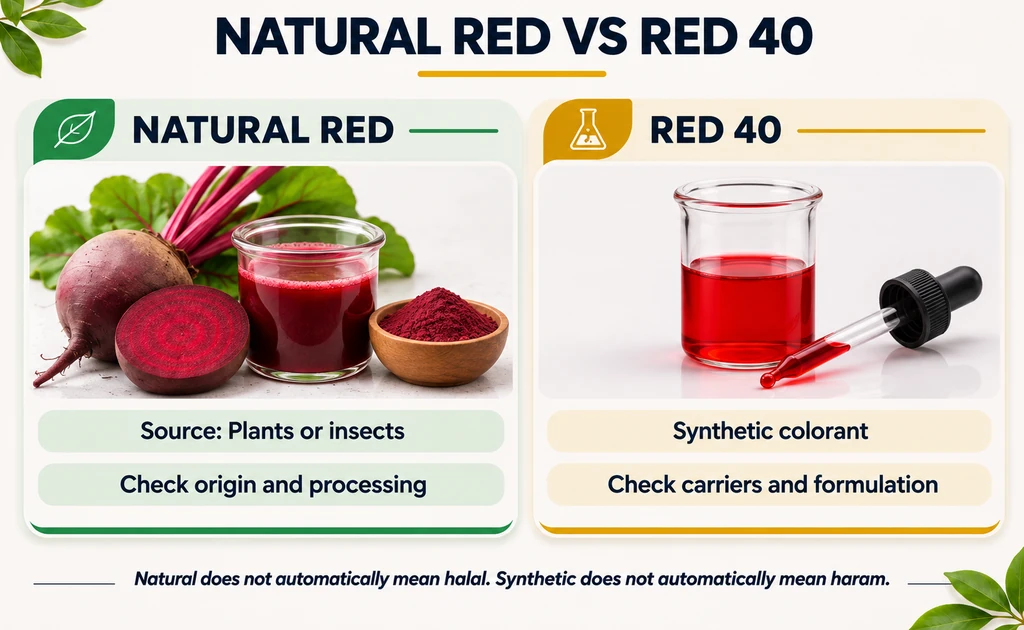
Neither is automatically better. Both can be fine, and both can need a check.
| Natural reds | Red 40 | |
|---|---|---|
| Source | Plants, or insects in the case of carmine and lac dye | Lab-made from petroleum-based raw materials |
| Main halal question | Is it insect-based? What solvent or carrier was used? | What carrier is it mixed with? |
| Label clarity in the US | Often grouped under “color added” (carmine must be named) | Must always be named |
Red 40 has no animal or insect source, and the scholars and halal bodies we reviewed generally accept it; see our main guide, is Red 40 halal. It also comes in a Red 40 Lake form for coatings. Plant reds avoid synthetic dyes altogether but need a look at extraction and carriers. If you have decided to switch, our guide to Red 40 alternatives helps you pick the right one for baking, drinks or candy, and our list of halal candy without Red 40 covers sweets.
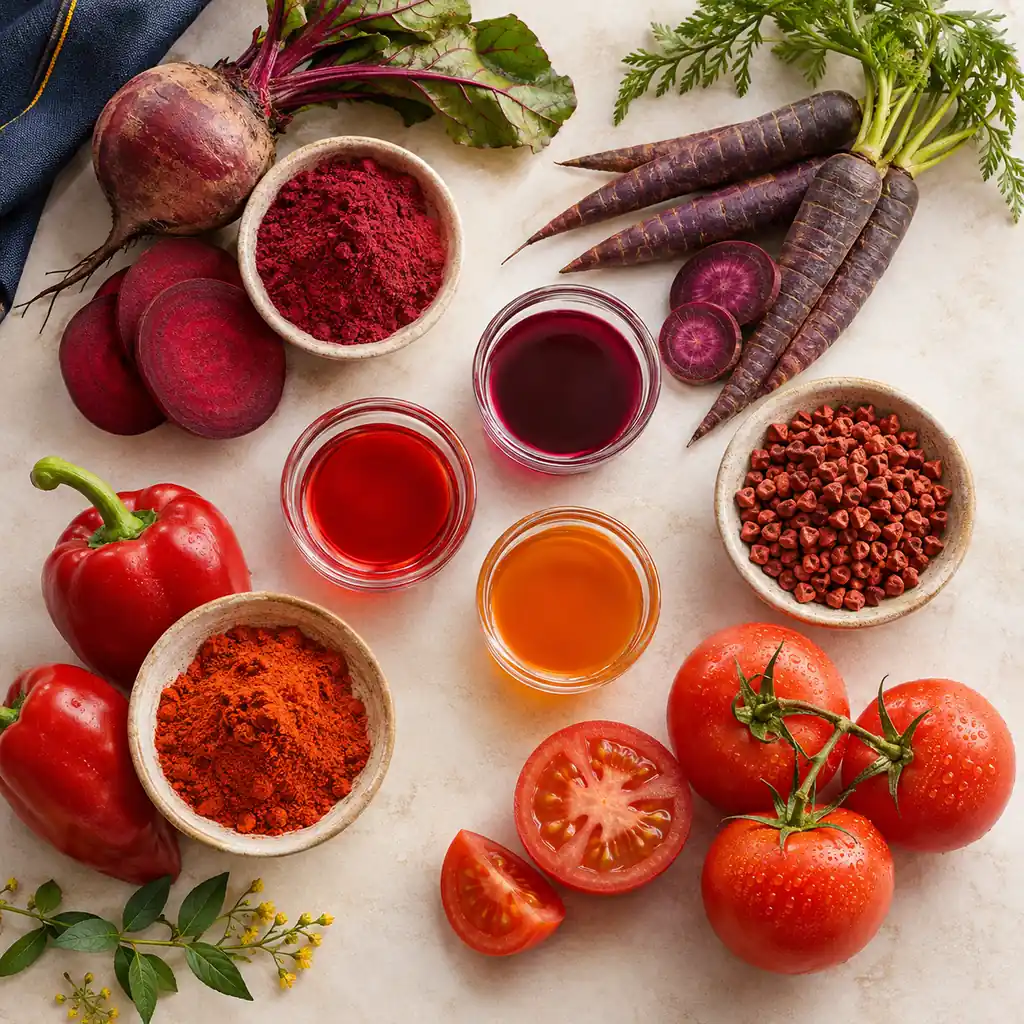
Most natural reds come from plants: beetroot, purple carrots, red cabbage, grape skins, paprika peppers, tomatoes and annatto seeds. Two come from insects: carmine, from cochineal insects, and lac dye, from the lac insect. Natural reds are taken from these sources rather than made from petroleum like Red 40.
Most natural reds are plant-based and generally considered halal by source. Carmine is the main exception, because scholars differ on insect-derived colors. Some plant colors are also extracted with alcohol or other solvents, and MUIS marks several as doubtful. Check the color's name, the carrier, and look for halal certification.
Yes, beet juice comes straight from the vegetable, so its source raises no halal concern. MUIS lists beet red (E162) with no doubtful mark. For bottled liquid beet color, check what it is mixed with, such as glycerin or alcohol. Homemade beet juice or plain beet powder avoids that question entirely.
Yes. Carmine, also called cochineal extract or E120, is a natural color made from insects, so under the FDA's February 2026 policy, products using it can still claim "no artificial colors." Scholars differ on its halal status. In the US it must be named on the label, so look for carmine or cochineal before buying.
Plant-based reds such as beet, anthocyanins, paprika, lycopene and annatto contain no animal material. Carmine and lac dye do not fit a vegan diet, because both come from insects. Some colors may also be coated with gelatin for stability, so check the full ingredient list or ask the maker.
No. "Natural color" only means the color was not made synthetically. It can include carmine from insects, or plant colors extracted with alcohol. Halal status depends on the exact source, the processing and the carrier. Only a trusted halal certification covers the whole product.
Most natural red food colorings come from plants and are generally considered halal by source. Carmine and lac dye come from insects and need a careful check, and even plant reds deserve a look at how they were extracted and what they are mixed with. Read the color’s name, watch for E120, and when in doubt, choose a powder, make your own, or trust a halal logo.
And Allah knows best.
Quick Answer Most natural red food colorings come from plants, such as beet, red cabbage, paprika and tomato, and are generally considered halal by source.
Quick Answer Quick Answer: Plant-based colors such as beet, paprika, purple carrot and tomato lycopene are common replacements for Red 40. They are generally halal
Plain mustard is made from plant seeds, vinegar and salt, so it is halal. The real question is what else goes in the jar: many Dijon and specialty mustards add white wine or spirits. Here is how to tell which jars are safe.
