
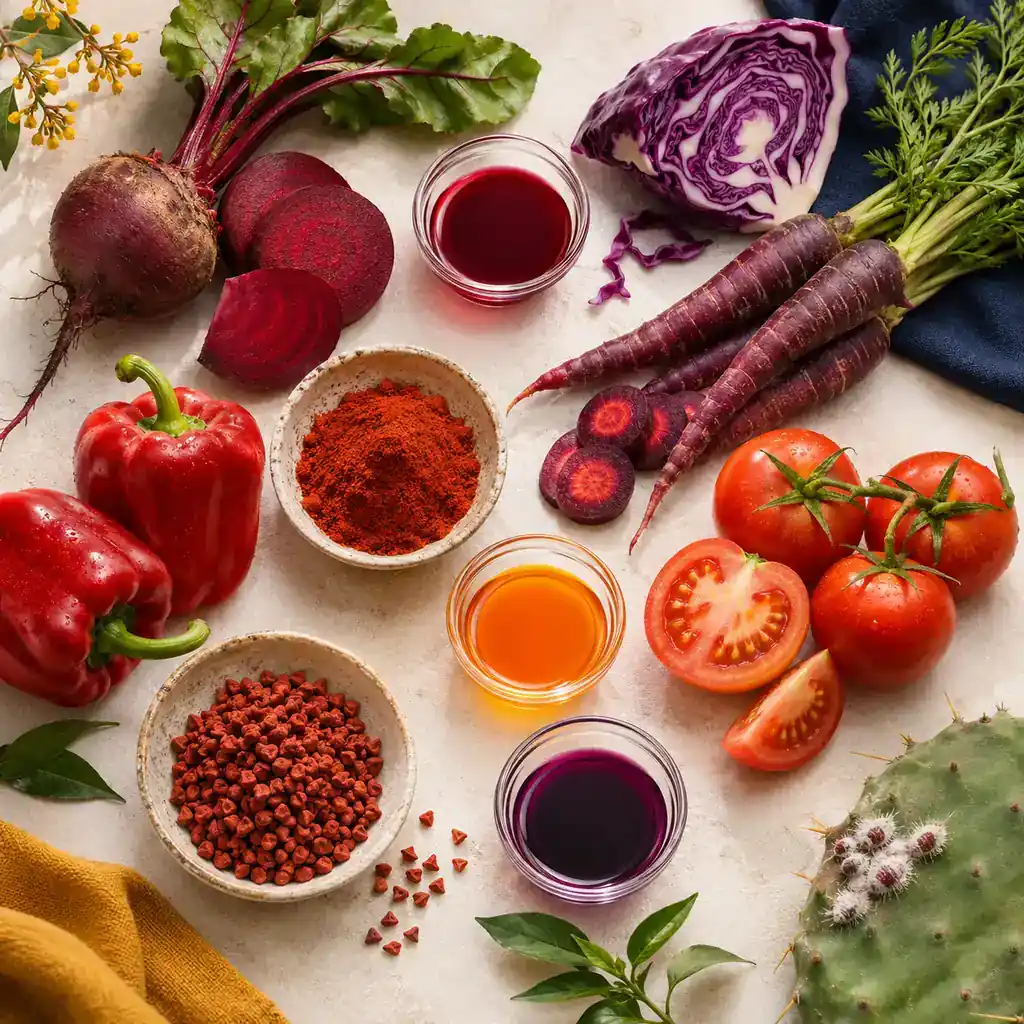
Natural Red Food Coloring: Which Are Halal?
Quick Answer Most natural red food colorings come from plants, such as beet, red cabbage, paprika and tomato, and are generally considered halal by source.
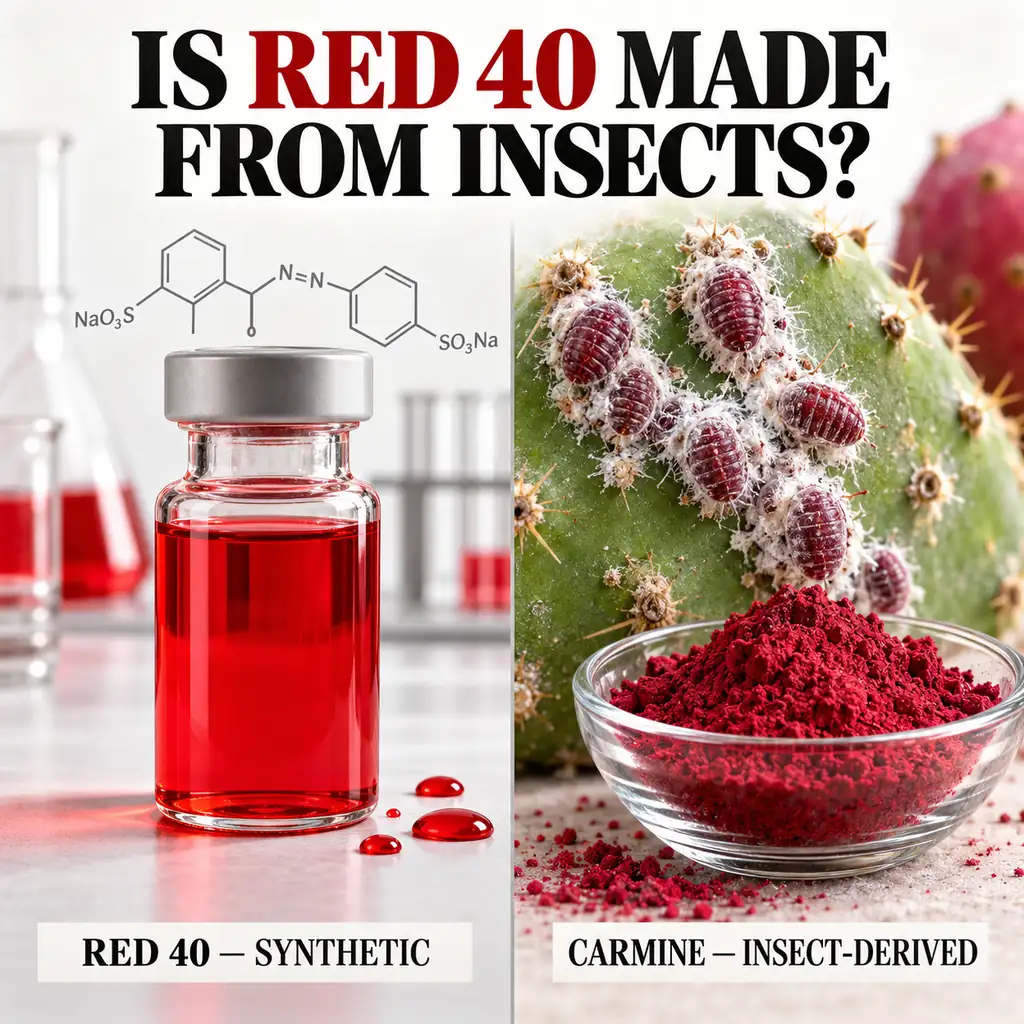
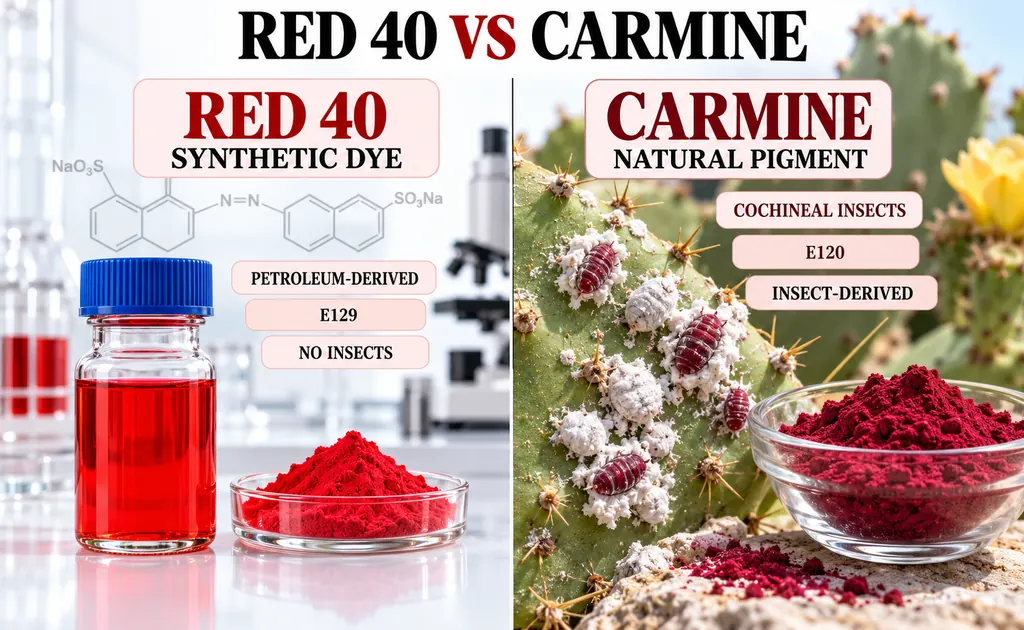
No, Red 40 is not made from insects. It is a synthetic food dye produced from petroleum-based chemicals. The red coloring that comes from insects is called Carmine (E120), which is extracted from cochineal insects. Although both are used to color foods and drinks, they come from completely different sources.
A product of Indonesia that is halal-certified.
A Malaysian brand with JAKIM certification.
I get this question often, usually from a worried parent standing in a grocery aisle.
The confusion is understandable, because both dyes show up as “red” on food labels. In this article, I will explain where Red 40 comes from, what carmine is, how to tell them apart on a label, and what scholars say about carmine. If you want the full ruling on Red 40 itself, read our main guide: Is Red 40 halal?
No. Red 40 contains no insect, animal or plant material. It is made in a factory from chemical raw materials.
The US Food and Drug Administration (FDA) lists Red 40 as a “certified” color. The FDA describes certified colors as synthetic colorings, and every batch must be tested and approved before it can be sold. In April 2025, the US health department and the FDA named Red 40 among the petroleum-based synthetic dyes it wants food companies to phase out. The legal standard for Red 40 is set in US federal rules at 21 CFR 74.340.
So when you see Red 40 on a label, there is no bug inside it. That one fact settles the insect question.
Red 40 is built step by step in a lab. Chemists join two petroleum-derived chemicals to form a bright red compound. This kind of dye is called an azo dye, a family of man-made colors.
You may see Red 40 under other names:
All of these share the same coloring compound; the lake is only a different physical form. None of them come from insects.
The rumor did not come out of nowhere. There is a red dye made from insects, and it has made the news many times. Here is why people mix them up:
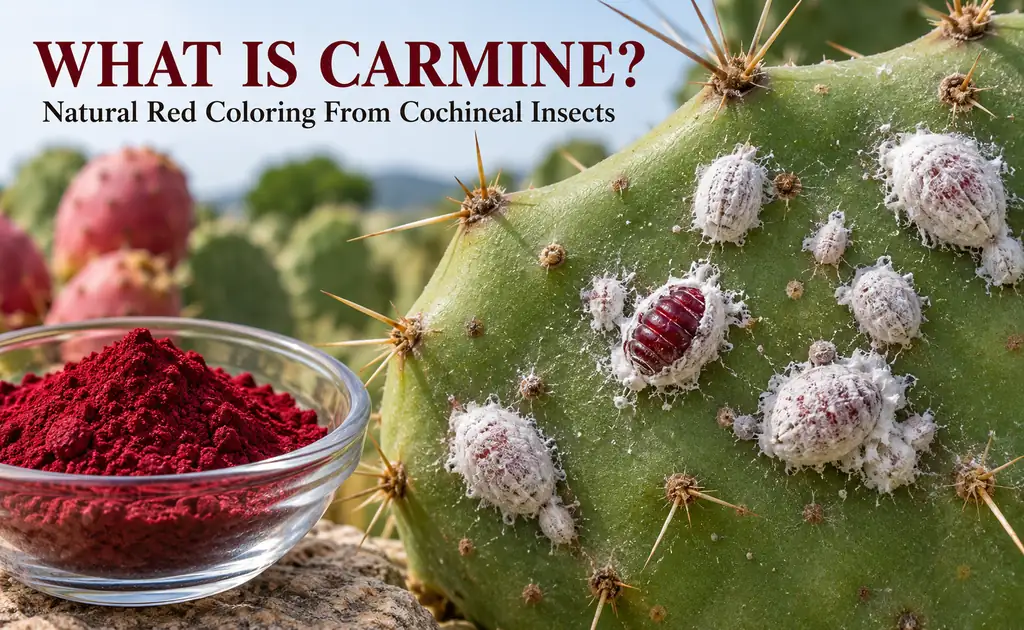
Carmine is a red dye made from cochineal insects. In Europe and many other countries, it carries the food code E120.
The cochineal is a tiny, soft-bodied insect, only a few millimeters long. It lives on prickly pear cactus and feeds on the plant’s sap. The female insect holds a deep red substance called carminic acid in her body. That substance is what gives carmine its color.
Because it comes from a living creature and not a lab, companies often call carmine a “natural” color. That word is accurate, but it can mislead. Natural does not always mean plant-based. Carmine belongs to the same family as other natural red food coloring, such as beet juice and paprika, and it is the best-known red food color derived from an insect. Lac dye is another insect-derived red, used in some Asian markets.
You can find carmine in yogurt, candy, gelatin desserts, juices and other drinks, and some processed meats. It is also widely used in lipstick, blush and other cosmetics.
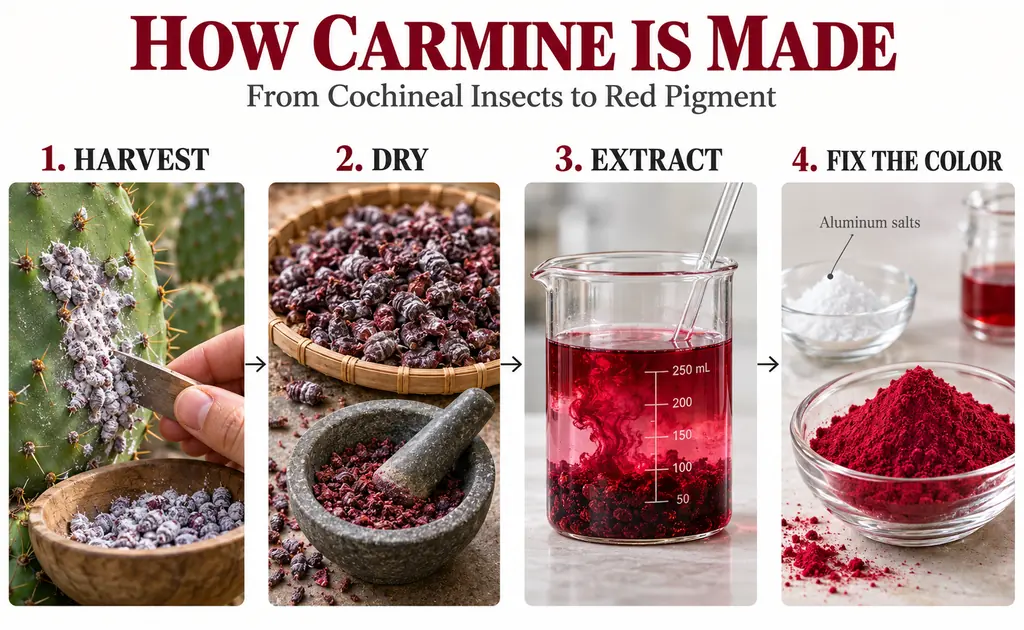
Carmine starts on a cactus farm and ends as a red powder or liquid. The basic steps are:
The US rules define both products this way, and both are made from the same insect, Dactylopius coccus (21 CFR 73.100). It takes about 70,000 insects to make one pound of dye (source).
One more point matters for halal buyers. Carmine itself may be mixed or coated with gelatin to keep it stable, so the source of that gelatin also needs checking (LPPOM MUI).
Carmine hides behind several names. If you see any of these, the product contains a cochineal-based color:
| Name on label | Where you will see it |
|---|---|
| Carmine | US and worldwide |
| Cochineal extract | US and worldwide |
| Cochineal | Europe, UK and others |
| Carminic acid | Europe, UK and others |
| E120 | Europe, UK, Middle East, Asia |
| INS 120 | Countries that use the Codex code system |
| Natural Red 4 or CI 75470 | Mostly cosmetics and technical sheets |
| Crimson lake or carmine lake | Older labels and art or cosmetic products |
The E120, INS 120, Natural Red 4 and CI 75470 codes are confirmed by the FAO/WHO expert committee on food additives. For any other ingredient you are unsure about, check our ingredient list.
The table below shows how the two red dyes differ at a glance.
Scholars and halal bodies differ on carmine. Some major fatwa councils allow it, while many muftis, especially in the Hanafi school, say to avoid it. My job here is to lay out who says what, honestly and with sources, so you can follow the scholar you trust.
The difference goes back to one older question: may a Muslim eat insects at all? The Qur’an tells us the Prophet ﷺ makes lawful what is good and forbids what is khabith, or foul (Surah Al-A’raf, 7:157). Scholars have long differed on whether insects fall under “foul.” Dar al-Ifta al-Misriyyah summarizes the schools this way:
| School | View on eating insects |
|---|---|
| Hanafi | Not permitted, except the locust |
| Maliki | Permitted if the insect is killed for that purpose (a form of slaughter) |
| Shafi'i and Hanbali | Some insects not permitted, some permitted |
Two more questions then shape the ruling on carmine:
A third point, purity, is separate from eating. Many scholars hold that a dead insect with no flowing blood does not make things impure. That is why some allow carmine in lipstick or clothing dye even if they would not eat it.
So how should you act? If your local scholar or halal certifier allows carmine, you may follow them. If you are unsure, the Prophet ﷺ gave us a simple rule: “Leave what makes you doubt for what does not make you doubt” (Tirmidhi, Nasa’i). Many Muslims in America and Europe simply choose products without carmine for that reason.
Nothing changes for Red 40. This whole debate is about insects, and Red 40 contains none. The question for Red 40 is different, and we answer it fully in our guide: is Red 40 halal.
You can spot carmine in under a minute with two checks: read the ingredient list, and know which vague words to question. The good news is that in the US and Europe, the law is on your side.
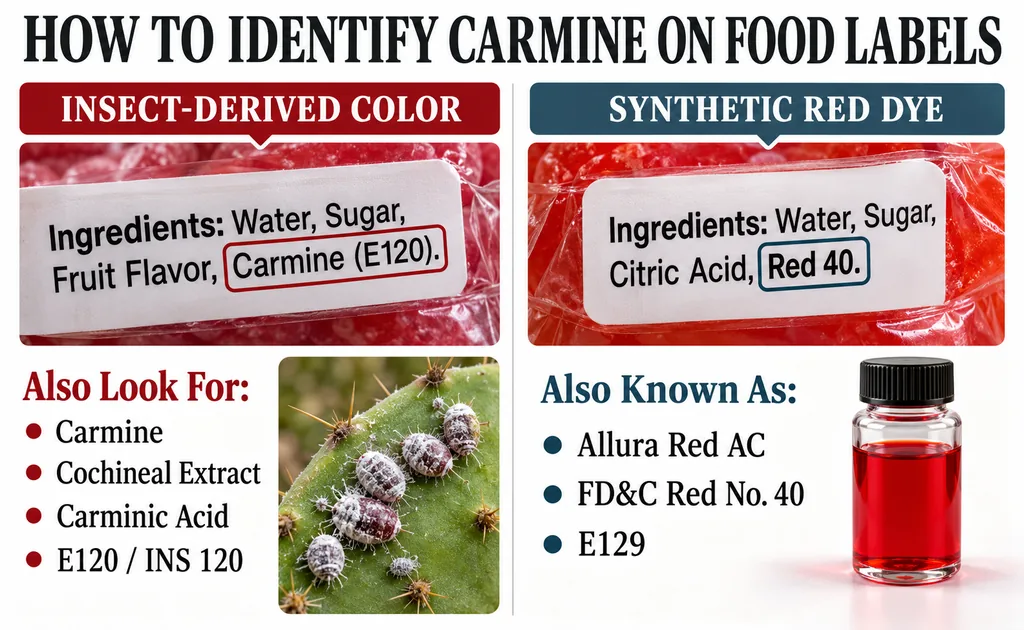
Look for any of these words: carmine, cochineal, cochineal extract, carminic acid or E120.
Cosmetics in the US must also declare carmine, often with a line such as “Contains carmine as a color additive.”
US rules let companies group most natural colors under general words such as “color added” or “artificial color” (FDA). Carmine is the exception, because it must be named.
Still, be careful in three cases:
One more change to know about: since February 2026, the FDA has said it will not object to “no artificial colors” claims on foods that contain no certified colors, even when they use colors from natural sources (Wiley). So a product colored with carmine can now carry that claim. Always read the actual color names.
Synthetic dyes like Red 40 work differently. They are certified colors, and US rules require each one to be named on the label.
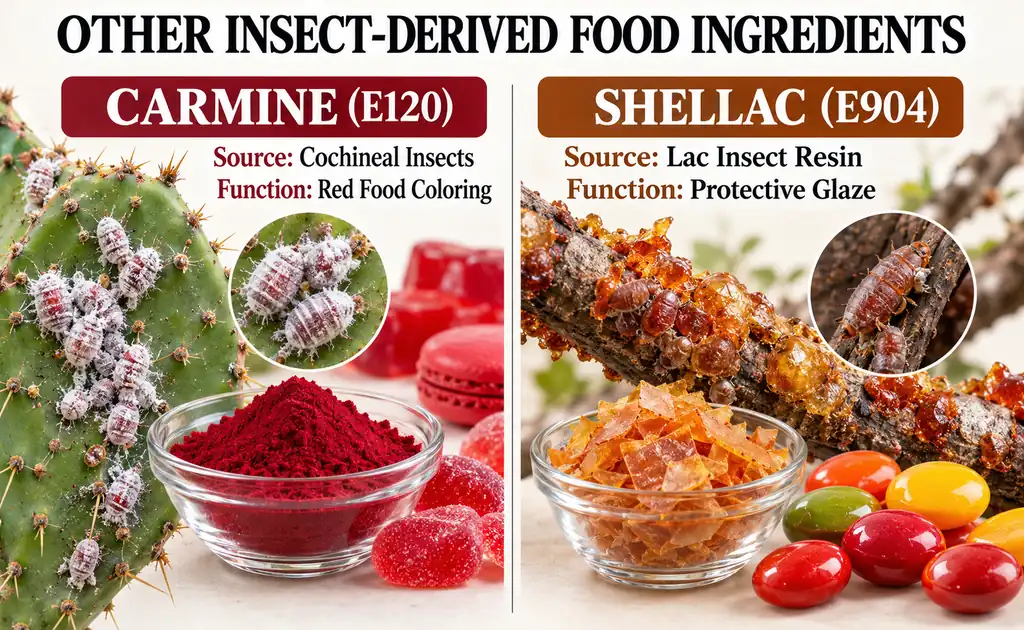
Carmine is not the only food ingredient that comes from insects. The most common one is shellac, also sold as confectioner’s glaze or resinous glaze (E904). It is a resin that the lac insect, Kerria lacca, secretes onto tree branches. It gives the shiny coat on many candies, coated fruits and pills (cRc Kosher). Many scholars treat insect secretions, like honey or silk, differently from the insect’s body, and some count lac among them (SeekersGuidance). If you want a red color with no insect question at all, see our list of natural red food coloring from plants.
Some red dye is, but not all. Carmine, also called cochineal extract or E120, is made from crushed cochineal insects. Red 40, the most common red dye in American snacks and drinks, is made in a lab and contains no insects. The ingredient list tells you which one you have.
Red 40 contains no animal or insect material, so by its ingredients it fits a vegetarian or vegan diet. Some strict vegans still avoid synthetic dyes because they have been tested on animals. That is a personal choice about testing, not about what the dye is made from.
No. They are two completely different dyes that happen to share a color. Carmine (E120) comes from cochineal insects. Red 40 (E129, Allura Red AC) is a synthetic dye made from petroleum-based raw materials. Their sources, label names and halal discussions are all different.
Scholars differ. The Indonesian Ulema Council and Malaysia's National Fatwa Committee allow it, as long as it causes no harm. Many Hanafi muftis and several halal bodies say to avoid it, because eating insects is not allowed in their view. Follow the scholar or certifier you trust.
Read the ingredient list. Look for carmine, cochineal, cochineal extract, carminic acid, E120 or INS 120. In the US, the law has required carmine to be named on food labels since 2011. For counter foods with no label, ask the seller directly.
Red 40 is not made from insects. It is a lab-made dye with no insect, animal or plant material in it. Carmine (E120) is the red dye that comes from insects, and scholars differ on whether Muslims may eat it.
So read the label, look for carmine, cochineal or E120, and follow the scholar you trust. For the full ruling on Red 40, read is Red 40 halal. If you would rather skip synthetic dyes altogether, see our guide to Red 40 alternatives.
And Allah knows best.
Quick Answer Most natural red food colorings come from plants, such as beet, red cabbage, paprika and tomato, and are generally considered halal by source.
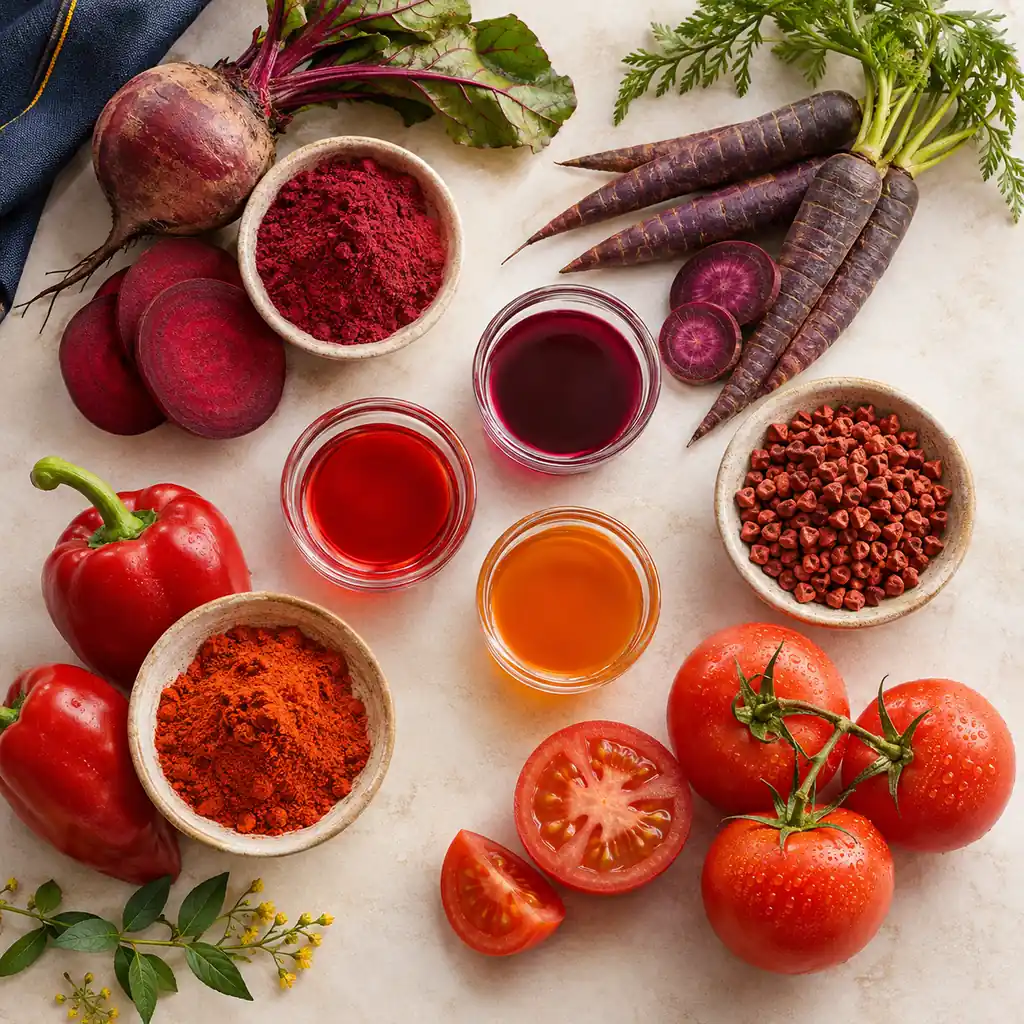
Quick Answer Quick Answer: Plant-based colors such as beet, paprika, purple carrot and tomato lycopene are common replacements for Red 40. They are generally halal
Plain mustard is made from plant seeds, vinegar and salt, so it is halal. The real question is what else goes in the jar: many Dijon and specialty mustards add white wine or spirits. Here is how to tell which jars are safe.
