
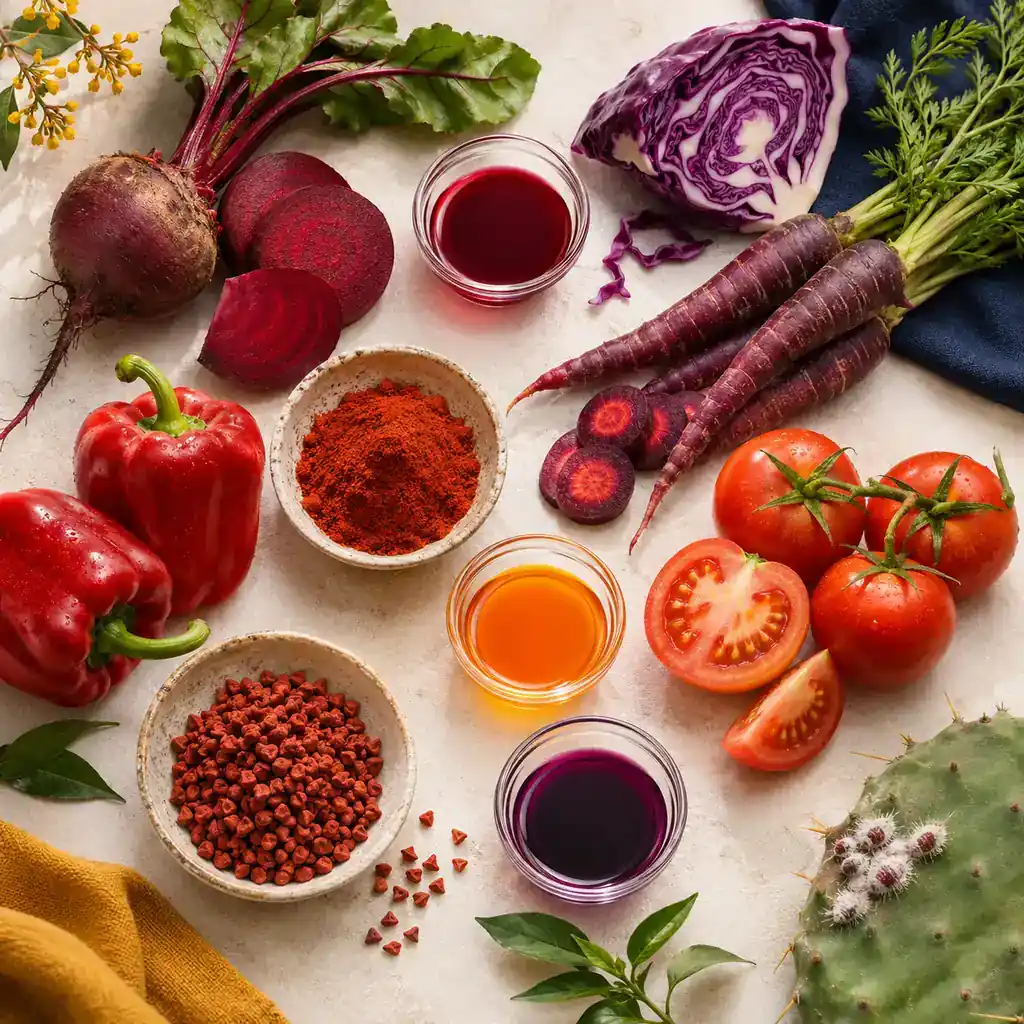
Natural Red Food Coloring: Which Are Halal?
Quick Answer Most natural red food colorings come from plants, such as beet, red cabbage, paprika and tomato, and are generally considered halal by source.
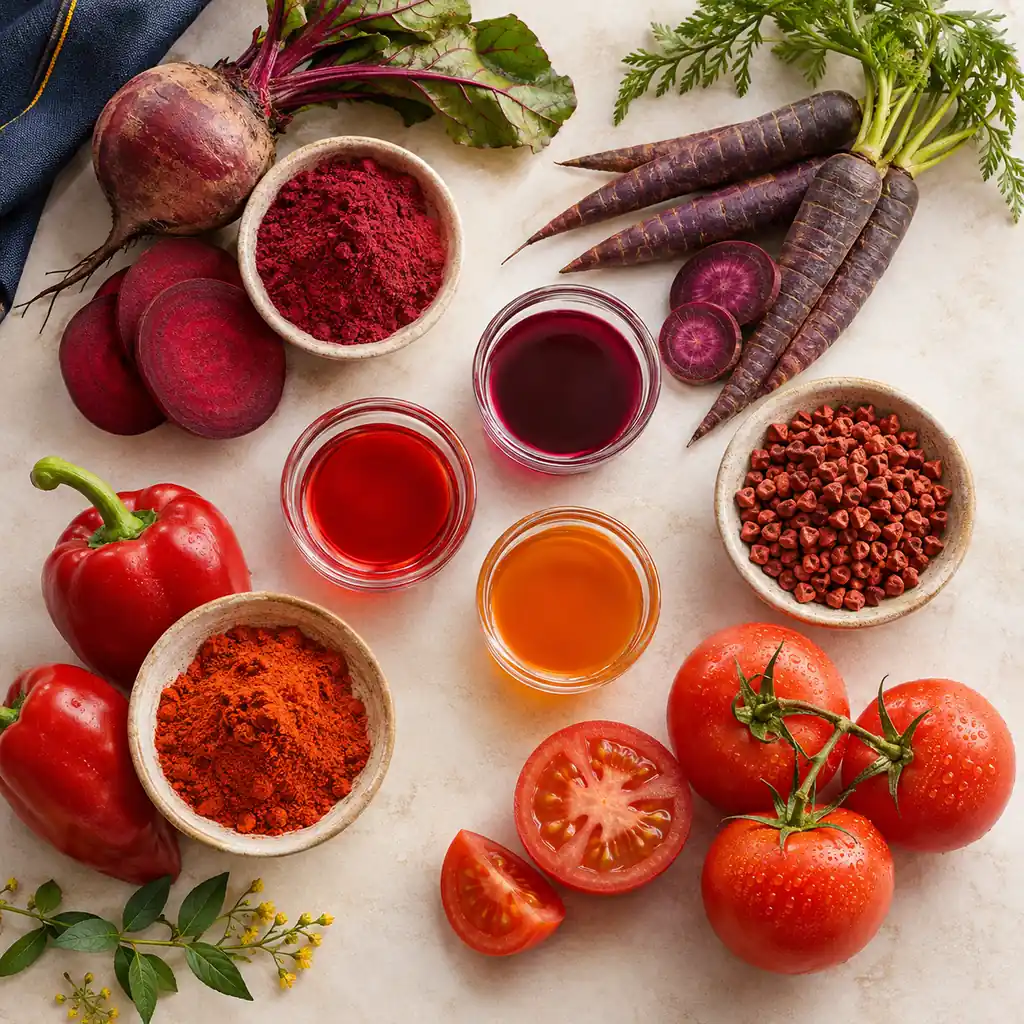
Quick Answer: Plant-based colors such as beet, paprika, purple carrot and tomato lycopene are common replacements for Red 40. They are generally halal by source, but check the carrier and ingredients of the finished product.
Parents often ask me, “If I stop buying Red 40, what should I look for instead?” It is a good question, and the answer is simpler than many expect.
In this guide, I will give you the main plant-based options, the one red you should not swap in without checking, and the best pick for baking, drinks, candy and store-bought foods. If you first want to know whether Red 40 itself is a problem, read our main guide: is Red 40 halal?
You do not have to give up Red 40 for halal reasons. It is a lab-made dye with no animal, insect, or alcohol source, and the scholars and halal bodies we reviewed in our main guide generally accept it.
So, from a halal-source perspective, switching is generally not required according to the authorities we reviewed. Families may still choose alternatives for personal, dietary, or other reasons, or simply for extra caution. Some families simply prefer colors from plants they recognize. Others want to avoid any doubt about carriers in liquid colors. Both are reasonable choices, and this guide helps you make them well.
Five plant colors cover almost every need Red 40 used to fill. Each has its strengths and limits, so the right one depends on what you are coloring. Below is a short pick for each. For the full source, label names and halal notes on every natural red, see our guide to natural red food coloring.
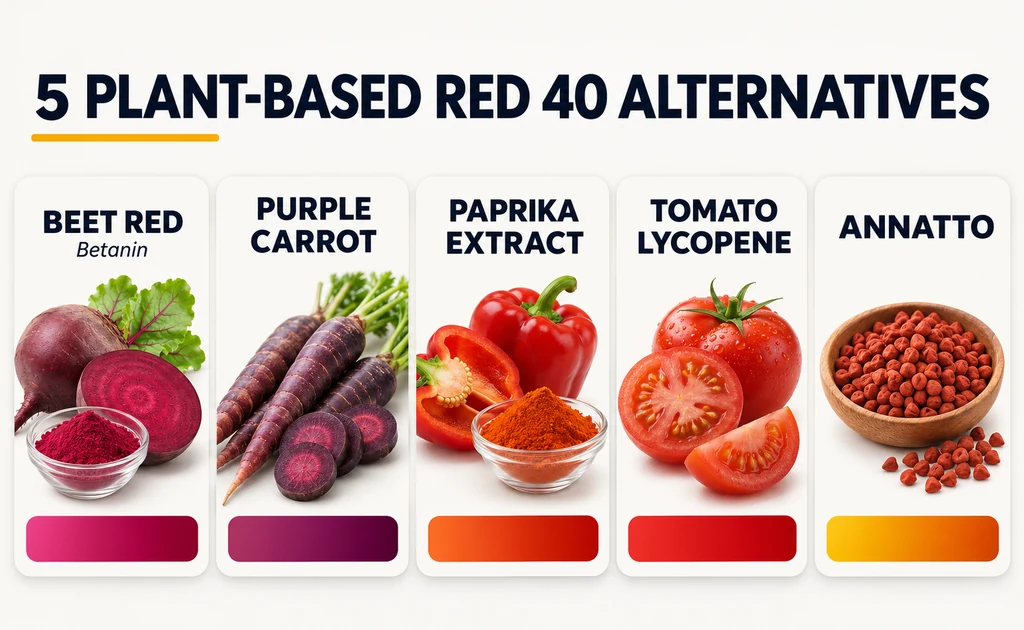
Beet color comes from beetroot, sold as beet juice, beet powder or “beet red” (E162). In the US, dehydrated beets are an approved food color (21 CFR 73.40). It gives a bright pink to red, but its color breaks down with heat and light, so baked goods often lose much of the red (UW–Madison lesson plan). That makes it best for frostings, smoothies, yogurt, and no-bake treats.
Anthocyanins are the natural pigments in purple carrots, red cabbage and grape skins (E163). Their shade depends on acidity: red or pink in acidic foods, and more purple as foods approach neutral (Wikipedia).
They work well in fruit drinks, jams, and sour candies. One of them, grape skin extract, requires a fermentation step during production, so read our guide to natural red food coloring before choosing it. In the US, they usually appear on labels as “vegetable juice” or “fruit juice” color (21 CFR 73.260).
Paprika extract comes from the pods of Capsicum annuum peppers and gives a red to orange color (E160c) (MUIS). Because it is a pepper extract, it suits savory foods like sauces, snacks, seasonings and meat products. It can add a slight pepper taste in mild foods.
Lycopene is the red pigment in tomatoes (E160d). In the US it is made from tomato pulp and approved for coloring foods in general (21 CFR 73.585). It gives a warm tomato red, a good match when you want a true red rather than pink.
Annatto comes from the seeds of the achiote tree, Bixa orellana (21 CFR 73.30). It is a yellow to peach color (E160b), not a true red, so it only fits when you want orange or a warm red-orange. You often see it in cheese, butter and snacks.
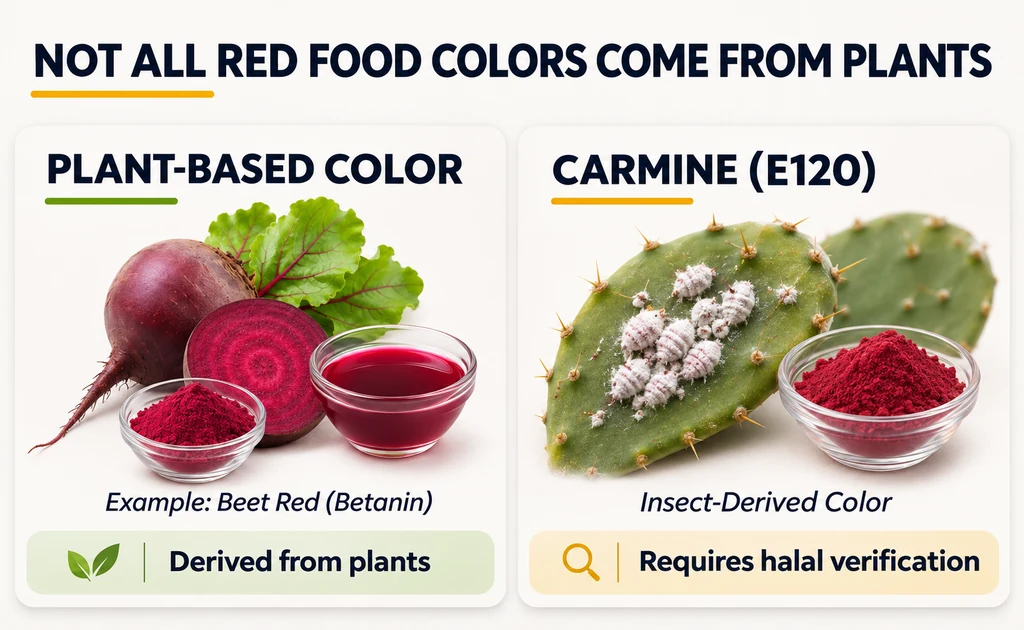
A plant source does not make a color halal on its own. Two things deserve a check before you buy: one red that is not a plant at all, and what the plant colors are extracted with or carried in.
Carmine, also called cochineal extract or E120, is often sold as a “natural red,” but it is made from insects. Scholars differ on whether it is permissible, so it is not a safe swap without checking which view you follow. Read our full guide on carmine before choosing a product that contains it.
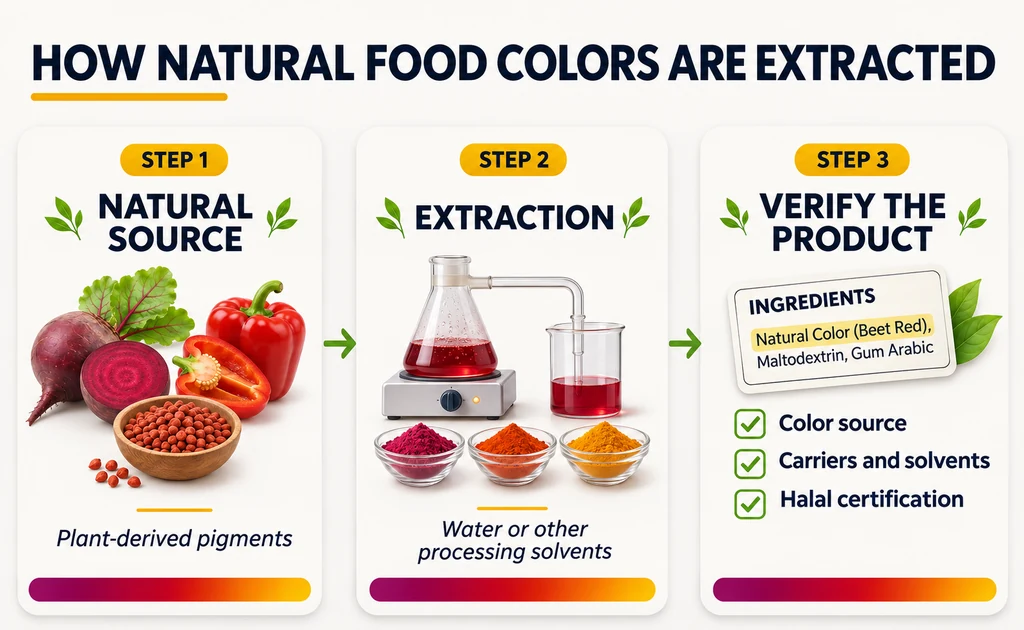
Many plant colors are made by extracting the pigment with a solvent. US rules list the solvents allowed, and some include alcohol:
Singapore’s halal authority, MUIS, also marks annatto, paprika extract, lycopene and anthocyanins as “doubtful,” which it defines as doubtful “either by way of its source or manufacturing process.” It does not say which reason applies to each color. Beet red carries no such mark, though that is not the same as halal certification (MUIS, 2016).
Liquid colors bring a second question: what the color is dissolved in. Glycerin can come from plants or animal fat, and some liquid colors use alcohol. Scholars and certifiers differ on alcohol used only in processing, especially when almost none remains, so follow your certifier. A plain powder that lists only the vegetable is generally the simpler choice, though powders can contain added ingredients too. A product with halal certification is the surest. The halal reasoning here is the same one we apply to Red 40 itself: judge the source and what is mixed in.
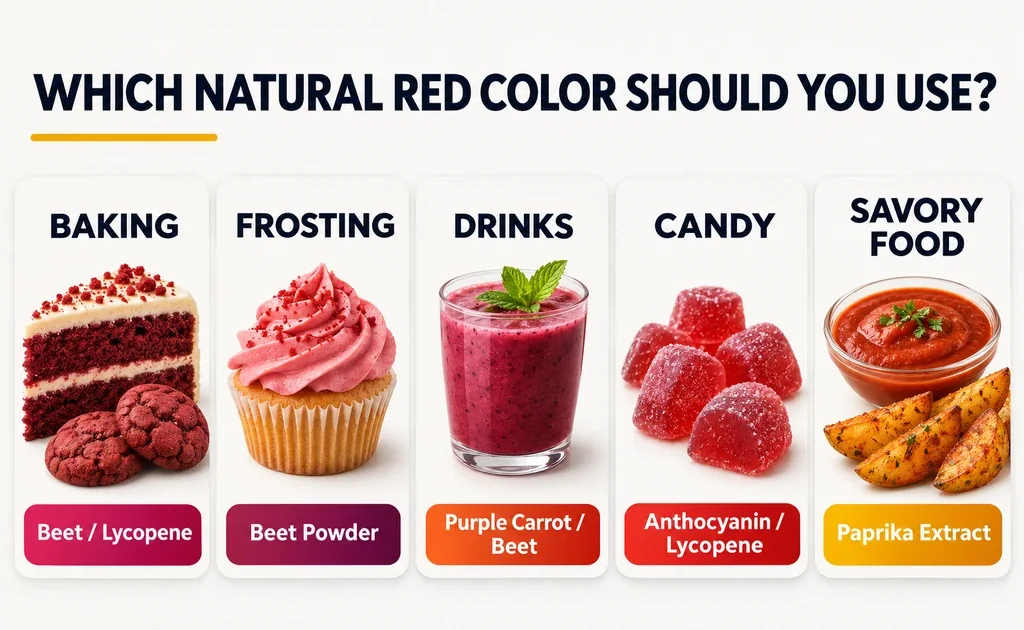
The best swap depends on what you are making. Use this table as a quick guide.
| Situation | Best pick | What to check |
|---|---|---|
| Baking at home (cakes, cookies) | Beet powder, or tomato lycopene for a warmer red | Beet can fade or brown in the oven; expect a softer red |
| Frosting and icing | Beet powder or beet juice | Use powder to keep frosting thick; no heat means the color stays bright |
| Drinks and smoothies | Purple carrot or beet juice | Anthocyanin colors look reddest in sour drinks; check liquid colors for alcohol. Grape skin extract involves a fermentation step, with the alcohol mostly removed |
| Candy and gummies | Anthocyanin or lycopene colors | The color is rarely the issue; check for gelatin |
| Savory foods (sauces, snacks) | Paprika extract | Mild pepper taste; ask about the extraction solvent if unsure |
| Store-bought products | A named plant color plus a halal logo | Avoid carmine or E120 unless you follow the view that allows it |
For home cooking, a plain powder made from the vegetable itself, like beet powder, is usually the simplest choice. Check that its ingredient list shows only the vegetable, since some powders include added ingredients.
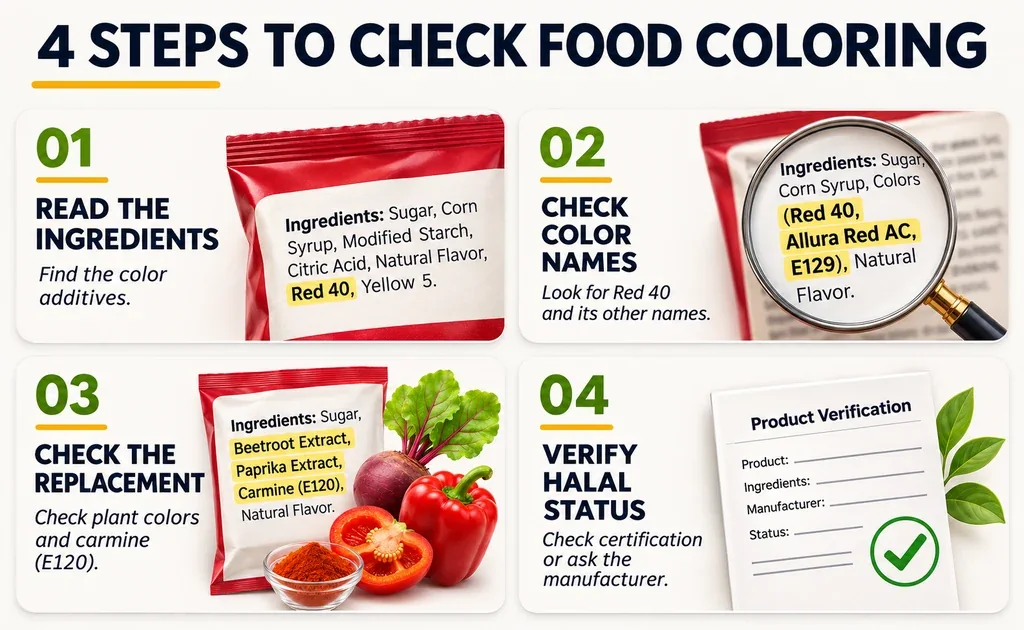
Finding a Red 40-free product takes four quick steps:
If you are shopping for sweets, see our list of halal candy without Red 40. For any ingredient you do not recognize, check our ingredient list.
A “no artificial colors” claim is not a halal claim. It only tells you the maker avoided synthetic dyes like Red 40. Since February 5, 2026, the FDA has said it will not object to this claim on foods with no certified colors, even if they use colors from natural sources (Wiley). So the product can still use carmine, which comes from insects. It can also contain gelatin, alcohol-based flavors or other ingredients a Muslim needs to check. Only a trusted halal logo covers the whole product.
The most common swaps are plant colors: beet red, purple carrot or other anthocyanin colors, paprika extract and tomato lycopene. Beet works well in frosting and no-bake treats, anthocyanins in sour drinks, and paprika in savory foods. For a warm orange-red, annatto is another option.
Beet juice and beet powder come straight from the vegetable, so the source raises no halal concern. MUIS lists beet red (E162) with no warning mark. For a liquid color sold in a bottle, check what it is mixed with, such as alcohol or glycerin, or choose plain beet powder.
No. "Natural" can include carmine, which comes from insects and on which scholars differ. Some plant colors are also extracted with alcohol or other solvents, and MUIS marks several of them as doubtful. Read the color's name and look for halal certification when unsure.
For home baking, beet powder is a simple, plant-only choice, though it can fade or turn browner in the oven. Tomato lycopene gives a warmer red. Choose a plain powder that lists only the vegetable, or a halal-certified product, to avoid questions about alcohol or glycerin carriers.
No, you do not need to. Red 40 is lab-made with no animal, insect or alcohol source, and the scholars and halal bodies we reviewed generally accept it. From a halal-source view, switching is not required, though families may still choose plant colors for personal, dietary or other reasons. Our main guide explains the full ruling.
Plant-based colors like beet, purple carrot, paprika and tomato lycopene are the usual way to replace Red 40. They are generally halal by source, but check the product, not just the color: avoid carmine unless you follow the view that allows it, ask about solvents and carriers, and trust a halal logo over a “no artificial colors” claim.
And Allah knows best.
Quick Answer Most natural red food colorings come from plants, such as beet, red cabbage, paprika and tomato, and are generally considered halal by source.
Quick Answer Quick Answer: Plant-based colors such as beet, paprika, purple carrot and tomato lycopene are common replacements for Red 40. They are generally halal
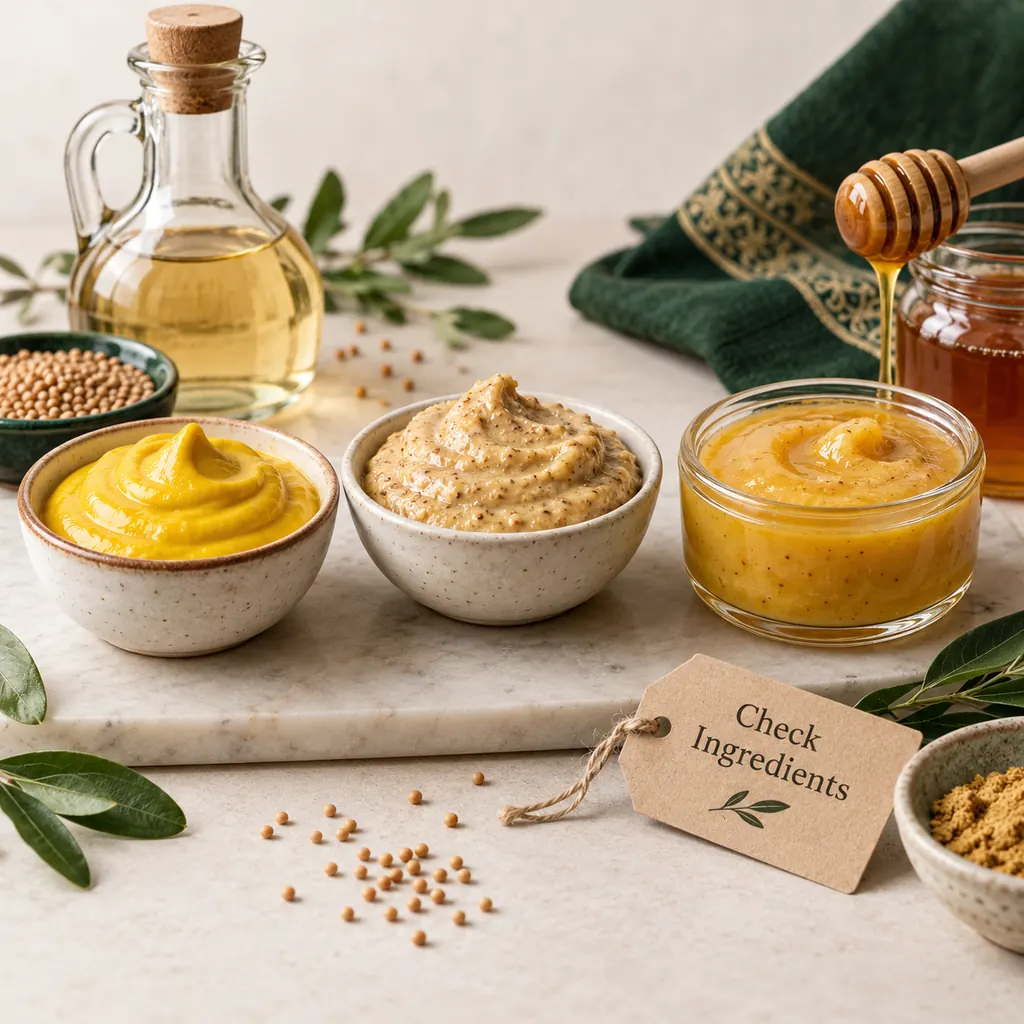
Plain mustard is made from plant seeds, vinegar and salt, so it is halal. The real question is what else goes in the jar: many Dijon and specialty mustards add white wine or spirits. Here is how to tell which jars are safe.
