2. The Core Question: What Makes Soy Sauce Questionable?
To determine whether soy sauce is halal, we must first clarify the meaning of these terms. Halal refers to anything permissible under Islamic law, while haram denotes what is forbidden. The Quran explicitly prohibits certain substances, including pork, blood, carrion, and intoxicants.
The primary concern with soy sauce centers on the presence of alcohol (ethanol), which naturally forms during the traditional fermentation process.
The Quran clearly states:
“O you who have believed, indeed intoxicants, gambling, [sacrificing on] stone alters [to other than Allah], and divining arrows are but defilement from the work of Satan, so avoid it that you may be successful.” (Surah Al-Ma’idah 5:90)
The Prophet Muhammad (ﷺ) reinforced this when he said: “Whatever intoxicates in large quantities, a small quantity of it is also forbidden.” (Sunan Ibn Majah, 3392)
However, the issue is more nuanced than a simple yes or no answer. The permissibility of soy sauce depends on several factors:
- The production method (naturally brewed vs. chemically hydrolyzed)
- The alcohol content and its source (naturally occurring vs. added)
- Whether the alcohol transforms during processing
- Your Islamic school of thought (madhab)
- The presence of halal certification
3. The Alcohol Factor: Understanding Fermentation
The Alcohol Factor: Understanding Fermentation
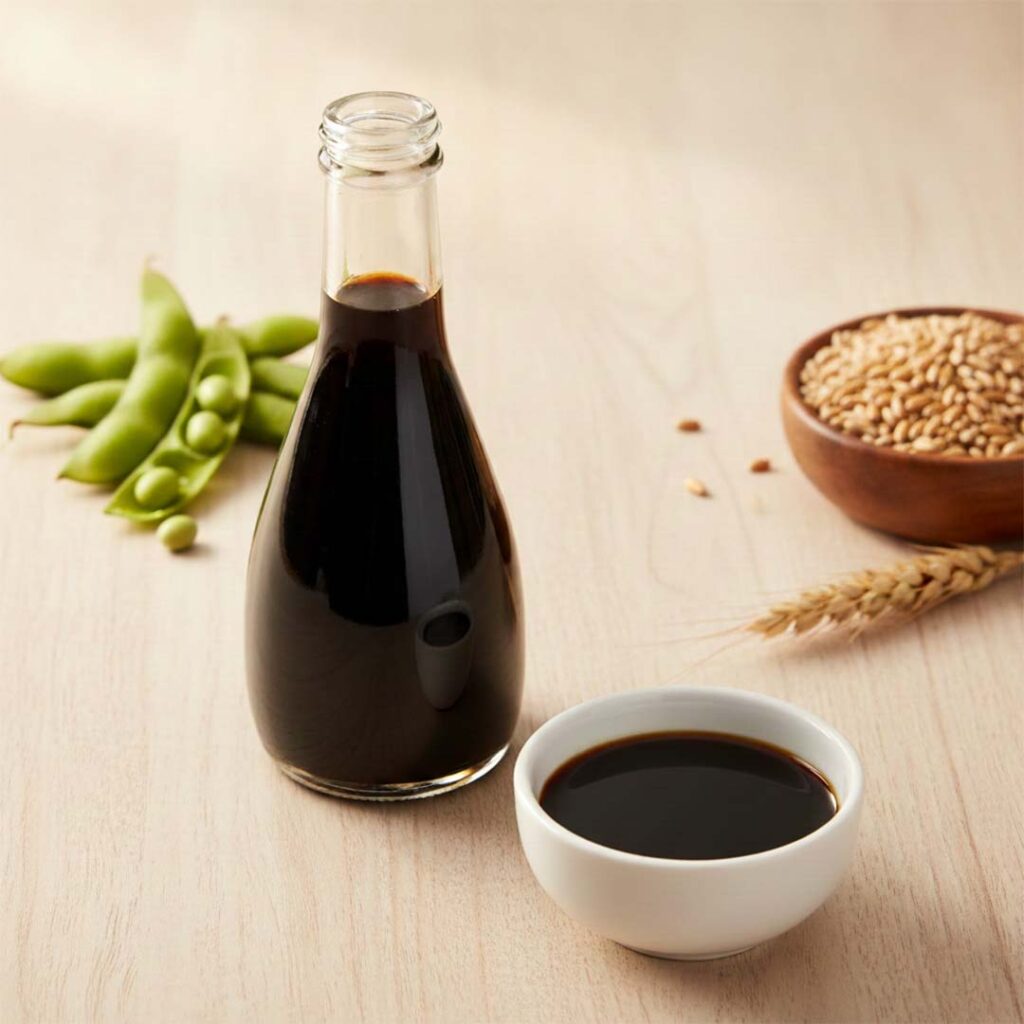
Traditional soy sauce undergoes a natural fermentation process that has remained largely unchanged for centuries. The basic steps include:
- Preparation: Soybeans are cooked, and wheat is roasted and crushed
- Koji cultivation: A starter mold (Aspergillus oryzae or Aspergillus sojae) is added to break down proteins and starches
- Moromi fermentation: The mixture is combined with salt water and left to ferment for months, sometimes years. During this stage, naturally occurring yeasts convert sugars into alcohol and other flavor compounds
- Blending and sedimentation: After fermentation, materials are stirred thoroughly and allowed to settle
- Aging and pressing: The mash is pressed to extract the liquid
- Pasteurization: The sauce is heated to kill bacteria, enhance flavor, and evaporate some alcohol
- Bottling: Finally, it’s bottled and ready for distribution
This is an unavoidable part of traditional brewing, similar to the fermentation in bread, vinegar, or yogurt.
Residual Alcohol Content
The alcohol content in naturally brewed soy sauce typically ranges from 1.5% to 3% by volume (some sources report up to 2-3%). This is significantly lower than beverages considered intoxicating (wine typically contains 12-15% alcohol), but it’s still present in measurable quantities.
The critical question becomes: Does this small amount of residual alcohol make soy sauce haram?
Fiqh Rulings on Residual Alcohol
Islamic scholars have different interpretations regarding trace alcohol in food products:
Permissible View (More Lenient):
Many contemporary scholars argue that residual alcohol in soy sauce is permissible based on several principles:
- Transformation (Istihalah): The alcohol is a byproduct of fermentation, not added intentionally, and the final product is not intoxicating. Some scholars compare this to wine turning into vinegar—once transformed, it becomes halal.
- Negligible amounts: The quantity is too small to cause intoxication, even if consumed in large amounts. To become intoxicated from soy sauce, one would need to consume an impractically large amount, which would be harmful due to the high salt content.
- Change of properties: The alcohol undergoes chemical changes during fermentation and is integrated into flavor compounds
- Necessity and common need: Soy sauce is widely used and difficult to replace in many cuisines
- Evaporation during cooking: Most alcohol evaporates when soy sauce is heated
This view is supported by fatwas from organizations like the Islamic Food and Nutrition Council of America (IFANCA) and various contemporary scholars who distinguish between intoxicating beverages and foods with trace fermentation alcohol.
The Hanafi School generally allows trace, non-intoxicating alcohol in food when it is not consumed as a beverage and the alcohol has been transformed during processing.
Stricter View (More Cautious):
Some scholars maintain a more conservative position:
- Hanafi and Shafi’i schools traditionally: Some jurists are cautious about any alcohol presence, though opinions vary
- Precautionary principle: The hadith states: “Leave that which makes you doubt for that which does not make you doubt.” (Tirmidhi, 2518). When in doubt, it’s safer to avoid
- Literal interpretation: Any amount of an intoxicant is impermissible
- Raw consumption concern: When soy sauce is consumed without cooking (sushi dips, salad dressings), trace alcohol remains
The Shia Perspective:
Shia jurisprudence generally takes a stricter stance on alcohol. Many Shia scholars advise avoiding naturally brewed soy sauce due to the alcohol content, recommending either certified halal versions or chemically hydrolyzed alternatives that contain no alcohol.
Hanbali and Maliki Schools: The Hanbali school generally prohibits trace alcohol, while the Maliki school permits some leniency if the alcohol has transformed during the process.
The diversity of opinion means you should consult with your own scholar or follow the ruling of your madhab for personal clarity.
4. Different Types, Different Rules
Not all soy sauce is created equal. Understanding the varieties helps you make better choices.
Dark Soy Sauce
Dark soy sauce is aged longer and often contains additional ingredients like caramel color, molasses, or thickeners for a richer, sweeter flavor and darker hue. The alcohol concern remains the same as regular soy sauce if it’s naturally brewed. Additionally, check labels for:
- Added alcohol: Some brands add alcohol as a preservative
- Caramel coloring: Ensure it’s from halal sources
- Animal-derived ingredients: Rare, but verify if uncertain
Light Soy Sauce
Light (or “regular”) soy sauce is thinner and saltier than dark varieties. Despite the name, “light” refers to color and body, not sodium content—it often contains more salt than regular soy sauce. It’s the standard soy sauce used in most cooking and typically contains the same 1.5-3% residual alcohol from fermentation. The same rulings apply.
Most Chinese light or dark soy sauce contains no added alcohol, unlike some Japanese varieties that may contain mirin.
Tamari and Gluten-Free Soy Sauce
Tamari is a Japanese-style soy sauce traditionally made with little to no wheat, making it suitable for those with gluten sensitivities. While it’s often perceived as “healthier,” tamari still undergoes fermentation and typically contains residual alcohol at similar levels to regular soy sauce.
Always check the label, as “gluten-free” does not automatically mean “alcohol-free.”
Non-Brewed (Chemically Hydrolyzed) Soy Sauce
This modern alternative bypasses traditional fermentation entirely. Instead, soybeans are chemically broken down using hydrochloric acid, then neutralized, and mixed with coloring and flavoring agents.
Halal advantages:
- No alcohol content: Since there’s no fermentation, no alcohol is produced
- Generally halal: Most scholars agree these are permissible
- Faster production: Made in days rather than months
Disadvantages:
- Different flavor profile: Lacks the complex, nuanced taste of brewed soy sauce
- Chemical processing concerns: Some prefer traditionally made foods
- Potential additives: May contain artificial flavors or colors
If avoiding alcohol is your priority, chemically hydrolyzed soy sauce is your safest bet.
5. Brand Spotlight: Is Kikkoman Soy Sauce Halal?
Kikkoman is arguably the world’s most recognized soy sauce brand, so it deserves special attention. Here’s what you need to know:
Standard Kikkoman Products:
- Regular Kikkoman soy sauce is naturally brewed and contains approximately 1.5-2% alcohol
- The company states this alcohol is naturally occurring from fermentation, not added
- It does not carry halal certification in most Western markets
Halal-Certified Kikkoman:
- Kikkoman produces halal-certified soy sauce specifically for Muslim-majority markets, particularly in Southeast Asia
- Look for products with JAKIM (Malaysia) or MUI (Indonesia) certification
- These certified versions meet stricter standards and undergo verification processes
Recommendation: If you follow the lenient view on fermentation alcohol, regular Kikkoman may be acceptable. If you prefer certainty, seek out their halal-certified line or choose an alternative brand with clear certification.
6. Critical Ingredient Concerns Beyond Alcohol
While alcohol is the primary concern, other ingredients can affect halal status:
Traditional Additives
In Indonesia and some Asian regions, traditional soy sauce production sometimes includes:
- Animal bone marrow (chicken heads, fish heads)
- Animal blood for flavor enhancement
- Fish sauce in some flavored varieties
If these come from halal-slaughtered animals, they may be acceptable. However, bones and ingredients of unclear origin create uncertainty about halal status.
Modern Additives
Some commercial brands may include:
- Flavor enhancers from non-halal sources
- Non-halal animal-based broths or extracts
- Preservatives that may contain alcohol
Warning Signs
Be cautious of soy sauce that has:
- Extremely savory taste or fishy odor (may indicate animal additives)
- Unusually cheap price (may indicate poor quality or questionable ingredients)
- No clear ingredient list or manufacturing details
7. Your Guide to Verification and Safety
Navigating the halal status of soy sauce becomes easier when you know what to look for on product labels.
What to Check on Labels
- Halal certification marks: Look for symbols from recognized bodies (see below)
- Ingredient list: Check for added alcohol, wine, animal extracts, or questionable additives
- Production method: “Naturally brewed” indicates fermentation and potential alcohol; “hydrolyzed” suggests no fermentation
- Alcohol content: Some brands explicitly state “alcohol-free” or list the percentage
- Country of origin: Products from Muslim-majority countries (Malaysia, Indonesia) often have stricter halal standards
Recognized Halal Certification Bodies
Trust these internationally recognized certification organizations:
- IFANCA (Islamic Food and Nutrition Council of America) – USA
- JAKIM (Department of Islamic Development Malaysia) – Malaysia
- MUI (Indonesian Ulema Council) – Indonesia
- HFA (Halal Food Authority) – UK
- HFCE (Halal Food Council of Europe) – Europe
- MUIS (Islamic Religious Council of Singapore) – Singapore
- SANHA (South African National Halaal Authority) – South Africa
- HFC-SEA (Halal Food Council Southeast Asia)
A product bearing any of these certifications has undergone thorough ingredient verification, production process review, facility inspection, and regular audits to ensure continued compliance.
Special Considerations for Dining Out
When eating at restaurants, especially Asian establishments, don’t hesitate to:
- Ask about the soy sauce brand they use
- Request the bottle to check for certification
- Inquire about alternatives if they don’t have halal options
Use your own travel-sized halal soy sauce if you’re particularly cautious
8. Halal Soy Sauce Brands: Your Shopping Guide
Here are reliable options that are either halal-certified or naturally alcohol-free:
Certified Halal Brands
- Ayam Brand – Malaysian brand with JAKIM certification, widely available in Asian stores
- Lee Kum Kee (selected products) – Premium Soy Sauce and Premium Dark Soy Sauce carry halal certification; verify labels as not all products are halal
- Halal Kikkoman – Available in Southeast Asian markets with proper JAKIM or MUI certification
- Habhal – Specifically marketed as halal, available online and in specialty stores
- Al-Hilal – Middle Eastern brand designed for Muslim consumers
- Amoy (selected products) – Some varieties like First Extract Reduced Salt are halal-certified
- Silver Swan – Product of the Philippines, halal-certified
- ABC Brand – Product of Indonesia, halal-certified
- Golden Mountain – Product of Thailand, halal-certified
Alcohol-Free/Chemically Hydrolyzed Options
- La Choy – Commonly available in Western supermarkets, chemically hydrolyzed, not fermented (no alcohol but not officially halal-certified)
- Some store brands – Check labels for “hydrolyzed soy protein” in ingredients
Shopping Tips
- Asian grocery stores in Muslim-majority neighborhoods often carry halal-certified options (H-Mart, 99 Ranch, Hong Kong Market)
- Online retailers like Amazon, Weee!, or specialty halal food websites offer wider selections
- Read reviews from Muslim consumers for additional verification
- Contact manufacturers directly if certification status is unclear
-
9. Regional Variations and Considerations
Shopping Tips
Countries like Malaysia, Indonesia, and Singapore have strict halal enforcement and widespread availability of certified products. If traveling or importing from these regions, products are generally reliable. Indonesia specifically uses the term “kecap” for soy sauce products, which includes sweet soy sauce (kecap manis), regular soy sauce, and fish sauce.
Western Countries
Halal soy sauce is available but requires more effort to find. Check ethnic grocery stores, online retailers, or contact local Islamic centers for recommendations
Homemade Alternatives
For those who prefer maximum control, recipes for alcohol-free soy sauce substitutes exist online using:
- Coconut aminos (naturally sweet, no fermentation, soy-free)
- Liquid aminos (soy-based but not fermented)
- Tamari-style recipes with controlled fermentation
10. Flavor Differences: Understanding Your Options
Understanding flavor profiles helps you choose the right soy sauce for your needs:
- Regular Soy Sauce: Bold, roasted profile with notes of mushroom and molasses. Highest perceived depth of flavor. Ideal for marinades, braised dishes, and rich sauces.
- Light Soy Sauce: Sharper, salt-forward flavor with less depth and sweetness. Cleaner taste and brighter finish. Perfect for stir-fries, steamed dishes, and preserving ingredient colors.
- Halal-Certified Natural Brewed: Very close to regular soy sauce when naturally brewed. Chemically hydrolyzed versions may taste slightly less complex with sharper saltiness and less fermented aroma.
- Organic Soy Sauce: Slightly milder saltiness with more pronounced earthy or nutty undertones. Delicate umami, ideal for dressings, sushi, and light broths.
- Low Salt Soy Sauce: Milder and rounder flavor, less punchy but still functional. Good for sodium-restricted diets or when other salty ingredients are present.
11. Making Your Personal Choice: A Framework
Given the varying opinions, here’s a practical decision-making framework:
If you follow a lenient interpretation:
- Standard naturally brewed soy sauce is likely acceptable
- Focus on avoiding added alcohol and questionable ingredients
- Major brands like Kikkoman, Yamasa, or San-J are options
- Remember that cooking evaporates most alcohol
If you prefer a middle ground:
- Seek halal-certified versions of naturally brewed soy sauce
- These provide traditional flavor with verification
- Support manufacturers who invest in halal certification
If you follow a strict interpretation:
- Choose chemically hydrolyzed (non-brewed) soy sauce
- Use coconut aminos or liquid aminos as alternatives
- Avoid all naturally fermented products
- Only purchase products with clear halal certification
Consulting Your Scholar:
- Contact your local imam or trusted scholar
- Follow the fatwa of your madhab
- When in doubt, choose the more cautious option (this is never wrong)
12. Conclusion: Informed Choices for a Halal Lifestyle
The question “Is soy sauce halal?” doesn’t have a single answer that applies to everyone. The permissibility depends on production methods, alcohol content, and your school of Islamic jurisprudence.
Key Takeaways:
- Naturally brewed soy sauce contains 1.5-3% residual alcohol from fermentation
- Islamic scholars differ on whether this trace amount is permissible
- Different madhabs have varying rulings: Hanafi allows trace amounts if non-intoxicating; Shafi’i and Hanbali are stricter; Maliki permits transformed alcohol; Shia generally advises avoidance
- Halal certification provides certainty and supports verified products
- Chemically hydrolyzed soy sauce is alcohol-free and generally accepted by all scholars
- Major brands like Kikkoman have halal-certified lines in Southeast Asian markets
- Watch for other ingredients beyond alcohol: animal-derived additives, fish sauce, unclear bone sources
- Most cooking evaporates alcohol, but raw consumption (sushi, dressings) keeps trace amounts
The most important step is to educate yourself, check labels carefully, and follow the guidance of scholars you trust. Whether you choose certified halal naturally brewed soy sauce or opt for alcohol-free alternatives, options exist to accommodate your dietary principles without sacrificing flavor.
Remember, maintaining a halal lifestyle is about intention, knowledge, and consistent effort. With this guide, you’re now equipped to make confident choices about soy sauce that align with both your faith and your culinary needs. By choosing Halal-certified alternatives, Muslims can enjoy the flavors they love while staying true to their faith.
Disclaimer: This article provides general information and various scholarly perspectives. For specific religious guidance, please consult with a qualified Islamic scholar or your local imam.