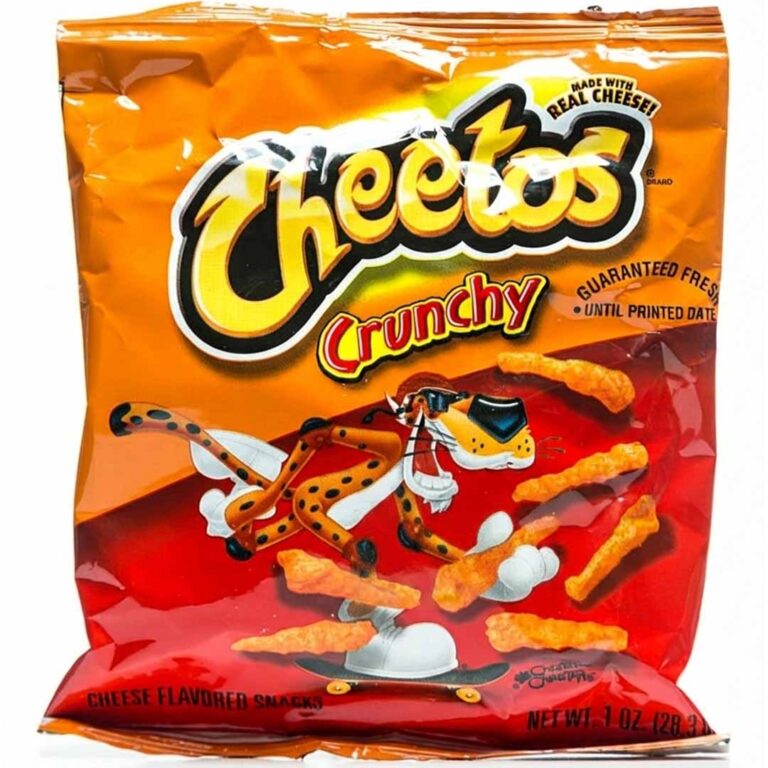
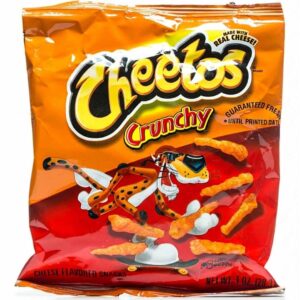
Ever grabbed a bag of Cheetos and found yourself wondering, “Wait, are Cheetos halal?” You’re definitely not the only one. This super-popular, cheesy snack is everywhere—over 36 countries, actually. But here’s the crucial detail: the answer completely depends on the country you’re in.
It’s confusing because the exact same brand and packaging might be halal-certified in a place like Pakistan, yet contain ingredients derived from pork in the United States. This guide is here to clear up that confusion and help you choose wisely.
Are Cheetos Halal: Why the Confusion?
It’s not the corn or the oil that makes Cheetos a tricky subject for Halal consumption—it’s the cheesy dust! To make that cheese, a special ingredient called rennet is needed to thicken the milk. Rennet can come from a few places:
- From an animal: Usually a calf or, problematically, a pig.
- From a microbe (like a fungus or bacteria): This is fine (halal).
- Engineered in a lab: This is also fine (halal).
The big issue is that Frito-Lay (the company that makes Cheetos) has admitted that they “use animal enzymes derived from pork to develop the cheese in some of our cheese seasonings.”
Since there’s no Halal symbol on the bag, you have no way of knowing if the bag you pick up is one of the ones that uses the pork enzymes or not.
Regional Breakdown: Where Cheetos Are Halal
Muslim-Majority Countries (Halal Certified ✅)
Pakistan
- Certification: SANHA (South African National Halal Authority – Pakistan)
- Manufacturing: Local production with dedicated halal facilities
- Enzyme Source: Halal-slaughtered beef or microbial rennet
- Popular Varieties: Cheetos Crunchy, Flamin’ Hot, Masala Balls
- Verdict: 100% Halal – safe to consume
Indonesia
- Certification: MUI (Majelis Ulama Indonesia) under HAS 23000 standard
- Regulation: Government-mandated halal certification (BPJPH)
- Supply Chain: Complete segregation – no pork ingredients allowed on premises
- Verdict: 100% Halal – among the strictest standards globally
Saudi Arabia & GCC Countries
- Certification: SFDA (Saudi Food & Drug Authority), ESMA (UAE)
- Formulation: Natural colors often used (paprika extract instead of synthetic dyes)
- Import Requirements: All imported snacks must have halal certification
- Verdict: 100% Halal – rigorously inspected at customs
Malaysia
- Certification: JAKIM (Department of Islamic Development Malaysia)
- Standard: MS 1500:2009 – considered the global gold standard
- Traceability: Full supply chain audit from farm to shelf
- Verdict: 100% Halal – highest confidence level
North America (NOT Halal ❌)
United States
- Status: No halal certification
- Key Issue: Frito-Lay admits using porcine (pig) enzymes in cheese seasonings
- Kosher Status: Regular Cheetos are NOT kosher-certified (strong indicator of animal enzyme use)
- Cross-Contamination: Shared production lines with bacon-flavored products
- Verdict: AVOID – high probability of pork-derived ingredients
Important Note (for Muslim Consumers): While some Frito-Lay products are certified Kosher (check their Kosher list), it is crucial to remember that Kosher certification does not automatically guarantee a product is Halal. Although Kosher products generally use microbial enzymes and contain no pork, Muslim consumers should be cautious and may prefer to avoid or keep distance from products where the Halal status is not explicitly confirmed, as standard Cheetos varieties are NOT on the Frito-Lay Kosher list.
Canada
- Status: Same as US – no halal certification
- Manufacturing: Often sourced from US facilities
- Verdict: AVOID – same enzyme concerns as US products
United Kingdom (Mixed ⚠️)
The UK market offers more options due to strict vegetarian labeling laws.
Halal-Suitable Varieties:
- Cheetos Cheese Puffs – Often marked “Suitable for Vegetarians”
- Some Twisted varieties – Check individual packaging
What “Suitable for Vegetarians” Means:
- ✅ No animal rennet/enzymes
- ✅ No animal flesh
- ✅ Microbial enzymes used
- ⚠️ May contain trace ethanol in flavorings (<0.1%)
The Ethanol Question: UK Cheetos sometimes use ethanol as a flavor carrier. While present in tiny amounts (non-intoxicating), scholars differ:
- Permissive view: Trace amounts (<0.5%) of synthetic ethanol are acceptable if non-intoxicating
- Strict view: All ethanol should be avoided
Varieties to Avoid:
- Products WITHOUT the “V” (Vegetarian) symbol
- Any variety listing “Carmine” or “E120” (insect-derived red dye – haram for Hanafi followers)
Verdict: Check each bag individually for the vegetarian symbol. If present, it’s halal-suitable for most consumers.
Europe (EU) (Mixed ⚠️)
European Cheetos vary significantly by country due to different regulations.
Key Concerns:
- E120 (Carmine) – Red dye from crushed beetles
- Common in Europe to avoid synthetic dyes
- Haram according to Hanafi school
- Disputed among other schools
- E471 (Mono- and Diglycerides) – Can be plant or animal-derived
- Without vegetarian label, source is unknown
Safe Approach:
- Look for “Suitable for Vegetarians” label
- Avoid products containing E120/Carmine
- Check country-specific formulations (German Cheetos may differ from French)
Verdict: Vegetarian-labeled varieties are generally halal-suitable; others require caution.
Australia & New Zealand (Mixed ⚠️)
Manufacturer: Smith’s Snackfood Company (PepsiCo subsidiary)
Status:
- Some varieties are AFIC-certified (Australian Federation of Islamic Councils)
- Others are not certified but may be vegetarian
How to Check:
- Look for official halal logo
- Check for “Suitable for Vegetarians” symbol
- When in doubt, contact Smith’s directly
Verdict: Certification varies by product line – always verify packaging.
How to Verify Your Specific Bag
Since formulations change and supply chains vary, follow this protocol:
Step 1: Look for Halal Certification
Recognized Organizations:
- JAKIM (Malaysia)
- MUI (Indonesia)
- SANHA (Pakistan/South Africa)
- IFANCA (USA – rare but exists)
- HFA (UK)
- AFIC (Australia)
If you see a halal logo: The product is certified. You’re good to go.
Step 2: Look for Vegetarian Label (UK/EU/Australia)
What to look for:
- “Suitable for Vegetarians” text
- “V” symbol in green circle
- “Vegetarian” badge
What this guarantees:
- No animal flesh
- No animal-derived rennet/enzymes
- Generally halal-suitable (except for ethanol-strict consumers)
Step 3: Scan the Ingredients
Red Flags – AVOID if you see:
- “Enzymes” without modifier (could be pork)
- “Animal Enzymes”
- “Carmine” or “E120” (insect-derived)
- “Cochineal Extract”
- “Natural Flavors” without certification (could contain animal derivatives)
Green Flags – Generally Safe:
- “Microbial Enzymes”
- “Vegetable Rennet”
- “Bacterial Cultures”
- All synthetic colors (Yellow 6, Red 40) – petroleum-derived, not animal
Step 4: When in Doubt
Contact the Manufacturer:
- US/Canada: 1-800-352-4477 (Frito-Lay Consumer Relations)
- UK: Check Walkers/PepsiCo UK website
- Always ask specifically about enzyme sources and certification status
Specific Varieties: Quick Reference
Cheetos Crunchy
- US/Canada: ❌ Not Halal
- UK: ⚠️ Check for Vegetarian label
- Muslim Countries: ✅ Halal Certified
Key Issue: Cheese contains enzymes
Flamin' Hot Cheetos
- US/Canada: ❌ Not Halal
- UK (Twisted Flamin’ Hot): ⚠️ Often Vegetarian, may contain trace ethanol
- Saudi Arabia/Pakistan: ✅ Halal Certified
Key Issue: Same enzyme problem plus Red 40 (synthetic – halal) or potential Carmine in some markets
Cheetos Puffs
- US/Canada: ❌ Not Halal
- UK (Cheese Puffs): ✅ Usually “Suitable for Vegetarians” – Halal-suitable
- Muslim Countries: ✅ Halal Certified
Note: UK Cheese Puffs are the most reliably vegetarian variety
Baked Cheetos
- US: ⚠️ Some varieties appear on Kosher list – check packaging
- If Kosher-certified: Generally halal-suitable
If not certified: Avoid
Halal Alternatives to Cheetos
If you’re in the US/Canada or can’t find certified Cheetos, try these alternatives:
Cheese Puff Alternatives
- PeaTos
- Status: Many varieties are vegan (no animal ingredients)
- Flavors: Classic Cheese, Fiery Hot
- Why Safe: Plant-based formulation
- Availability: US/Canada
- Hippeas
- Status: Certified Kosher and Vegan
- Base: Chickpea puffs
- Why Safe: No animal derivatives, certified
- Availability: Widely available in US/UK
- Lesser Evil “No Cheese” Cheesiness
- Status: Vegan
- Base: Organic corn
- Why Safe: Nutritional yeast instead of cheese
- Availability: Health food stores, US
Spicy Chip Alternatives
Takis Fuego
- Status: Generally vegan (check specific production)
- Key Point: No cheese or dairy in Fuego flavor specifically
- Why Safe: Uses citric acid and chili for flavor, not cheese enzymes
- Caveat: Not halal-certified, but ingredient-compliant
- Availability: US, Canada, internationally
- Saffron Road Snacks
- Status: ✅ IFANCA Halal Certified
- Varieties: Crunchy Chickpeas, Lentil Chips
- Why Safe: Dedicated halal brand
- Availability: US, specialty stores
- Kurkure (from Halal Markets)
- Status: ✅ Halal Certified (when purchased from South Asian stores)
- Note: Also a PepsiCo brand, but manufactured in Pakistan/India
- Why Safe: Formulated for Muslim-majority markets
- Availability: Desi/halal grocery stores in the West
Common Questions Answered
The Ethical Dimension: Beyond Ingredients
For many Muslim shoppers today (2024-2025), deciding if a food is “halal” is about more than just the ingredients—it also includes ethical and moral concerns.
The BDS (Boycott, Divestment, Sanctions) Angle
PepsiCo, the company that owns Cheetos, has been the target of boycott campaigns for a few reasons:
- In 2018, they bought SodaStream, a company that previously operated in Israeli settlements.
- They are seen by some as having corporate positions that are unfavorable regarding Middle East conflicts.
How Consumers Responded: Reports from 2023–2024 show that sales dropped significantly in Muslim-majority countries such as Egypt, Pakistan, and Turkey.
The Personal Choice: Some individuals have made the decision to avoid all PepsiCo products, including those with halal certification, purely because of these ethical objections.
Health Concerns (The Tayyib Principle)
The Quran instructs believers to consume food that is both halal (permissible) and tayyib (wholesome and good). Some Islamic scholars point out that:
- These are highly processed foods, loaded with sodium and artificial additives.
- Eating them too much can negatively impact one’s health.
- While they aren’t technically haram (forbidden), regularly overconsuming them to the detriment of one’s health is considered makruh (disliked or discouraged).
A Balanced View: Having Cheetos occasionally as a fun snack is generally fine. However, making them a regular part of your diet raises serious concerns about whether the food meets the tayyib standard of wholesomeness.
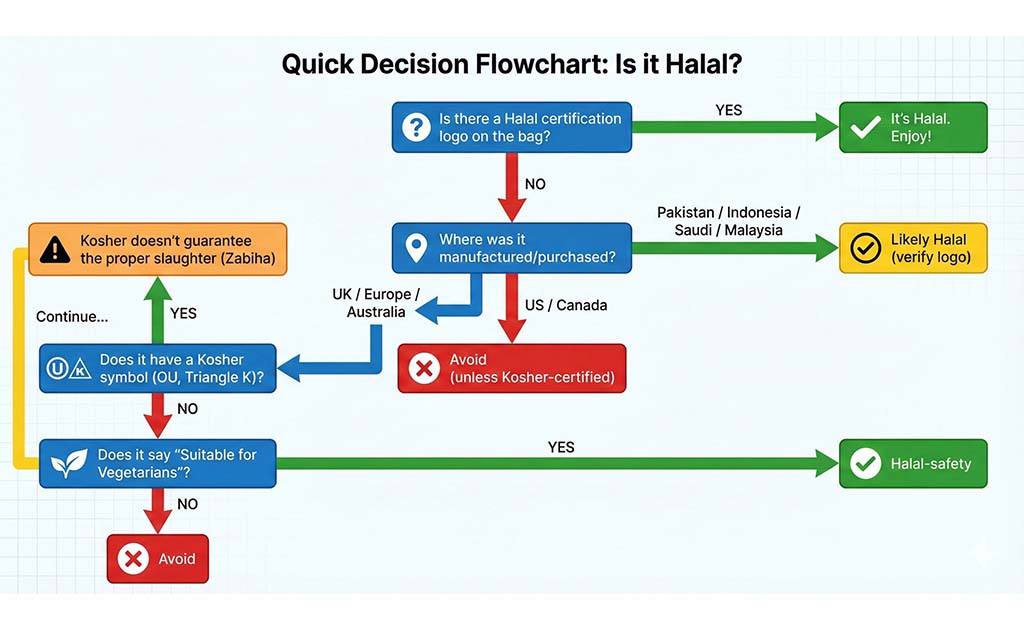
Quick Decision Flowchart
Is there a Halal certification logo on the bag?
- YES → ✅ It’s Halal. Enjoy!
- NO → Continue…
Where was it manufactured/purchased?
- Pakistan/Indonesia/Saudi/Malaysia → ✅ Likely Halal (verify logo)
- US/Canada → ❌ Avoid
- UK/Europe/Australia → Continue…
Does it have a Kosher symbol (OU, Triangle K)?
- No → Kosher doesn’t guarantee the proper slaughter (Zabiha)
- NO → Continue…
Does it say “Suitable for Vegetarians”?
- YES → ✅ Halal-suitable (if you accept trace ethanol)
- NO → ❌ Avoid
Final Recommendations
For Strict Halal Observers:
- Only buy packages with printed halal certification
- In the West, purchase imported versions from halal/ethnic grocery stores
- Avoid US-manufactured regular Cheetos entirely
For Moderate Observers:
- Look for Kosher or Vegetarian certification as a proxy
- UK vegetarian varieties are generally acceptable
- Stay informed about formulation changes
For All Consumers:
- When traveling, verify local formulations – don’t assume all Cheetos are the same
- Use the Scan Halal app or similar tools for barcode verification
- Contact manufacturers when certification is unclear
- Share information with your community
Resources for Further Verification
Official Certification Bodies:
Product-Specific Resources:
Mobile Apps: