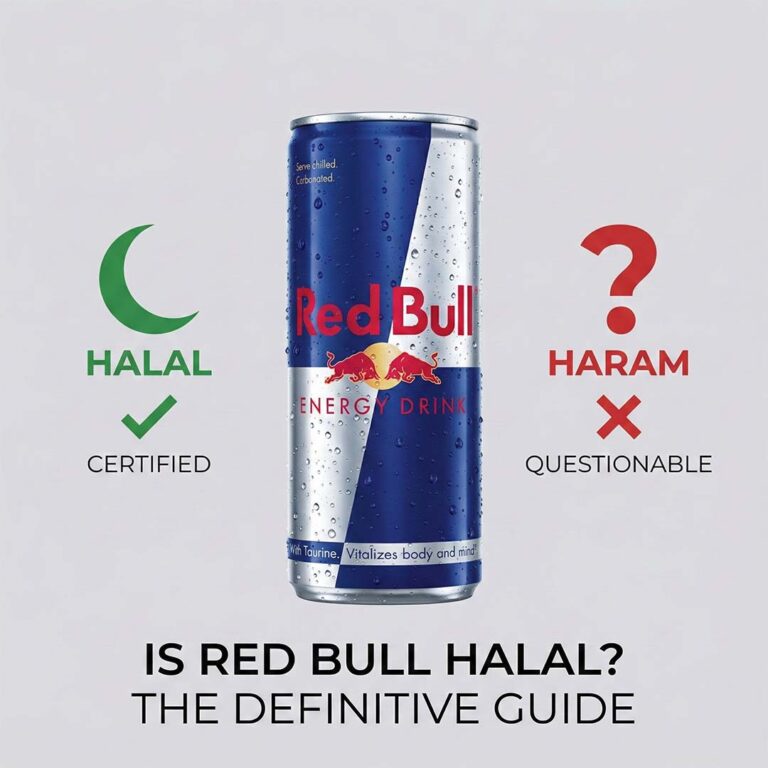
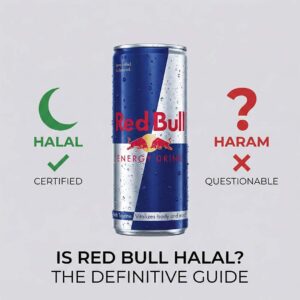
Is Red Bull hala? This is one of the most debated questions among Muslim consumers, fueled by myths, confusing ingredient names, and inconsistent certification across countries. For years, many believed Red Bull contained animal-based taurine or hidden alcohol in its flavor system — claims that created doubt despite Red Bull being one of the world’s most consumed beverages.
But Muslims today don’t want guesses. They want clear evidence, ingredient-level analysis, and verification from recognized halal authorities.
This guide cuts through the noise. We examine Red Bull’s ingredients, analyze alcohol-related concerns, compare global formulations, explain halal certification findings, and deliver a verdict grounded in both fiqh principles and scientific verification.
If you’re searching for:
— This article gives the definitive, evidence-based answer.
Understanding Halal Requirements for Beverages
Before determining whether Red Bull is halal, it’s important to understand what makes any beverage permissible under Islamic law.
What Makes a Drink Halal?
In Islamic dietary law, halal means “lawful” or “permitted.” For a beverage to be considered halal, it must meet specific criteria. The drink cannot contain alcohol, pork-derived ingredients, or products from animals not slaughtered according to Islamic guidelines. Additionally, the manufacturing process must avoid cross-contamination with prohibited substances, and all ingredients must be sourced and processed in compliance with Islamic principles.
The Importance of Halal Certification
Halal certification provides third-party verification that a product meets Islamic dietary standards. Certification organizations conduct thorough inspections of production facilities, examine ingredient sources, and monitor manufacturing processes to ensure compliance. This certification offers Muslim consumers confidence and peace of mind when making purchasing decisions.
Alcohol in Flavor Extraction — The Hidden Question Muslim Consumers Ask
The biggest overlooked halal concern in beverages is not taurine — it’s alcohol-based solvents used during flavor extraction.
Why This Matters
Almost all commercial flavors start with ethanol extraction. Even if alcohol is used in early stages, halal bodies evaluate whether any alcohol remains in the final product. Fiqh rulings differentiate between “alcohol used as a processing aid” versus “alcoholic beverage content.”
Does Red Bull Contain Alcohol?
No — Red Bull does not contain added alcohol. Flavor houses confirm that any ethanol used during extraction is either removed or remains in negligible, non-intoxicating trace amounts — far below the halal threshold (typically 0.1% or lower depending on the madhhab).
What Halal Bodies Say
Major halal authorities (MJC-SA, MUI Indonesia, WHG) certify Red Bull as halal because:
- The drink contains no intoxicating alcohol
- Any ethanol used in flavor extraction is negligible, evaporated, or chemically transformed
- Red Bull does not use alcohol for preservation, fermentation, or formulation
Islamic Ruling on Processing Alcohol
The majority scholarly view states that if ethanol is used only as a processing solvent, and it does not remain in the end product in an amount that can intoxicate, it is halal. Red Bull meets this criterion.
Red Bull Ingredients Analysis
Understanding what goes into Red Bull is crucial for determining its halal status. Let’s examine each ingredient in detail.
Main Ingredients in Red Bull
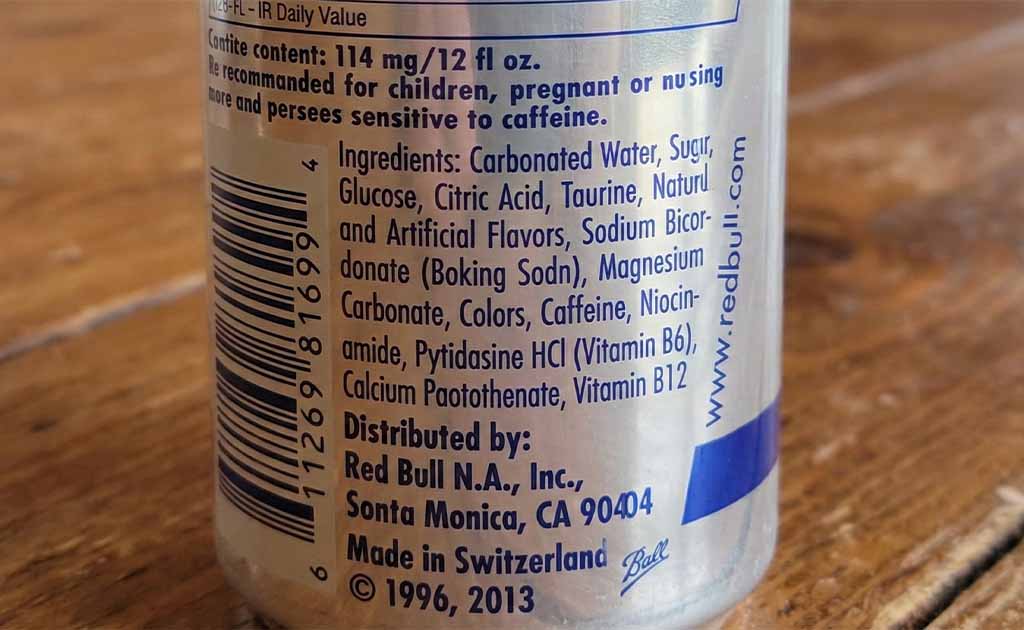
According to Red Bull’s official website, the energy drink contains five core ingredients: caffeine, taurine, B-group vitamins, sugars, and water. Let’s examine each ingredient and its halal compliance.
Caffeine: Red Bull contains caffeine naturally occurring in coffee beans. Each 250ml can contains approximately 80mg of caffeine, roughly equivalent to a cup of coffee. Caffeine is a plant-derived stimulant that provides the energy-boosting effect Red Bull is known for.
Taurine: An amino acid that supports neurological development and helps regulate water and mineral levels in the blood. This is the most scrutinized ingredient for halal compliance, which we’ll examine in detail below.
B-group vitamins: Red Bull contains essential B-vitamins from natural sources, including niacin (B3), pantothenic acid (B5), vitamin B6, and vitamin B12. These are micronutrients that play crucial roles in energy metabolism, helping convert food into usable energy for the body. According to Red Bull, these vitamins are sourced naturally and are essential for normal body functions.
Sugars: Red Bull uses two types of simple sugars – sucrose derived from sugar beet and glucose from wheat or corn. Both are plant-based carbohydrates that provide quick energy. The sugar-free version uses artificial sweeteners instead, which are also synthetically produced and halal-compliant.
Water: The base of the drink is high-quality water from the Alps, which is carbonated to create the fizzy texture. Water is naturally halal and poses no concerns for Muslim consumers.
Is Taurine in Red Bull Halal?
Taurine is undoubtedly the most controversial ingredient when discussing Red Bull’s halal status. This amino acid naturally occurs in animal tissues, including the human body, where it supports neurological development and regulates water and mineral balance in the blood. The natural occurrence in animal sources has led to widespread confusion and concern among Muslim consumers about whether the taurine in Red Bull is animal-derived.
According to Red Bull’s official statements and ingredient disclosures, the taurine used in their energy drinks is 100% synthetically produced through pharmaceutical manufacturing processes. Red Bull explicitly states: “The taurine in Red Bull is not derived from animals. It is produced synthetically by pharmaceutical companies, which guarantees the highest quality standards.”
This synthetic production method means the taurine is created from basic chemical compounds in laboratories without any animal involvement whatsoever. This makes it suitable not only for vegetarians and vegans but also fully compliant with Islamic dietary restrictions, as there are no animal derivatives or by-products involved in its production.
Common Misconceptions About Taurine
One of the most persistent myths is that taurine comes from bull testicles, bull bile, or even bull sperm. This misconception likely stems from the ingredient’s name (derived from the Latin word “taurus” meaning bull) and Red Bull’s branding, which features bulls prominently. However, these claims are completely false and have been repeatedly debunked.
Red Bull has clearly stated that their taurine is “produced synthetically by pharmaceutical companies” and is “not derived from animals.” The synthetic taurine used in Red Bull is manufactured in controlled laboratory environments using chemical synthesis processes, similar to how many vitamins and supplements are produced. This ensures consistent quality, purity, and most importantly for Muslim consumers, complete freedom from any animal-derived components.
The confusion also stems from the fact that taurine was first isolated from ox bile in 1827 by German scientists, which is where it got its name. However, modern taurine production for commercial use, including in Red Bull, has nothing to do with this historical discovery. Today’s synthetic taurine is chemically identical to naturally occurring taurine but is produced entirely through industrial chemical processes without any animal involvement.
Cross-Country Red Bull Formulation Comparison
Red Bull’s core formula is globally standardized, but minor differences exist depending on regional regulations and sweetener rules.
US Version
The American version contains sucrose and glucose as sweeteners, synthetic taurine, 80 mg of caffeine, and no animal-derived additives. While there is no halal certification in most US regions, the ingredients are halal-compliant.
EU Version (Austria, Germany, UK, France)
The European formula uses sucrose and glucose sweeteners with colors and flavors following EU additive rules. Some countries have official halal certification (such as UK imports with global halal seals). The formula remains synthetic and plant-based.
Middle East & Asia (Indonesia, Malaysia, UAE, KSA)
These regions often feature halal-certified products with a formula identical to EU and US versions. Halal authorities regularly inspect flavor carriers, vitamin fermentation substrates, taurine synthesis, and production line cross-contamination.
South Africa
Red Bull in South Africa is halal-certified by MJC-SA following full site inspection. The certification cites synthetic taurine, no ethanol, and no animal derivatives.
Conclusion on Regional Differences
The formula is globally consistent. Differences are regulatory, not ingredient-source differences. Countries like Indonesia and South Africa certify the same formula that the US uses. Red Bull does not switch between halal and haram ingredients across markets.
Halal Risk Matrix for Red Bull
Red Bull's Halal Certification Status
The halal certification status of Red Bull varies by region, which is an important consideration for Muslim consumers.
Official Halal Certifications
Red Bull has received halal certification from several reputable Islamic organizations worldwide. The Muslim Judicial Council in South Africa (MJC-SA), under the guidance of Imaam Y. Harris from Cape Town, has certified Red Bull as halal after inspecting the production site and verifying the origin of all ingredients. Additionally, organizations like the World Halal Trust Group (WHG) and the Indonesian Ulama Council (MUI) have provided halal certification for Red Bull in their respective regions.
These certifications involve rigorous inspection processes where officials examine every aspect of production, from raw material sourcing to final packaging, ensuring complete compliance with Islamic dietary laws.
Regional Variations
It’s important to note that halal certification can vary depending on where you purchase Red Bull. In countries like Indonesia, Pakistan, South Africa, and Malaysia, Red Bull typically carries official halal certification from local Islamic authorities. However, in some regions such as the United States, Red Bull may not have official halal certification despite its ingredients being compliant with Islamic dietary standards.
This variation doesn’t necessarily mean the product itself differs significantly, but rather reflects differences in certification processes and regulatory frameworks across countries.
Is Red Bull Halal or Haram? The Verdict
After evaluating Red Bull through ingredient analysis, production methodology, cross-country certification, and Islamic legal principles, the ruling is clear:
✓ Red Bull is halal.
This conclusion is supported by:
1. Ingredient Verification
Red Bull contains no animal-derived substances, no pork-based gelatin, enzymes, or carriers. The taurine is fully synthetic, B-vitamins are synthetic or microbially derived, and no intoxicating alcohol is present.
2. Halal Certification Bodies
Authorities including MJC-SA (South Africa), MUI (Indonesia), and WHG (World Halal Group) have inspected production sites and certified Red Bull as halal.
3. Fiqh Principles
According to the majority of Islamic scholars, ingredients that are synthetic and non-intoxicating are halal. Trace ethanol used for extraction is permissible when it does not intoxicate. The ruling follows the principles of istihlak (complete dissipation), and there is no najs contamination.
4. No Evidence of Any Haram Components
Neither Red Bull nor independent halal audits have found any prohibited substances.
Final Ruling
Red Bull energy drink is permissible (halal) for Muslim consumption in all regions, even where certification is not printed on the can. If available, purchasing halal-certified versions may give additional peace of mind.
Health Considerations from an Islamic Perspective
Beyond the halal status of ingredients, Islam teaches Muslims to care for their bodies and avoid anything that causes harm. Energy drinks like Red Bull, while halal, contain high levels of caffeine and daily sugar limits.
The Quran states, “And do not throw yourselves with your own hands into destruction” (Quran 2:195),
reminding believers to protect their wellbeing. Therefore, while Red Bull is halal, moderate consumption is advisable, especially for individuals with heart conditions, high blood pressure, or caffeine sensitivity.
Frequently Asked Questions
Conclusion
Based on comprehensive research and analysis of ingredients, manufacturing processes, and certification from multiple Islamic authorities, Red Bull energy drink is halal. The most controversial ingredient, taurine, is synthetically produced and does not contain any animal derivatives, making it compliant with Islamic dietary laws.
Red Bull has received halal certification from reputable organizations including the Muslim Judicial Council in South Africa, the Indonesian Ulama Council, and the World Halal Trust Group. However, certification availability varies by region, so Muslim consumers should verify the certification status in their specific location.
While Red Bull is halal, it’s important to remember that Islam encourages moderation and protecting one’s health. Energy drinks should be consumed responsibly, considering their high caffeine and sugar content. If you have any doubts or concerns, consult local Islamic scholars or opt for certified halal alternatives that provide greater peace of mind.
Ultimately, the decision to consume Red Bull is a personal one that should be made with full knowledge of the ingredients, certification status in your region, and your own health considerations. Armed with this information, Muslim consumers can make informed choices that align with both their faith and wellbeing.