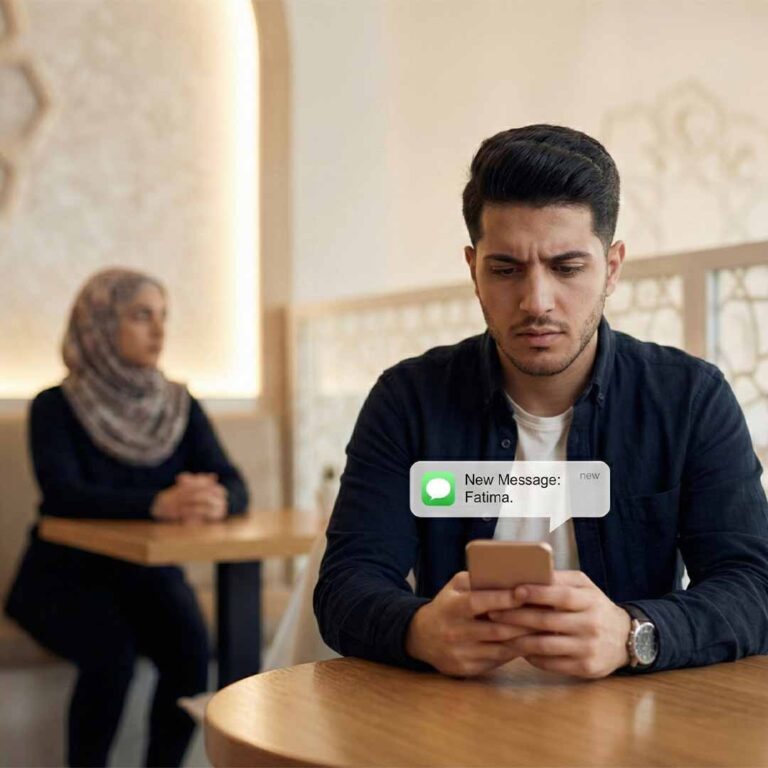
If you’re a young Muslim living in a non-Muslim country, you’ve probably felt the tension between your faith and the dating culture around you. Your classmates, coworkers, and friends might all have boyfriends or girlfriends, and sometimes it feels like you’re the only one not participating. You might wonder: “What’s really wrong with dating?” or “What exactly is a haram relationship?”
This article will guide you through understanding what a haram relationship means, why Islam forbids it, and most importantly, how to navigate modern life while staying true to your values, even when it feels incredibly difficult.
What Is a Haram Relationship?
Let’s start with the basics. A haram relationship is any romantic or intimate connection between two people who aren’t married according to Islamic law. The word “haram” means forbidden or prohibited in Islam—it’s the opposite of “halal,” which means permissible.
What Is Haram Relationship in Simple Terms?
Haram relationship meaning: Any boyfriend-girlfriend situation, casual dating, romantic texting, secret meetings, or physical intimacy outside of marriage falls under this category. It doesn’t matter if you have “good intentions” or plan to marry someday—if you’re not married through an Islamic marriage contract (nikah), the relationship is considered haram.
Think of it this way: Islam doesn’t forbid love or attraction. What it forbids is expressing that love in ways that cross boundaries before marriage. Your feelings aren’t the problem—it’s how you choose to act on those feelings that matters.
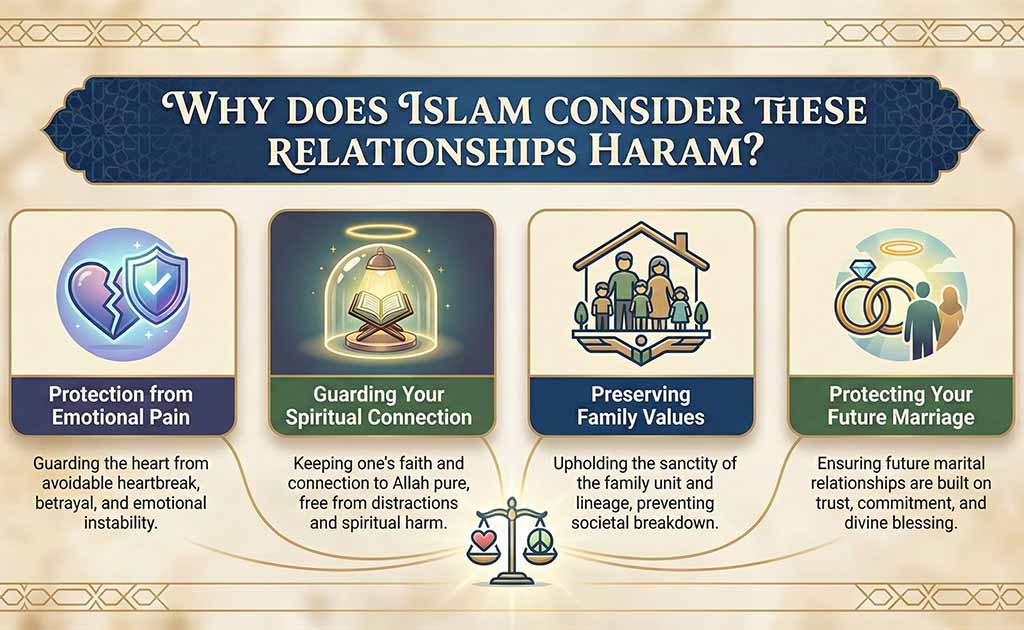
Why Does Islam Consider These Relationships Haram?
You might think this rule seems strict or outdated, especially when everyone around you is dating freely. But Islamic teachings about relationships aren’t meant to make your life harder—they’re designed to protect you.
Protection from Emotional Pain
When you get emotionally and physically involved with someone without the commitment of marriage, you’re putting your heart at risk. How many people do you know who’ve been devastated by breakups? Islam wants to spare you that pain by ensuring that intimacy only happens within a stable, committed relationship—marriage.
Guarding Your Spiritual Connection
The Quran says: “Do not approach adultery. Indeed, it is ever an immorality and is evil as a way.” (Quran 17:32)
Notice the wording—it doesn’t say “don’t commit adultery.” It says don’t even approach it. This means Islam wants you to stay far away from anything that might lead you down that path. Haram relationships often start innocently but can quickly lead to bigger sins.
Preserving Family Values
In Islam, family involvement in marriage decisions isn’t about controlling you—it’s about building relationships that last. When families are involved from the start, marriages tend to be more stable. Secret relationships, on the other hand, often create conflict, broken trust, and family problems.
Protecting Your Future Marriage
Every relationship you have before marriage leaves an emotional mark. Islam wants your first real intimate relationship to be with your spouse, without the baggage of past relationships, comparisons, or heartbreak. This gives your marriage the best chance to thrive.
The Reality of Living in Non-Muslim Countries
Here’s the truth that many young Muslims face: living your faith in a non-Muslim country is hard. Really hard.
The Pressure Is Real
At school or work, dating seems like the most normal thing in the world. Your friends might not understand why you won’t go out with someone you like. You might feel left out when everyone’s talking about their relationships. Some people might even think you’re weird or old-fashioned.
Loneliness Can Hit Hard
Seeing everyone coupled up while you’re alone can make you feel lonely. Social media doesn’t help—everywhere you look, people are posting pictures with their partners. It’s natural to want that connection, that feeling of being special to someone.
The Temptation Is Everywhere
Unlike in Muslim-majority countries where there are social structures that help you avoid temptation, in non-Muslim countries, you’re constantly exposed to dating culture. You might work side-by-side with the opposite gender, share classes, or even live in co-ed dorms. The opportunities for crossing boundaries are endless.
Feeling Like You’re Missing Out
When you see your friends experiencing romance, going on dates, and sharing their relationship stories, you might wonder if you’re missing out on an important part of life. This feeling—often called FOMO (fear of missing out)—can be incredibly powerful.
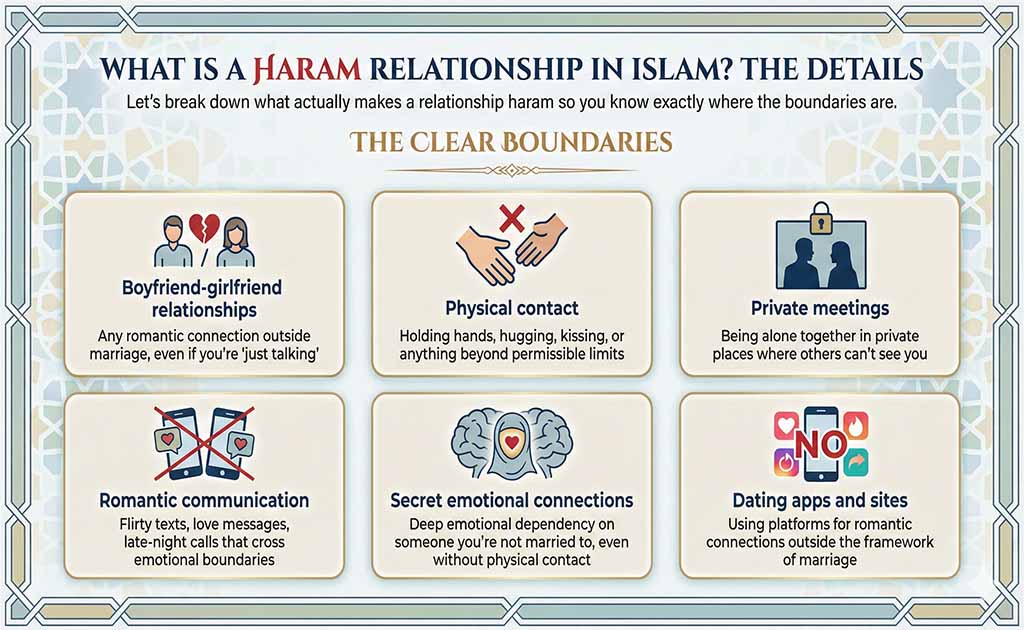
What Is a Haram Relationship in Islam? The Details
Let’s break down what actually makes a relationship haram so you know exactly where the boundaries are.
The Clear Boundaries
Haram relationships in Islam include:
- Boyfriend-girlfriend relationships – Any romantic connection outside marriage, even if you’re “just talking”
- Physical contact – Holding hands, hugging, kissing, or anything beyond what’s permissible between non-related members of the opposite gender
- Private meetings – Being alone together in private places where others can’t see you
- Romantic communication – Flirty texts, love messages, late-night calls, or any communication that crosses emotional boundaries
- Secret emotional connections – Even if there’s no physical contact, developing a deep emotional dependency on someone you’re not married to
- Dating apps and sites – Using platforms for romantic connections outside the framework of marriage
What People Often Misunderstand
Some young Muslims think: “As long as we’re not physical, it’s okay.” But Islam’s guidance is broader than that. Even emotional intimacy and romantic attachment without marriage can be problematic because:
- It distracts you from your relationship with God
- It often leads to more serious boundary violations
- It creates emotional bonds that make breakups devastating
- It puts you in situations where mistakes become easier
Signs You Might Be in a Haram Relationship
Sometimes we rationalize our choices, telling ourselves it’s not that serious. Here are signs that you might be crossing lines:
You’re Hiding It
If you can’t tell your parents, siblings, or religious friends about this relationship, ask yourself why. Usually, it’s because you know they’d disapprove—and deep down, you know why they’d be right.
You’re Compromising Your Prayers
Are you skipping prayers to text them? Avoiding Islamic events because you’d rather spend time together? When a relationship pulls you away from God, that’s a major red flag.
You Feel Guilty
That nagging feeling in your heart? That’s your conscience speaking. If you feel guilty after spending time with someone or after certain conversations, your heart is telling you something’s wrong.
The Relationship Has No Clear Path to Marriage
If months or years pass with no family involvement, no talk of actual marriage, no concrete plans—you’re likely in a situation that’s wasting your time and emotions.
You’re Making Excuses
“We’re going to get married eventually.” “It’s different because we really love each other.” “At least we’re not as bad as other couples.” When you constantly justify your actions, it’s usually because you know those actions need justifying.
How to Stay Away from Haram Relationships: Practical Guidance
Knowing what’s wrong is one thing. Actually avoiding it while living in a non-Muslim country is another challenge entirely. This article will guide you through practical strategies that actually work.
1. Strengthen Your Why
You need a powerful reason to stay strong when everyone around you is dating. That reason is your relationship with God. When you remember that every sacrifice you make is for His sake, and that He promises to replace what you give up with something better, it becomes easier.
Remind yourself regularly: “I’m not avoiding relationships because I’m scared or backward. I’m protecting my heart, my faith, and my future for something more meaningful—a blessed marriage that has God’s approval.”
2. Set Physical Boundaries Early
Don’t wait until you’re in a compromising situation to decide your boundaries. Decide now:
- You won’t be alone with someone of the opposite gender in private
- You won’t engage in flirty conversations or romantic texting
- You won’t add people on social media who might lead to temptation
- You’ll keep conversations with the opposite gender respectful and purposeful
3. Guard Your Gaze and Your Heart
The Prophet Muhammad (peace be upon him) taught us to lower our gaze. In modern terms, this means:
- Don’t stalk people’s social media profiles
- Don’t binge-watch romantic shows or movies that glorify haram relationships
- Don’t entertain thoughts about people you’re attracted to
- Don’t feed your imagination with romantic scenarios
What you consume mentally affects your heart. Fill your mind with things that strengthen your faith instead.
4. Find the Right Community
This might be the most important advice in this article. You need friends who share your values. When all your friends are dating, it’s nearly impossible to stay strong. But when you have friends who understand your struggle and support your choices, everything becomes easier.
Look for:
- Muslim student associations at your school or university
- Islamic youth groups in your community
- Online Muslim communities and support groups
- Islamic lectures, classes, or study circles
5. Stay Busy with Purpose
Idleness and boredom make temptation stronger. Fill your life with meaningful activities:
- Focus on your education or career goals
- Develop new skills or hobbies
- Volunteer in your community
- Work on personal development and self-improvement
- Strengthen your relationship with the Quran and prayer
When your life has purpose and direction, you’re less likely to seek fulfillment in haram relationships.
6. Be Smart About Technology
Your phone can be either your biggest temptation or your best protection tool.
Delete what tempts you:
- Dating apps (obviously)
- Social media accounts that constantly tempt you
- Numbers or contacts of people you know you shouldn’t be talking to
Use what protects you:
- Islamic apps for prayer times, Quran, and daily reminders
- Content filters and parental controls if needed
- Accountability apps where friends can check your screen time
7. Have Honest Conversations About Marriage
If you’re old enough to think about marriage, talk to your parents or guardians about it. Let them know you’re thinking about this stage of life. Many parents don’t realize their children are ready for marriage discussions.
In Islam, marriage is encouraged when you’re ready. Don’t let cultural barriers (like thinking you need to finish all your education first or have a perfect career) prevent you from pursuing marriage the halal way.
8. Learn to Process Loneliness
Loneliness is one of the biggest reasons young Muslims fall into haram relationships. But there are healthy ways to deal with it:
- Build strong friendships with same-gender friends
- Invest in family relationships
- Join group activities and social events (halal ones)
- Remember that feeling lonely sometimes is normal—it doesn’t mean you need a relationship right now
- Turn to God in prayer when you feel alone—He’s always there
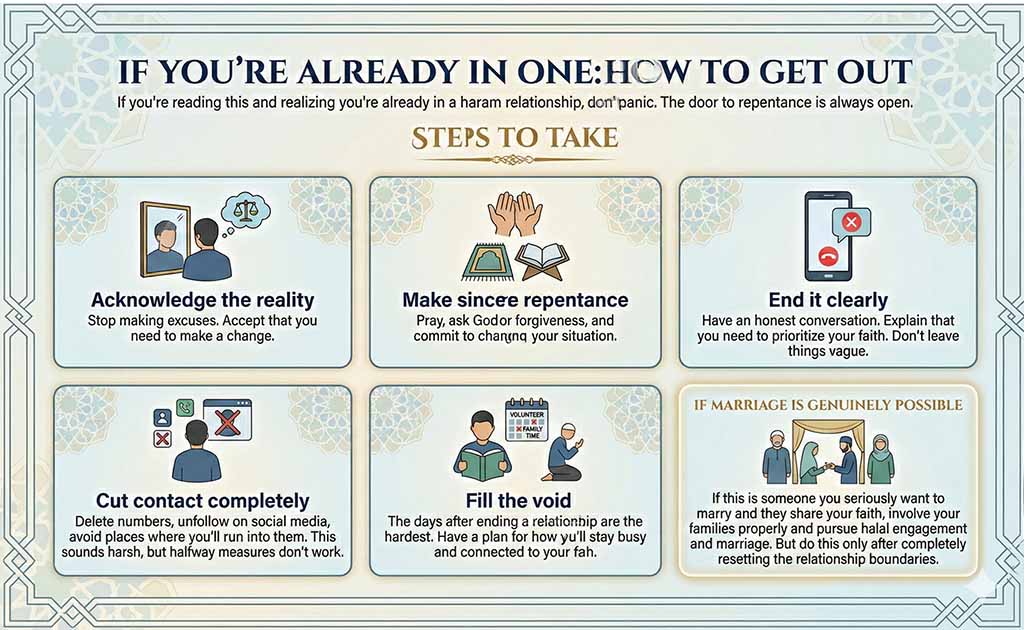
9. If You’re Already in One: How to Get Out
If you’re reading this and realizing you’re already in a haram relationship, don’t panic. The door to repentance is always open.
Steps to take:
- Acknowledge the reality – Stop making excuses. Accept that you need to make a change.
- Make sincere repentance – Pray, ask God for forgiveness, and commit to changing your situation.
- End it clearly – Have an honest conversation. Explain that you need to prioritize your faith. Don’t leave things vague.
- Cut contact completely – Delete numbers, unfollow on social media, avoid places where you’ll run into them. This sounds harsh, but halfway measures don’t work.
- Fill the void – The days after ending a relationship are the hardest. Have a plan for how you’ll stay busy and connected to your faith.
- If marriage is genuinely possible – If this is someone you seriously want to marry and they share your faith, involve your families properly and pursue halal engagement and marriage. But do this only after completely resetting the relationship boundaries.
The Halal Alternative: How Muslims Do Relationships
You might be thinking: “So I just never experience love until my wedding day?” Not at all. Islam has a beautiful alternative—it’s just different from the dating culture you see around you.
The Islamic Approach to Finding a Spouse
- When you’re ready for marriage, let your family know you’re looking
- People in your community (parents, relatives, friends) can suggest potential matches
- You meet in appropriate settings – with family present or in public places, for the purpose of seeing if you’re compatible
- You discuss important topics – faith, life goals, values, expectations for marriage
- If both agree, families get involved, and you move toward engagement and marriage
- After the Islamic marriage contract (nikah), you can start building your life together
This doesn’t mean arranged marriage, where you have no choice. It means guided introduction where you make the choice, but with family support and Islamic boundaries throughout.
What About Love?
Love absolutely has a place in Islam—but it’s meant to grow within marriage, not before it. The deepest love comes from:
- Building a life together as partners
- Overcoming challenges side by side
- Raising children together
- Growing old together
- All while pleasing God together
This lasting love is far more beautiful than the temporary thrill of haram relationships that often end in heartbreak.
The Promise God Makes to Those Who Sacrifice for Him
Here’s something beautiful: God promises that when you give up something for His sake, He replaces it with something better.
The Quran says: “And whoever fears Allah—He will make for him a way out. And will provide for him from where he does not expect.” (Quran 65:2-3)
Every time you:
- Turn down a date invitation
- End a conversation that’s getting inappropriate
- Choose to stay home instead of going somewhere you shouldn’t
- Delete that number you know you shouldn’t have
You’re making an investment in your future. And God sees every sacrifice, every struggle, every moment you choose Him over your desires.
Final Thoughts: You're Not Alone in This Struggle
Living as a young Muslim in a non-Muslim country isn’t easy. The challenges are real, the loneliness is real, and the temptations are real. But so is your faith, so is God’s promise, and so is the community of believers who understand exactly what you’re going through.
Remember:
- Your struggle is noble. You’re not weird or backward—you’re strong for holding onto your values when it’s hard.
- Short-term sacrifice leads to long-term blessing. The temporary difficulty of avoiding haram relationships is nothing compared to the blessing of a halal marriage and God’s pleasure.
- You’re building your character. Every time you choose right over easy, you’re becoming a stronger, more disciplined person.
- Your future spouse will be worth the wait. Imagine entering marriage with a clean heart, free from the emotional baggage and comparison that comes with past relationships.
- God is always with you. When you feel alone, remember that God is closer to you than your jugular vein. He hears your struggles, sees your tears, and will never abandon you.
The path of avoiding haram relationships while living in a non-Muslim country is challenging, but it’s absolutely possible. With strong faith, the right community, clear boundaries, and sincere intention, you can navigate this modern world while staying true to the timeless wisdom of Islam.
Your future self—and your future spouse—will thank you for the sacrifices you’re making today.
May God make it easy for you, protect your heart, and grant you a righteous spouse when the time is right.
Frequently Asked Questions About Haram Relationships