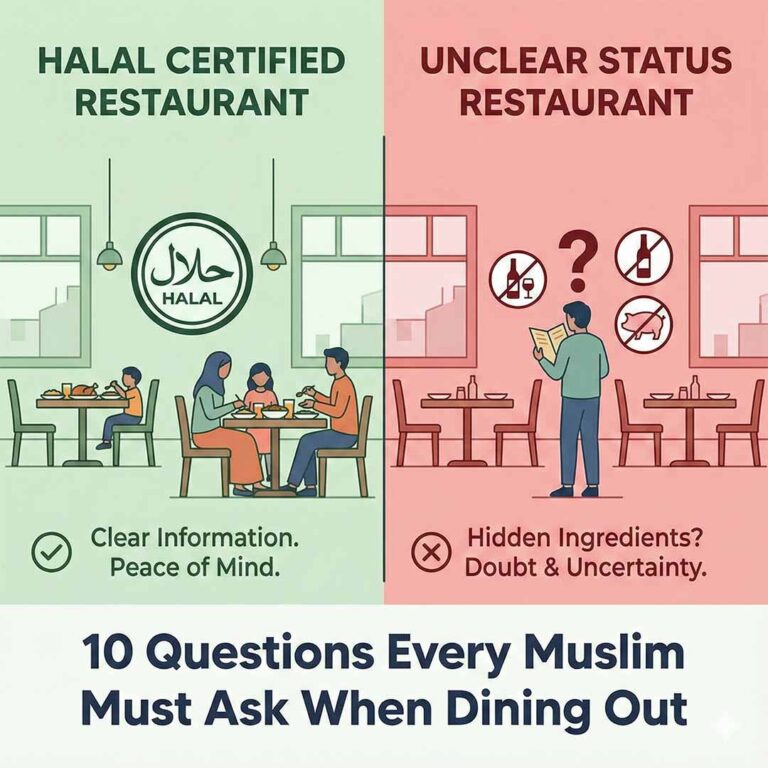
Living in a non-Muslim country makes eating out more complicated. Halal options might be hard to find, labels are sometimes unclear, and many restaurants may not know about Islamic dietary rules. To follow your faith and enjoy social and work gatherings, it’s important to stay alert, ask questions, and be certain your meals are halal.
If you are a Muslim living in a diverse community, knowing how to avoid haram food when eating out is essential. Whether you are traveling, eating with coworkers, or trying new places, figuring out what is halal can be challenging. However, with the right questions, you can enjoy meals out and uphold your faith.
This comprehensive guide offers ten critical questions to ask at any restaurant. These will help you spot halal options and steer clear of prohibited ingredients, ensuring every meal out aligns with Islamic dietary laws.
Question 1: Is This Restaurant Halal-Certified?
Start by asking if the restaurant has halal certification from a reputable Islamic authority. Halal certification indicates that the restaurant follows strict guidelines for sourcing meat, preventing cross-contamination, and ensuring all ingredients comply with Islamic dietary laws.
If a restaurant is certified, you can be reasonably confident that the meat is slaughtered according to Islamic rites (zabiha), pork and alcohol are excluded from the kitchen, and proper food separation practices are observed. However, since certification standards can differ by country and certifying organization, it’s important to know which authority issued the certificate.
If the restaurant isn’t certified, don’t dismiss it immediately. Instead, ask further questions to make an informed choice.
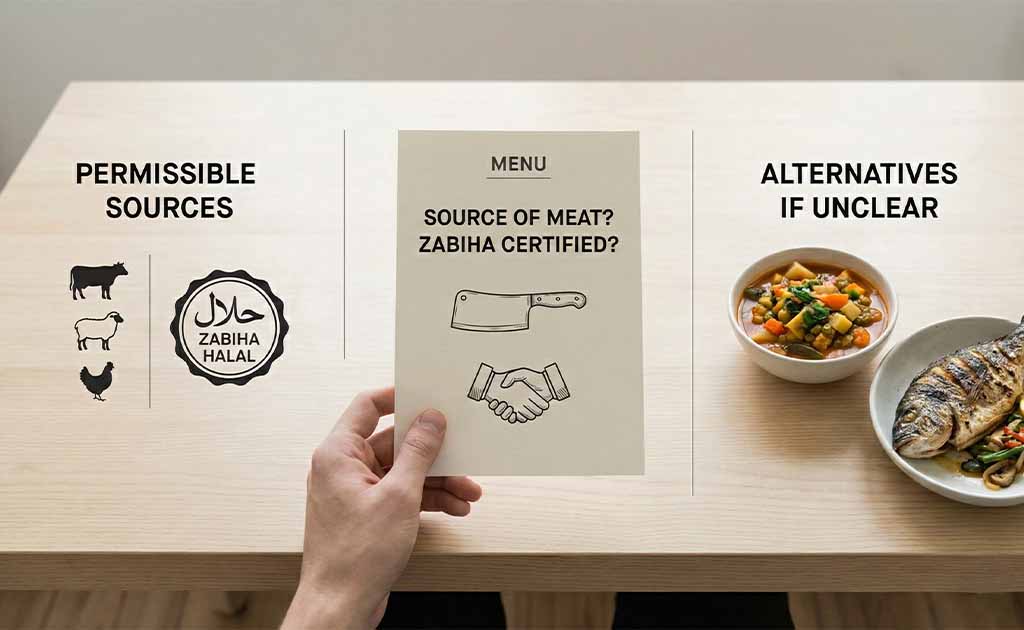
Question 2: What Type of Meat Do You Serve, and How Is It Slaughtered?
For meat to be considered halal, it must come from permissible animals like cattle, sheep, goats, or chickens and be slaughtered in the name of Allah by a Muslim, or, according to some scholars, by People of the Book (Jews or Christians) following proper procedures.
Always ask about the source of the meat: Is it from a halal butcher? Was it slaughtered following Islamic guidelines? Some restaurants may serve specifically “zabiha” meat, while others might offer kosher meat.
Be especially cautious with poultry and beef. If the restaurant can’t clearly explain the meat’s source and slaughter process, it’s safest to skip meat dishes and choose vegetarian or seafood options instead.
Question 3: Do You Use Any Pork Products in Your Kitchen?
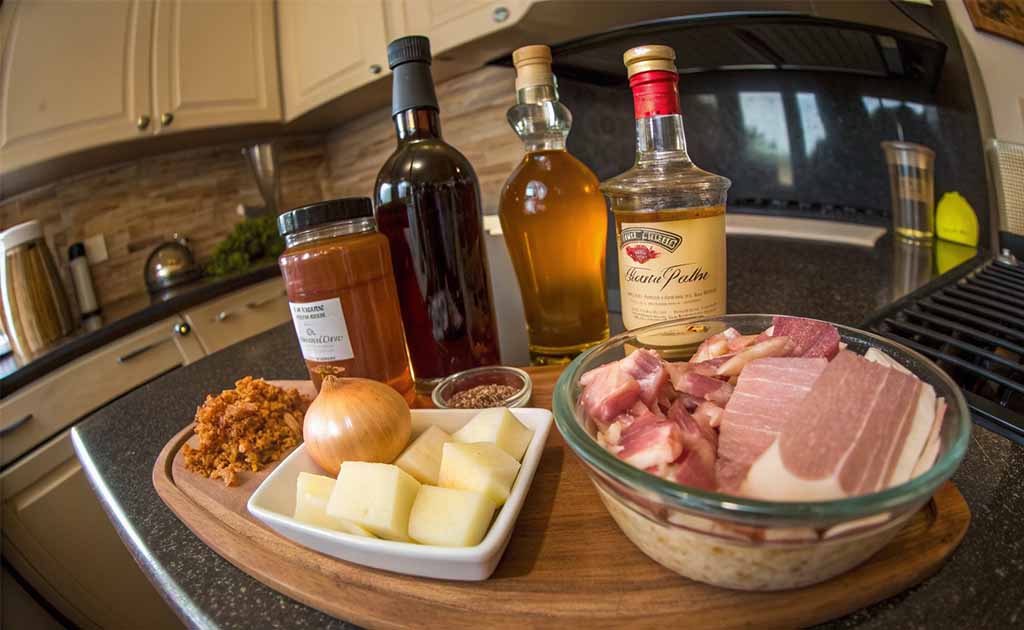
Pork is explicitly haram (forbidden) in Islam, and even trace amounts can render a meal impermissible. However, the concern goes beyond just pork dishes on the menu. Ask whether the kitchen uses pork products in any form, including bacon bits, ham, pork fat (lard), or pork-based seasonings.
Additionally, inquire about cross-contamination risks. Are the same grills, fryers, or utensils used for both pork and non-pork items? Even if you order a chicken dish, if it’s cooked on the same surface as pork bacon without proper cleaning, it may not be halal.
Many restaurants, especially breakfast spots and fast-food chains, regularly use pork products. Being vigilant about this question can save you from unknowingly consuming haram ingredients.
Question 4: Are There Any Alcohol-Based Ingredients in the Food?
Alcohol is haram for Muslims, and this restriction goes beyond beverages to include any alcohol used in cooking. Many sauces, marinades, and desserts feature wine, beer, liqueurs, or cooking spirits. Examples include wine-based pasta sauces, bourbon-glazed meats, tiramisu containing liqueur, and some salad dressings.
It’s important to note that opinions differ among Muslims about alcohol in cooked food. Some believe that if alcohol evaporates during cooking, the food becomes permissible, while others hold that any deliberate use of alcohol makes a dish haram, regardless of whether it cooks off. Knowing your own position and inquiring about alcohol-based ingredients allows you to make informed choices that align with your beliefs.
Also, remember to ask about extracts such as vanilla extract, which is often made with alcohol. While some scholars permit its use due to the small quantity and the transformation process during production, others recommend opting for alcohol-free alternatives whenever possible.
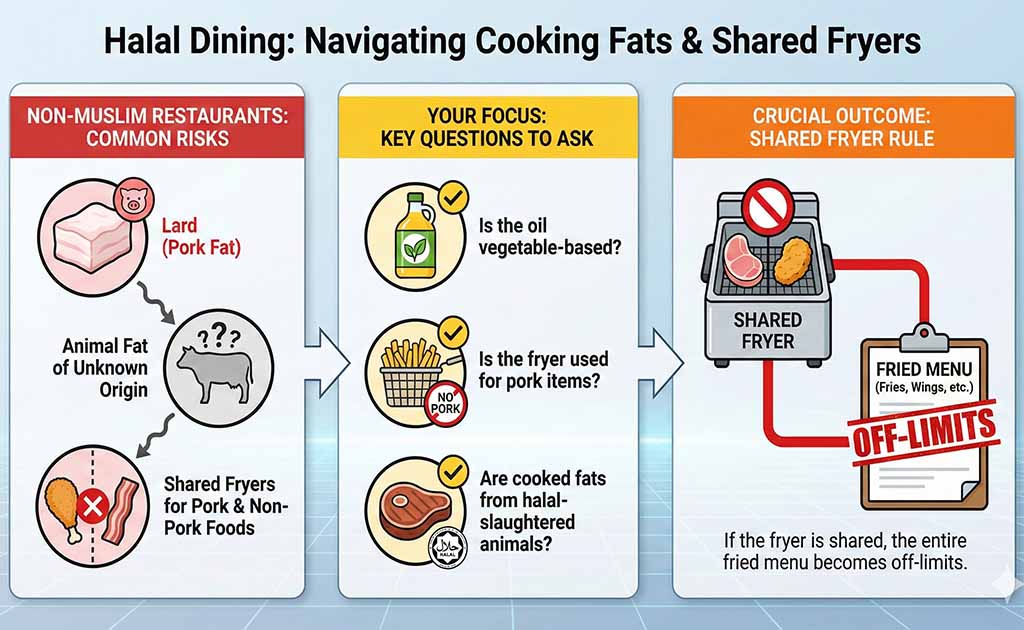
Question 5: What Type of Oil and Cooking Fats Do You Use?
The type of cooking fat used in food preparation is crucial. Lard (pork fat) is haram and, unfortunately, still used in some restaurants, particularly in traditional cooking or certain ethnic cuisines. Even if a dish doesn’t contain meat, if it’s fried in lard or cooked with pork fat, it becomes impermissible.
Ask whether the restaurant uses vegetable oil, olive oil, or other plant-based fats. Also inquire about the oil used in fryers. Shared fryers are a common concern—if the same oil is used to fry both pork items and other foods, cross-contamination occurs.
Animal fats other than pork (such as beef tallow or chicken fat) may be permissible if they come from halal-slaughtered animals, but this requires verification.
Question 6: Are Your Seafood Options Wild-Caught or Farm-Raised?
Seafood is generally considered halal in Islam, with some differences of opinion among schools of thought. The majority of scholars accept all seafood as permissible, making it a safe option when you’re uncertain about meat sources.
However, some Muslims following the Hanafi school may have stricter interpretations, permitting only fish with scales and prohibiting shellfish, crustaceans, and mollusks. If you follow this interpretation, verify what type of seafood is being served.
Additionally, ask about preparation methods. Is the seafood cooked separately from non-halal items? Are there any non-halal sauces or ingredients added? A grilled fish with butter and herbs is straightforward, but seafood dishes with complex sauces may contain wine, pork-derived ingredients, or other questionable components.
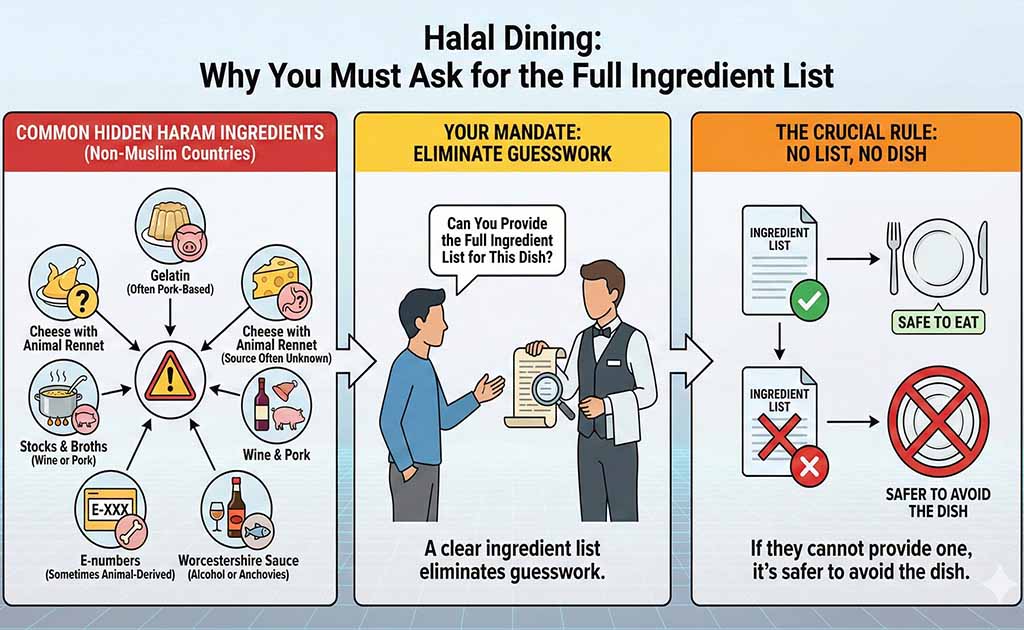
Question 7: Can You Provide a List of Ingredients for This Dish?
Don’t hesitate to ask for a complete ingredient list, especially for complex dishes with sauces, seasonings, or marinades. Many ingredients have non-obvious sources that may be problematic:
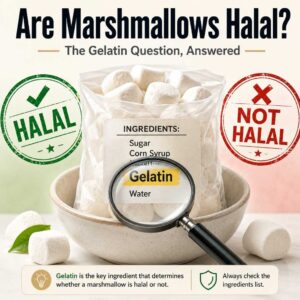
- Gelatin: Often derived from pork, commonly found in desserts, marshmallows, and some yogurts
- Cheese: May contain animal-derived rennet; look for vegetarian or microbial rennet
- Emulsifiers and additives: E-numbers and food additives can sometimes be derived from animal sources
- Broths and stocks: May contain pork, non-halal meat, or alcohol
- Worcestershire sauce: Traditionally contains anchovies and sometimes unclear ingredients
A detailed ingredient list helps you identify hidden haram components and make informed choices. If the restaurant cannot provide this information, consider it a red flag.
Question 8: Do You Have Separate Preparation Areas for Vegetarian Dishes?
When in doubt, vegetarian dishes often provide a safer alternative. However, cross-contamination remains a concern even with vegetarian options. Ask whether vegetarian dishes are prepared in separate areas or with dedicated utensils.
If the restaurant uses the same cutting boards, knives, pans, and grills for all dishes, there’s a risk of contamination from pork or non-halal meat. Some restaurants have dedicated vegetarian preparation zones, which significantly reduces this risk.
Pure vegetarian or vegan restaurants eliminate most halal concerns related to meat and cross-contamination, though you should still verify the absence of alcohol in cooking and ensure any dairy products (cheese, yogurt) don’t contain animal-derived enzymes from non-halal sources.
Question 9: Are Your Desserts Made With Alcohol, Gelatin, or Animal-Derived Ingredients?
Desserts can be surprisingly problematic from a halal perspective. Beyond alcohol-containing items like tiramisu or rum cake, watch for:
- Gelatin in mousses, cheesecakes, and gummy toppings: Usually pork-derived
- Vanilla extract: Often alcohol-based
- Mono and diglycerides: Can be animal-derived
- Ice cream: May contain non-halal stabilizers or alcohol-based flavorings
Ask about the specific ingredients in desserts. Simpler desserts like fresh fruit, sorbet, or items made with clear, plant-based ingredients are typically safer choices. Some restaurants now offer desserts with vegetarian gelatin or halal-certified ingredients, which is worth asking about.
Question 10: Can You Accommodate Special Halal Requests?
Finally, don’t be afraid to ask if the restaurant can accommodate halal requirements. Many establishments are willing to make modifications, such as:
- Preparing your dish with fresh utensils and on a clean cooking surface
- Substituting ingredients (using vegetable oil instead of butter that may contain questionable additives)
- Avoiding cross-contamination by taking extra care during preparation
- Providing detailed information about suppliers and ingredients
A restaurant’s willingness to accommodate shows respect for your dietary needs. Clear, polite communication about your requirements often yields positive results. Explain that you follow halal dietary laws and ask if they can ensure your meal meets these standards.
Conclusion
Dining out as a Muslim requires diligence, but it doesn’t mean you can’t enjoy diverse culinary experiences. By asking these ten questions, you protect your commitment to halal principles while navigating restaurant menus with confidence. Understanding how to avoid haram food when eating out becomes easier with practice and awareness.
Remember that Allah values intention and effort. If you’ve made sincere attempts to verify the halal status of your meal and the information available is limited, many scholars recognize this diligence. However, when clear alternatives exist or when doubt is significant, choosing the safer option is always recommended.
As the Muslim community grows globally, more restaurants are becoming aware of halal requirements and obtaining proper certification. Supporting halal-certified establishments encourages this positive trend and makes dining out easier for all Muslims. When certification isn’t available, these questions serve as your guide to making informed, faithful choices in any dining situation.