What Is Red 40?
Red 40 is a red food coloring. Its scientific name is Allura Red AC. It was developed in 1971 and is now the most widely used red dye in the United States.
The same dye goes by different names depending on where you shop:
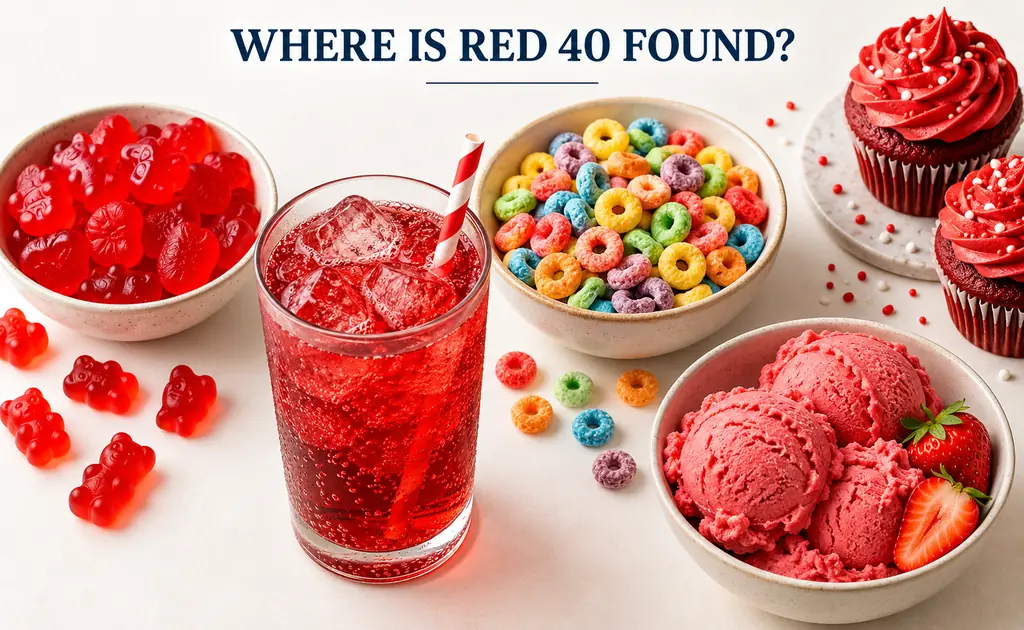
Companies use it to make food look bright red. You can find it in:
- Candy and chewing gum
- Soft drinks and sports drinks
- Breakfast cereal
- Ice cream, frozen desserts and baked goods
- Sauces and condiments such as ketchup
- Vitamins and some medicines
For more ingredient guides, see our Ingredient List.
How Is Red 40 Made?
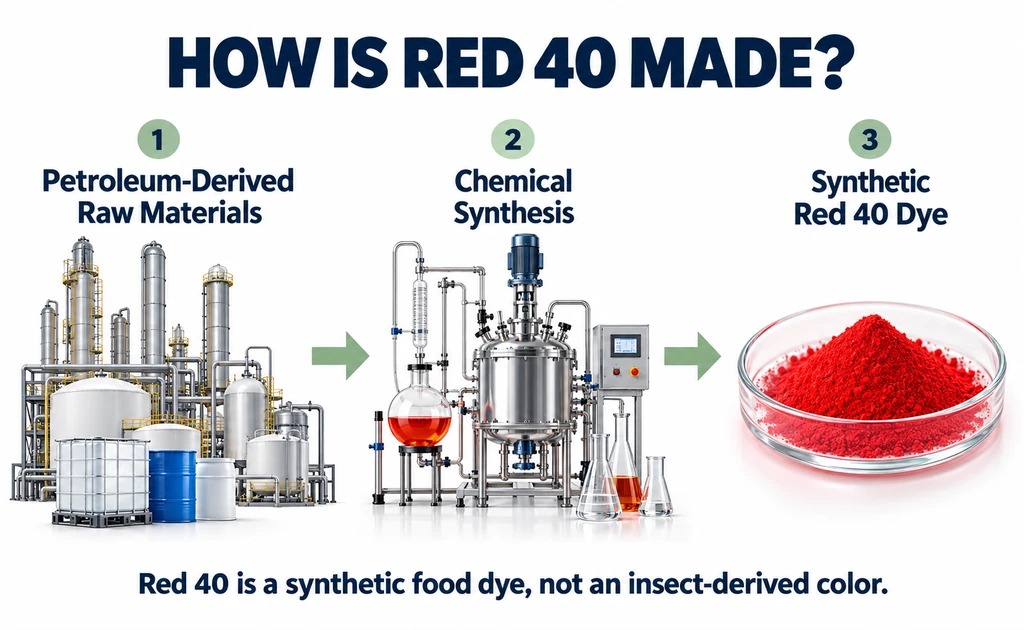
Red 40 is made in a laboratory. It is a synthetic azo dye made from petroleum-derived chemicals, not extracted from animals or insects. The US Food and Drug Administration says certified synthetic colors like this are synthesized mainly from raw materials obtained from petroleum or coal. The source and processing of any additional ingredients in a finished color product may still need to be checked.
This is the main reason scholars and halal organizations treat Red 40 as permissible. Its source is not an animal, and it is not something forbidden.
What Is Red 40 Lake?
Sometimes a label says “Red 40 Lake” or “Red 40 Aluminum Lake.” This is the same red color made into a pigment, a form that does not dissolve the way the plain dye does. US rules treat it separately. We explain the difference in our guide to Red 40 Lake vs Red 40.
Is Red 40 Halal or Haram?
Red 40 is generally considered halal. Here is the reasoning, step by step.
The Basic Rule: Allowed Unless Proven Otherwise
In Islamic law, things are considered permissible unless there is clear evidence that they are forbidden. Scholars express this as al-asl fi al-ashya’ al-ibaha, which means “the default for things is permission.”
For food, the question is usually about the source. Is it pork? Is it blood? Is it from an animal that was not slaughtered properly? Red 40 is made from petroleum-derived chemicals, so it falls into none of these groups.
What Do Scholars and Halal Authorities Say?
Here is what the sources we reviewed report:
- ca and IlmHub: In an answer published on IlmHub and on IslamQA.org, Mufti Faisal al-Mahmudi says Red 40 was originally made from coal tar, is now mostly made from petroleum, and is not derived from any insect. The answer reports that SANHA (South African National Halal Association) has classified Red 40 as halal. It does not give a separate ruling of its own.
- DarulUloomTT (Hanafi): A Q&A from DarulUloomTT says the natural red colouring, cochineal or carmine, is not halal, while the other red colours are artificial and permissible.
- MUIS (Singapore): The Food Additive Listing describes E129 as a “synthetic red colouring” and does not mark it as doubtful (syubhah). The listing says it is a general guideline, was last updated in 2016, and has no halal or haram column, so it is not a certificate.
- Other halal guides: Halalification and HalalSeeking reach the same view. Both add that you should check the finished product.
One important point: halal organizations usually certify finished products, not the color on its own. For an official position on a product, check the certifier’s own listing. If you are unsure, send us a question.
Do the Four Schools of Thought Differ?
The four main Sunni schools (Hanafi, Shafi’i, Maliki and Hanbali) disagree on some food questions, especially about eating insects. That matters for carmine, not for Red 40, because Red 40 does not come from insects. The sources we reviewed do not identify a school-specific disagreement over Red 40 itself. The one Hanafi source above treats artificial red colours as permissible.
Can a Halal Dye Become Non-Halal?
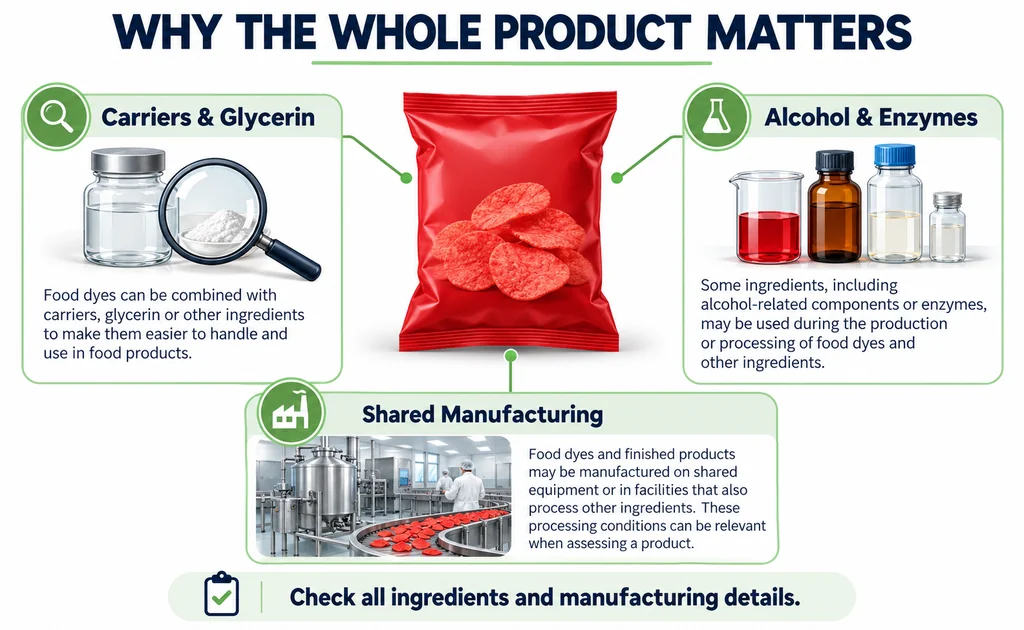
The dye itself is fine. But what is added to it, and what else is in the food, can change the answer for the finished product. These are the things to know.
Carriers and Glycerin
Red 40 dissolves in water. But many ready-made liquid colors are blends, where the dye is mixed with other ingredients. US rules allow only listed diluents in these mixtures. One halal food researcher at HalalYummies names glycerin, propylene glycol, sugar-based liquids, vegetable oil and water as common carriers, and adds that they may not appear on the ingredient list.
Glycerin is the one to watch, because it can come from plants or from animal fat. The MUIS Food Additive Listing marks glycerol (E422) as doubtful (syubhah) because of its source or manufacturing process.
Alcohol and Animal-Derived Enzymes
Halalification points out that a product may not be halal if alcohol or animal-derived enzymes are used during production. Scholars also differ on small amounts of alcohol used as a solvent. If this matters to you, ask the manufacturer.
Shared Factories
A factory that also handles non-halal ingredients can cause cross-contact. When this information is missing, Halalification recommends choosing products with halal certification.
Do Kosher Symbols Help?
A reliable kosher certification may give useful information about a product’s ingredients. However, kosher certification is not a substitute for halal verification.
Is Red 40 the Same as Carmine (E120)?
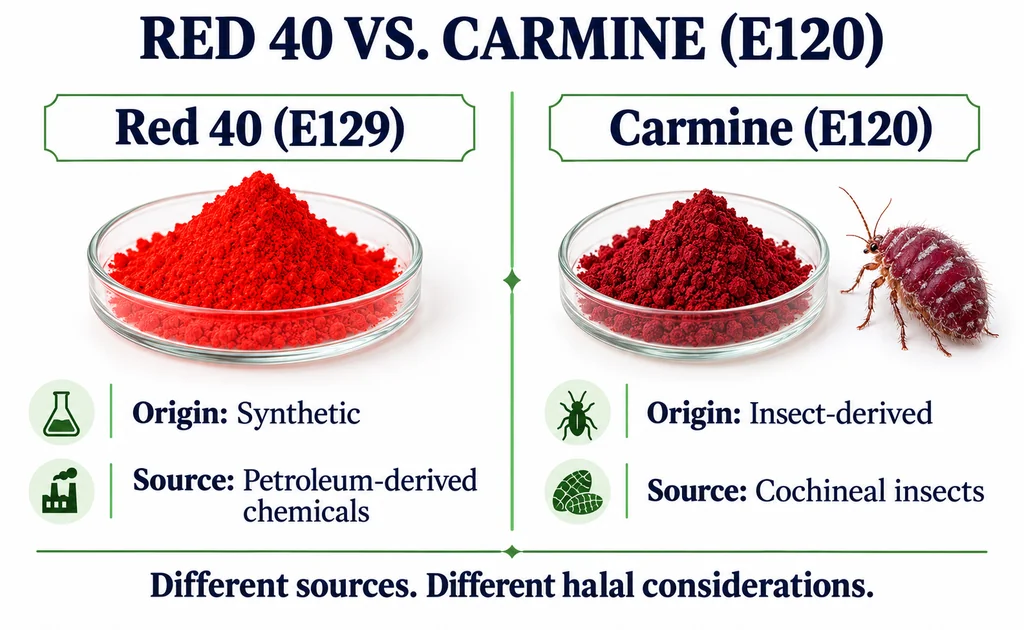
No, and this is the most common mix-up. Red 40 is made in a lab. Carmine (E120) is a natural red dye made from cochineal insects. The MUIS listing describes E120 as extracted from the bodies of female insects, and the DarulUloomTT Q&A says this natural red is not halal. Different ingredient, different ruling.
On a label, the insect-based red can appear as carmine, cochineal extract, E120 or Natural Red 4. If you see Red 40, Allura Red AC or E129, it is the lab-made dye. Our full guide to Red 40 vs carmine explains the scholarly reasoning.
Are Other Synthetic Food Dyes Halal?
The same source-based reasoning applies to other lab-made dyes. The IlmHub answer says Yellow 5 and Yellow 6 are synthetic, made from petroleum, and suitable for Muslims. Both are also azo dyes, like Red 40.
For any other dye, we have not reviewed a halal ruling here. Check the carrier and the rest of the product as explained above, or ask us.
Halal vs Tayyib: What About Health Concerns?
Halal means permitted. Tayyib means good and wholesome. The Quran often puts the two together, for example “eat of what is lawful and good” (Al-Baqarah 2:168). So some Muslims ask: if Red 40 has health questions, should I avoid it?
Here is what is worth knowing. Food safety authorities allow Red 40 within set limits. A UK-commissioned study found a possible link between some artificial colors and hyperactivity in children, but the European Food Safety Authority later said the evidence did not support a link. Wikipedia’s summary describes this debate. This guide does not try to settle it.
What we can say from Islamic reasoning is this. A food does not become haram just because a person prefers to avoid it. Islamic law also teaches avoiding harm, through the principle “no harm and no reciprocal harm” (la darar wa la dirar). If you or your child seem to react to dyes, or you simply want to be careful, avoiding Red 40 is a reasonable personal choice. Scholars call this precaution (ihtiyat). It is a different thing from saying Red 40 is haram.
What Are Halal-Friendly Alternatives to Red 40?
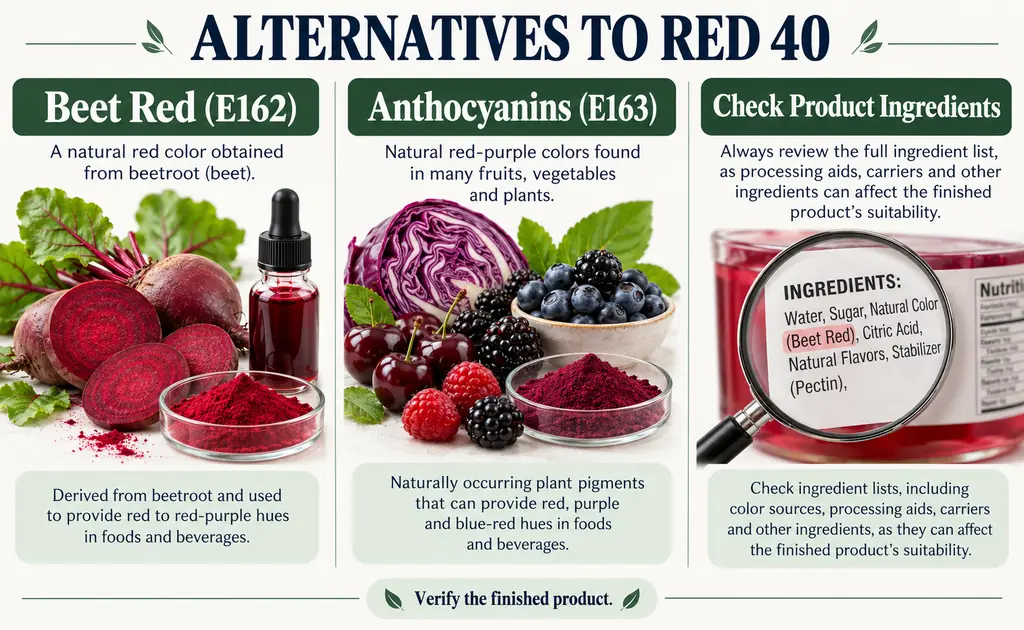
Plant-based reds such as beet red (E162) and anthocyanins (E163) are common alternatives. Carmine (E120) is not one, because it comes from insects. Even natural colors need a check, since some are extracted with alcohol or carried in glycerin. See our guides to halal-friendly Red 40 alternatives and natural red food coloring.
How Do You Check a Product Containing Red 40?
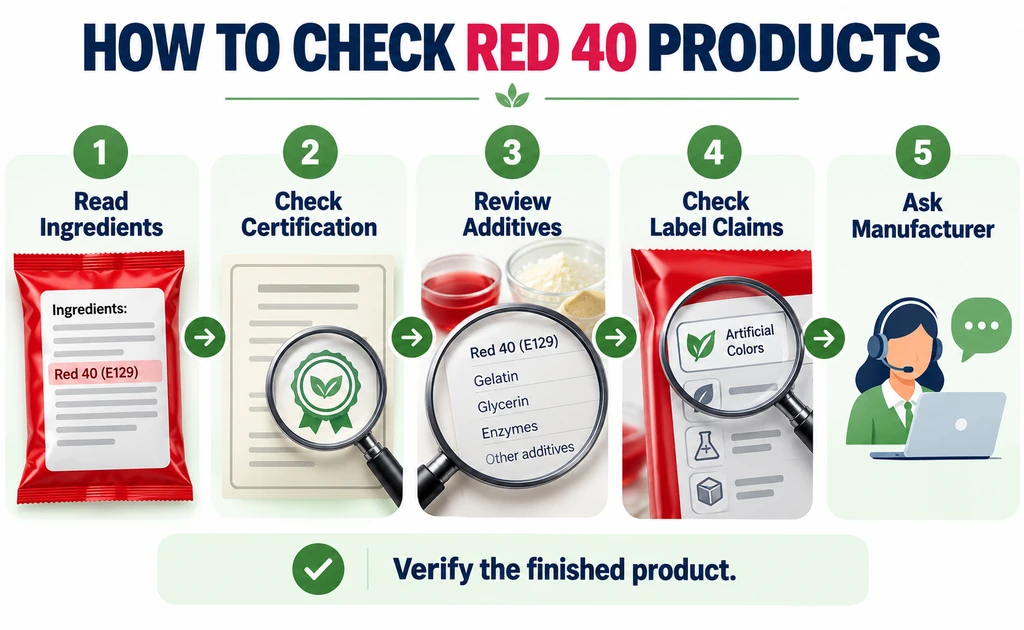
Seeing Red 40 on a label is not a reason to put the product back. Do this instead:
- ☐ Read the full ingredient list, not just the color.
- ☐ Look for a trusted halal logo on the package.
- ☐ Watch for gelatin, alcohol-based flavorings and carmine (E120).
- ☐ Notice if the label says “liquid color” or “lake,” and think about the carrier.
- ☐ If anything is unclear, contact the manufacturer and ask.
For help with terms like “certified colors” on US labels, see our label-reading guide. You can also send us a question.
Is a Product With Red 40 Halal?
Not automatically, either way. A candy, drink or cereal with Red 40 can be halal or not halal, depending on everything else in it. Gummy candies often use gelatin. Some drinks have flavorings made with alcohol. Medicines can come in gelatin capsules. In all of these cases, Red 40 is not the cause. It is just in the same product.
Many popular products contain Red 40, and we check them one by one:
In the US, UK and Canada, many products with Red 40 are not halal-certified, even though the color itself is generally considered halal. That is why the whole product matters.
Frequently Asked Questions
Conclusion: Is Red 40 Halal?
Red 40 itself is generally considered halal. It is made in a lab, not from pork, animals or insects. But the halal ruling applies to the whole product, so read the full ingredient list, look for halal certification, and ask the maker when something is unclear. The red dye to watch for is carmine (E120), which comes from insects. For more ingredient guides, browse our Ingredient List.